NDC

  • NDC, NPP win an equal number of parliamentary seats; what are the implications of a hung parliament?

    The 2020 elections will go down in history as one of the most keenly contested elections in the fourth republic.

    The 2008 elections in Ghana remains the most keenly contested elections in the history of the fourth republic, with the then opposition National Democratic Congress (NDC) narrowly beating the then incumbent New Patriotic Party (NPP) by just a little over 40,000 votes in the second round of that election.

    But even in the 2008 elections, the NDC had a clear majority of seats in parliament – 116 seats as against the NPP’s 107 seats. There were four independent Members of Parliament, two People’s National Convention (PNC) MPs, and one Convention People’s Party (CPP) MP.

    In the 2020 general elections, even though the incumbent president, Nana Addo Dankwa Akuffo-Addo, per the official results declared by the Electoral Commission, won by a margin of over 500,000 votes, he was unable to secure a majority in parliament.

    Both the NPP and the NDC won 137 seats each with one independent MP.

    The independent MP was a member of the NPP before his expulsion from the party prior to the elections.

    Andrews Amoako Asiama, who secured the mandate of the people of the Fomena constituency as an independent MP, has since expressed his desire to support the NPP side in parliament.

    Article 97 of the 1992 constitution of Ghana, however, bars him from rejoining the NPP.

    “An MP shall vacate his seat in parliament if he was elected a Member of Parliament as an independent and joins a political party,” the constitution states.

    This means the number of seats for the NPP cannot increase even if the Fomena MP decides to side with the NPP side.

    He would be able to vote or debate in favour of the NPP side in parliament but cannot join to give them a majority.

    This, therefore, means that Ghana is in for a hung parliament if the number of seats won by the two parties remains the same after the resolution of the disputes in some of the constituencies.

    Any implications of a hung parliament on parliamentary business?

    1.      Construction of the leadership of parliament?

    Article 95 (1) of the 1992 constitution provides for the election of a speaker of parliament.

    It states: “There shall be a speaker of Parliament who shall be elected by the members of parliament from among persons who are members of Parliament or who are qualified to be elected as members of parliament.”

    Article 96 (1) also provides for the election of two deputy speakers of Parliament. Paragraph (b) of Article 96 states that the two deputy speakers of Parliament shall not be members of the same political party.

    A private legal practitioner, Lawyer Terrence Ningneng told Dubawa in a telephone interview both sides can present candidates to be elected as speaker and deputy speakers, and the candidates who win simple majority become the speaker and deputy speaker.

    The side which fails to secure the first deputy speaker position automatically takes the second deputy speaker position.

     “The speaker, normally both sides will nominate but it’s just natural that all the time the majority always gets their way because if you nominate and you are on the minority side, there is no way because it’s a simple majority,” he explained.

     From this explanation, the candidates the NPP side presents are likely to win the speaker and first deputy speaker positions if the independent MP decides to vote in their favour.

     This may apply to other elected offices among the MPs in parliament.

     2.      Composition of committees of parliament

    A private legal practitioner, John Ndebugri who spoke to Dubawa in a telephone conversation believes the composition of the various committees will be one of the major challenges the 8th parliament will battle with.

    He explains how the committee members are constituted based on which party is the majority in the house.

    Using the current parliament and the number of MPs the NPP (169) and the NDC (106) have, he said the number of MPs on the NPP side (169), for example, is divided by the total number of MPs (275) and multiplied by 100 to get a percentage that will inform the percentage of Majority MPs who would be on a particular committee.

    The chairmen of the committees, with the exception of the Subsidiary Legislation and Public Accounts Committees, are appointed from the majority side.

    However, with the current situation where there is no majority side, the committees will have an equal number of representatives from both sides of the house.

    “It is going to be difficult to determine the leadership of these committees unless the two parties decide to compromise. One way of compromising is for the NPP to cede grounds and allow the NDC to also control some, if not all of the committees,” he suggested.

    He contends that there is bound to be serious problems relating to the passage of, especially controversial bills and agreements.

    Implications on government business

    Lawyer Ndebugri said if the situation remains as it is, the NDC can decide to make matters very difficult for the government by simply refusing to cooperate at the committee level.

    Article 78 (1) of the constitution stipulates that the president shall appoint the majority of ministers from among members of parliament.

    This, Lawyer Ndebugri believes, will have an effect since the ministers who are at the same time MPs may not always be available for committee meetings.

    “If the NDC wants to paralyze government business it’s just the matter of voting out every matter that comes before the committees,” he said.

    How will the government get the cooperation of the opposition?

    Lawyer Ndebugri said if the dispute over the election results is resolved and the status quo, the president-elect, Nana Addo Dankwa Akuffo-Addo must extend the olive branch to the opposition.

    He also advised activists of the NPP to desist from using violent language against the opposition NDC and its candidate.

    “I think that if we are going to make some progress, people must pipe down and try extending the olive branch. There have to be compromises. Beyond compromises I don’t see that we can make much progress,” he stated.

    The reporter produced this article under the auspices of the Dubawa 2020 Fellowship in partnership with The Finder Newspaper to facilitate the ethos of “truth” in journalism and to enhance media literacy in the country.
  • Election 2020: Who are the three ‘extra’ Essikado-Ketan parliamentary candidates?

    Following our previous fact-check that confirmed that the Electoral Commission (EC) published results for six instead of the three candidates who contested the Parliamentary seat in the Essikado-Ketan Constituency, we received several feedbacks and questions. 

    One of the questions sought to know who the three extra candidates who were apparently added mistakenly to the EC’s Essikado-Ketan parliamentary election results  were. 

    As a reminder, the names were:

    CandidatePolitical partyVote obtainedPercentage
    Samuel AbokyiGFP2600.27
    Asamoah AgyemanPNC260.06
    Sadick SarfoNDP270.06

    Series of online searches we ran revealed that all three persons were actual candidates in other constituencies.

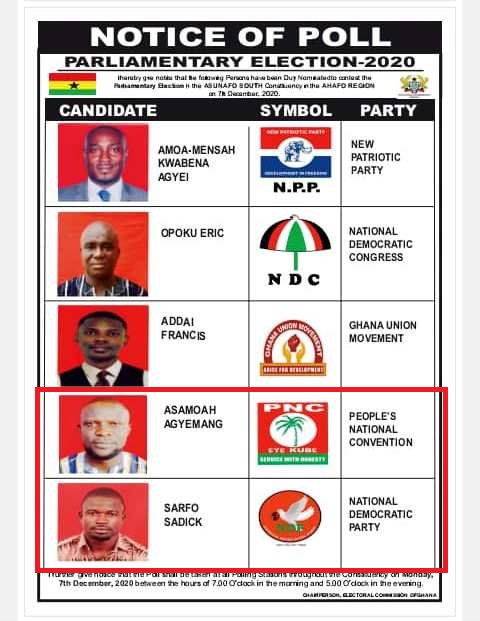
    We found that Asamoah Agyeman and Sadick Sarfo of the People’s National Convention (PNC) and the National Democratic Party (NDC) respectively were both parliamentary candidates in the Asunafo South constituency of the Ahafo region. 

    The notice of poll in that constituency also confirmed their identities and corresponding political parties.

    Notice of poll from Asunafo South constituency

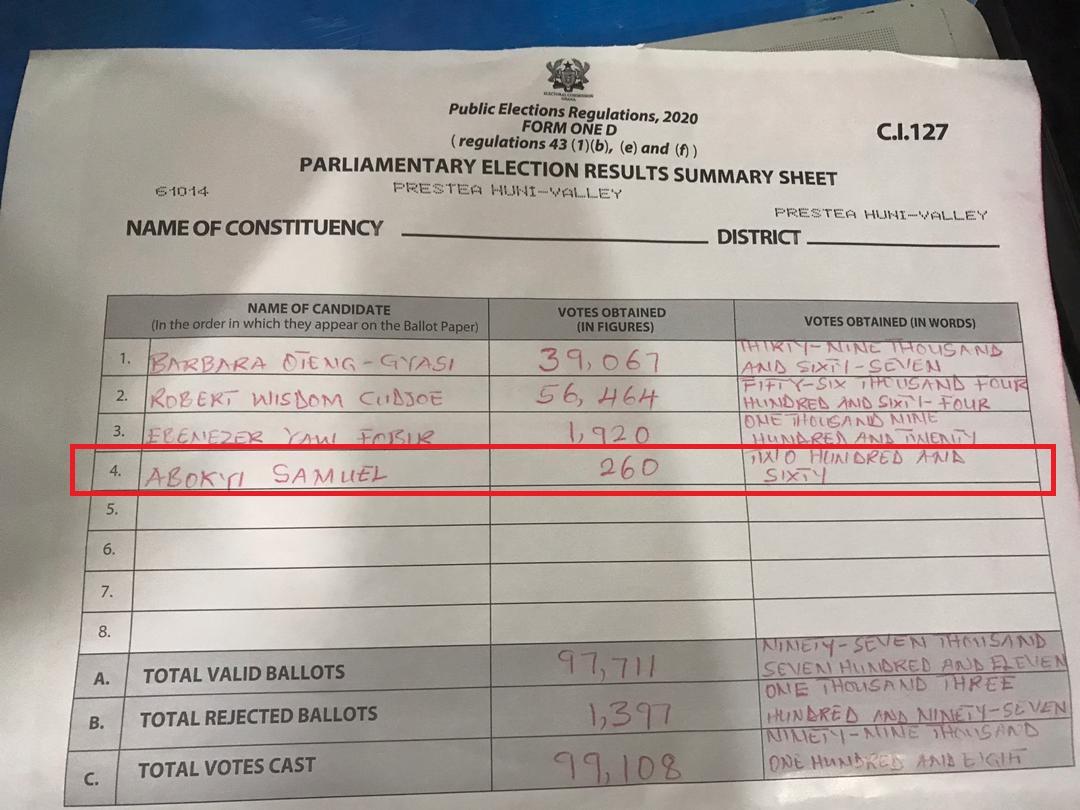
    No record was found of a Samuel Abokyi contesting on the ticket of the Ghana Freedom Party. Our further search, however, showed that Samuel Abokyi contested on the ticket of the Great Consolidated Popular Party (GCPP) as a parliamentary candidate in the Prestea Huni Valley constituency of the Western region. 

    Results from the two constituencies all three candidates contested in confirmed the number of votes the EC attributed to them on the Essikado-Ketan parliamentary result document. 

    C:\Users\Jonas\Desktop\Prestea Huni valley.jpg
    Pink sheet from Prestea Huni Valley

    Conclusion: 

    The three extra names added by the Electoral Commission to the Essikado-Ketan parliamentary election results document are actual candidates who contested the elections in different constituencies. 

  • Key Statistics from Elections In Ghana

    Dominant Political parties since the Fourth Republic

    On December 7th, 2016, Members of seventh Parliament were elected to office. The dissolution of the sixth Parliament took place on the eve of January 6th, 2017  followed by the ushering in of the seventh Parliament of January 7th, 2017.

    The predominant parties of representation in Ghana’s parliament have been the New Patriotic Party (NPP) and the National Democratic Congress (NDC). Power has rotated between these two parties since the fourth republic commenced in 1992/3.

    Year1992199620002000 (RO)200420082008 (RO)20122016
    Political PartyNPP30.439.648.256.952.549.149.847.753.9
    NDC58.357.444.543.144.647.950.250.744.4
    Others11.337.32.93.01.61.7

    Source: Boakye (2018)

    Others, as indicated above, represent the other political parties that contested in the elections. See more here.

    In terms of political party representation in the present parliament, of the 275 MPs, 169 were members of the ruling New Patriotic Party (NPP), 106 belonged to the opposition National Democratic Congress (NDC).

    Gender representation in the Ghanaian Parliament since 1992

    Gender representation in the present parliamentary seating is heavily skewed towards males with 240 males being elected to parliament and only 35 females. In comparison to previous years, female representation in parliament has steadily improved.

    Source: fesghana.org
  • NDC and NPP’s ‘fight’ over Tolon District Hospital: Here are the Facts About the Project

    Ghana’s Vice President, Dr Mahamudu Bawumia on Monday, November 23, 2020, commissioned the Tolon district hospital in the Northern Region. 

    He said the facility is one of the six medical facilities which began three (3) years ago.

    The other facilities are the 80-bed Hospital at Somanya in the Eastern Region; 80-bed District Hospital at Buipe in the Savannah Region; 60-bed Hospital at Wheta in the Volta Region; 60- bed Hospital at Sawla in the Savannah Region and a 30-bed Polyclinic at Bamboi in the Savannah Region.

    In addressing the gathering at the ceremony, he remarked that the commissioning of the project proves wrong persons who claim the New Patriotic Party (NPP) government has not built a single health facility since it came to power in January 2017. 

    “Today’s event is a testament to the fact that truth crawls but will always triumph over falsehood…All of these facilities are practically complete and will be inaugurated one after the other by the close of the year, 2020,” Dr Bawumia said at the event.  

    His claim is, however, disputed by the opposition National Democratic Congress (NDC) which contends that the project is a legacy left behind by the John Mahama NDC administration. 

    A former Communications Minister, Felix Kwakye Ofosu in a Facebook post said the Akufo-Addo government knows nothing about the project. 

    “The Tolon District Hospital is yet another legacy of President Mahama. He found money for it in April 2016 and the contract for it and four others, as well as a Polyclinic at Bole, was awarded and signed with Vamed in September 2016. Akufo-Addo knows nothing about it and nothing about it knows Akufo-Addo,” Kwakye Ofosu’s post read. 

    There is, therefore, divided opinion on social media over who should be credited for the project. 

    While supporters of the New Patriotic Party (NPP) insist that is an achievement of the government, supporters of the opposition National Democratic Congress (NDC) say the project must be credited to them. 

    What are the facts about the project and who can lay claim to it? 

    Based on the background information that the Tolon District Hospital and the five other health facilities were externally funded, we checked the Parliament of Ghana’s archive of agreements and memoranda and found that the agreement for funding and construction of the facilities was submitted to parliament in March 2016 when the NDC’s John Mahama was still in office. 

    According to the document, President Mahama gave executive approval to the credit agreement a day before it was sent to Parliament.

    Per the document, a total amount of €89.9 million was sought from the Raiffeisen Bank International of Austria for the design, construction, equipping and furnishing of five new district hospitals at Somanya, Buipe, Sawla, Wheta, Tolon, and one Polyclinic at Bamboi.

    The Ministry of Health in a press release on September 7, 2016, indicated that an agreement had been signed with Vamed Engineering group as the contractor to execute the project. 

    According to many news reports such as one on Myjoyonline and GBC Ghana, John Mahama, on January 1, 2017, days before officially handing over power to the NPP’s Nana Akufo-Addo, held a ceremony in Wheta in the Volta Region to symbolically cut sod for all the five district hospital projects.  

    At the function, he said funding had been approved and he was hopeful that the incoming government will continue with the projects. 

    In his last State of the Nation Address on January 5, 2020, John Mahama restated the fact that he had cut sod for the projects to start. 

    In the 2017 budget statement [Page 113] read by the new government’s finance Minister, Ken Ofori Atta on March 2, 2017, the NPP government said it will continue the work that had started for the five district hospitals including the Tolon district hospital as well as the Polyclinic in Bamboi. 

    Despite the development, media reports from Daily Guide and Citi FM indicate that President Akufo-Addo in July 2018 again cut sod for the construction of the Tolon district hospital while on a 3-day tour of the Northern Region.

    A photo from the ceremony used by Daily Guide shows that at the time, blockwork was yet to commence, although the site had been prepared. 

    In the 2019 budget statement [Page 175] item 899, the Minister for Finance said, “In 2019, the following projects will continue: completion and equipping of Bekwai district hospital; four district hospital projects at Sawla, Tolon, Somanya, Buipe and a polyclinic at Bamboi; construction of Axim hospital; and rehabilitation of Effia-Nkwanta emergency, maternity and children’s block.”

    Again in the 2020 budget statement [Page 185] item 1033, the Finance Minister, Ken Ofori Atta said, the construction of 5 District Hospitals in Sawla, Tolon, Somanya, Buipe and Wheta and a Polyclinic in Bamboi will continue. 

    The contractors, VAMED Engineering GmbH on their website listed the Tolon District Hospital project contract’s execution as spanning from 2016 to 2020. 

    Conclusion:

    Evidence shows that the John Mahama administration started work on the Tolon District Hospital project by getting parliamentary approval for its funding agreement, signing the agreement with the contractor and cutting sod for the commencement of construction. 

    The Akufo-Addo administration also cut sod for the project and blockwork (actual construction) was undertaken during this administration.

    Both leaders, therefore, played a role in the construction of the Tolon District Hospital. 

  • False! Akufo-Addo did not challenge Rawlings’ Ghanaian nationality in court in 1992

    An NDC activist claims President Akufo-Addo took Former President Rawlings to court to challenge his Ghanaian nationality in 1992

    The case challenging Rawlings’ nationality in 1992 was brought against him by politician John Bilson. The lawyer for John Bilson was Mr Obeng Manu. There is no evidence that Nana Akufo-Addo is linked to the case.  

    Full text:

    An activist of the National Democratic Congress (NDC), Dzifa Gunu in a Facebook post on Facebook on Saturday, November 14, 2020, indicated that Ghana’s president, Nana Akufo-Addo in the year 1992, dragged the late former President Jerry John Rawlings to court to challenge his Ghanaian nationality. 

    “In 1992 Akufo-Addo took JJ to court saying that he (JJ) was not Ghanaian. J J suffered,” the post reads.   

    The post has attracted more than 800 reactions on his wall and has been shared in various groups as well

    C:\Users\Jonas\Desktop\NDC.JPG

    Verification:

    The lawsuit brought against Jerry John Rawlings to challenge his nationality in 1992 was a major issue in Ghana’s recent history receiving both local and international coverage. The Independent in the UK, on Friday 9 October 1992 reported the news. The publication named one John Bilson as the man that challenged Rawlings’ nationality. 

    A book titled, The politics of government-business relations in Ghana, 1982-2008” on page 107 confirmed John Bilson as the one to have challenged Rawlings’ nationality in court. 

    The book described Dr Bilson as the leader of a political party, the Third Force Party, which contested and lost in the 1979 elections. 

    The news report says that he initiated the process in an attempt to stop Rawlings from contesting in the 1992 elections; Ghana’s first democratic elections in the Fourth Republic. 

    Judy.legal, a website that has archived several court records in Ghana online has a copy of the judgement on the case. 

    The case is titled; BILSON V. RAWLINGS AND ANOTHER (1992) JELR 69624 (HC).

    Case details:

    Jerry John Rawlings – First defendant 

    Interim National Electoral Commission – Second defendant 

    Dr John Bilson – Plaintiff 

    Dr John Bilson wanted the court; 

    1). “To restrain the first defendant-respondent herein from holding himself out and/or campaigning on any platform or at any public forum as presidential candidate of the National Democratic Congress (NDC) in any part of Ghana pending the hearing and final determination of the suit.

    (2). To restrain the second defendant-respondent from including the name and particulars of the first defendant-respondent in the performance of its functions in relation to the conduct and supervision of the 3 November 1992 presidential election.”

    Dr John Bilson’s position was that Rawlings, at the age of 21 years, was of dual nationality. He said Rawlings owed allegiance to the Republic of Ghana and the United Kingdom but had not renounced his UK citizenship, thus remaining a non-Ghanaian based on sections 1 and 8 of the Ghana Nationality Act, 1971 (Act 361). 

    He said by virtue of this, Rawlings did not qualify to contest in the elections.

    But the court presided over by Justice Essilfie Bondzie among other things noted in his judgement that:

    “The plaintiff has failed to provide in his pleadings particulars from which this court can infer that the first defendant is also a citizen of the United Kingdom. In the present condition of the plaintiff’s pleadings therefore, I hold that the plaintiff’s assertion that the first defendant held dual nationality at the age of 21 is purely speculative.

    I take a judicial notice of the fact that until September 1992 the first defendant was a member of the Ghana Armed Forces. Also as head of state he is the commander-in-chief of the Ghana Armed Forces. He had been a member of two governments of the Republic of Ghana. Currently, he is the head of state of Ghana. It is therefore to be expected that in these capacities he had on several occasions sworn allegiance to the Republic of Ghana. So that even if on attaining the age of 21 then he had dual citizenship (which is not admitted) the irresistible inference which this court draws from the oaths of allegiance he took on these several occasions, is that the first defendant does not owe allegiance to any foreign government. This must be so especially as he is still the head of state and a member of the Government of the Republic of Ghana.”

    Rawlings was consequently cleared to contest in the polls which he won with 58.3%. 

    Per the document, the counsels in the case were:

    1. Obeng Manu – Lawyer for John Bilson
    2. Joe Reindorf – Lawyer for Jerry John Rawlings 
    3. Martin Amidu (Deputy Attorney General), Afrifa Gyasi (Principal State Attorney) – Lawyers for INEC

    Was Akufo-Addo connected to the case? 

    President Akufo-Addo was not mentioned in the official record as being either the plaintiff or counsel for any of the parties involved. 

    While it is possible that there may have been supporting counsels, there is no record of President Akufo-Addo being one.

    Records show that by 1992 when the case was filed in court, Nana Akufo-Addo had already established his own law firm, Akufo-Addo, Prempeh & Co.    

    Conclusion:

    There is no evidence that President Akufo-Addo in 1992 took former President Rawlings to court to challenge his Ghanaian nationality. There is also no evidence that he served as counsel to any of the parties in the case.  

    The reporter, Jonas Nyabor, produced this fact-check under the auspices of the Dubawa 2020 Fellowship in partnership with Citinewsroom to facilitate the ethos of “truth” in journalism and to enhance media literacy in the country.

  • Former President Jerry John Rawlings dies aged 73

    Ghana’s former president, Jerry John Rawlings, has died at age 73. 

    The former president died on Thursday, November 12, 2020, at the Korle-Bu Teaching Hospital in Accra. 

    Rawlings, a flight lieutenant of the Ghana Air Force, came into public limelight after leading an unsuccessful coup attempt in May 1979.

    A month later on June 4, 1979, Rawlings and other junior officers overthrew the military government of the day.

    He formed the Armed Forces Revolutionary Council (AFRC) to rule Ghana for a few months before handing over power to Dr Hilla Limann on 24 September 1979. 

    On December 31, 1981, he ousted Hilla Limann and created the Provisional National Defence Council (PNDC) which led the country until 1992. 

    He resigned from the military and created the National Democratic Congress (NDC) on whose ticket he contested in Ghana’s first democratic elections of the fourth republic in December 1992.

    He won that election with 58.3% of valid votes cast. 

    He was re-elected in the 1996 elections and served until 2000 when his second four-year term came to an end. 

  • Rex Omar falsely claims NDC established all public universities in Ghana except KNUST

    Claim: Highlife artiste and spokesperson for the National Democratic Congress (NDC) on Creative Arts, Rex Omar, says all public universities except for the KNUST were built by the NDC.

    Mostly false. Out of the nine public universities in Ghana, the NDC built only two of them. The establishment of the remaining schools predates the party.

    Full text:

    Highlife artiste and spokesperson for the National Democratic Congress (NDC) on Creative Arts, Rex Omar says all public universities in Ghana, except the Kwame Nkrumah University of Science and Technology (KNUST) were built by an NDC government.

    He made the claim on United Showbiz on UTV on 17th October, 2020 where he was speaking on achievements of the NDC.  

    In his submission on the show, he said:

    “Most of the public universities in Ghana except KNUST which was built by Kwame Nkrumah, all the others were built by the NDC. There is no political party that has built a public university except the NDC.” 

    [2.08 minutes – 2.37 minutes]

    His claim has been widely reported in various online news portals including GhanaWeb and GhGossip

    Verification

    To verify this claim, we had to establish when the National Democratic Congress (NDC) as a political party was formed at the time the party formed the government. We also had to find out from historical events whether the political party, while serving as an elected government, played a role in the formation of any of the nine public universities in Ghana.

    Public Universities in Ghana

    According to the National Council for Tertiary Education (NCTE), there are nine public universities in Ghana (Page 7). These are;

    1. University of Ghana, Legon (UG),
    2. Kwame Nkrumah University of Science and Technology (KNUST),
    3. University of Cape Coast (UCC),
    4. University of Education, Winneba (UEW),
    5. University for Development Studies (UDS),
    6. University of Mines and Technology (UMAT),
    7. University for Professional Studies, Accra (UPSA),
    8. University of Energy and Natural Resources (UENR)
    9. University of Health and Allied Sciences (UHAS).

    The above institutions have also been confirmed in the 2020 budget (Page 258) where they were listed as the only public universities in Ghana under the Ministry of Education. 

    The NDC

    The NDC was founded in July 1992 and became a government from 1993 to 2001 with Flt. Lt. Jerry John Rawlings as president, serving two four-year terms.

    The NDC, after losing the December 2000 elections to the New Patriotic Party (NPP), returned to power in 2009 with John Evans Atta-Mills until the party lost the elections again in 2016 with John Mahama as incumbent president.

    In summary, the NDC was in government from 1993 – 2001 and 2009 – 2017.

    Founding of Ghana’s public universities:

    1. University of Ghana

    The University of Ghana, known in its early days as the University College of the Gold Coast, was founded by Ordinance from the work of the West African Commission of the Asquith Commission on Higher Education chaired by Rt. Hon. Walter Elliot on August 11, 1948. It had affiliation to the University of London.

    Through an Act of Parliament on  October 1, 1961 (Act 79), the University of Ghana became an autonomous public university in Ghana with the power to award its own degrees.

    From the above, it is clear that no specific political party in Ghana founded the University of Ghana. In fact, the first and only political party in Ghana at the time the University College of the Gold Coast (University of Ghana) was formed was the United Gold Coast Convention (UGCC). The NDC was not in existence at the time.

    1. Kwame Nkrumah University of Science and Technology (KNUST)

    According to a publication by an Assistant Librarian at the Kwame Nkrumah University of Science and Technology (KNUST), K Agyen-Gyasi,  the school was originally established as Kumasi College of Technology by a Government Ordinance on 6th October, 1951. 

    The University was later transformed into a full-fledged university by an Act of Parliament on 22nd August 1961. The institution’s name was changed to University of Science and Technology in February 1966 by a decree, but by another Act of Parliament (Act 559 of 1998) it reverted to its original name, Kwame Nkrumah University of Science and Technology in 2000 (KNUST, 2008).

    Based on the dates above, it is accurate for Rex Omar to say that the NDC did not build KNUST.

    1. University of Cape Coast (UCC)

    The University’s website states that it was established in October 1962 and attained the status of a full and independent University, with the authority to confer its own degrees, diplomas and certificates by an Act of Parliament in 1971.

    The NDC as a political party was yet to be formed at this time. So, there is no way it can claim to have built the school. 

    1. University of Education, Winneba (UEW)

    A publication on UEW’s website says the school was established in September, 1992 as a University College under PNDC Law 322.

    On 14th May, 2004 the University of Education Act, Act 672 was enacted to upgrade the status of the University College of Education of Winneba to the status of a full University.

    The Provisional National Defence Council (PNDC), whose law established UEW was a military government led by Jerry John Rawlings. The Council was in power until Ghana’s first democratically elected government in the fourth republic, the NDC took over office in January 1993.

    Many documentary materials on politics in Ghana view the NDC as a political party birthed by the PNDC; sharing the same values, principles and leadership, that is, Flt. Lt. Jerry John Rawlings.

    Despite this link, it will be misleading to claim that an NDC government established the UEW.

    1. University for Development Studies (UDS)

    Like UEW, University of Development Studies (UDS) was established under a PNDC law in May 1992 but began academic work in September 1993.

    Again, it will be misleading to claim that the institution was established by an NDC government since the 1992 date was a period when Ghana was under a PNDC military government. 

    1. University of Mines and Technology (UMAT)

    Records on the University’s website show that the University of Mines and Technology (UMaT) started as the Tarkwa Technical Institute in November 1952. It was eventually converted into a university capable of awarding its own degrees in November 2004 after parliament passed the University of Mines and Technology bill into an Act of Parliament and got Presidential Assent on 12th November 2004.

    As already established, the NDC was not formed until 1992 and therefore it is impossible that the party established UMAT.

    Again, in 2004 when UMAT was approved to run a full-fledged university, that was done by the NPP’s John Agyekum Kufuor and not the NDC.

    1. University for Professional Studies, Accra (UPSA)

    The University for Professional Studies, Accra, was founded by Nana J.K. Opoku Ampomah as Institute of Professional Studies (IPS) in 1965. It says on its website that the institution was taken over by government in 1978 and subsequently, on 22nd April 1999, the Institute of Professional Studies (IPS) Act, Act 566, was passed to establish the Institute as a tertiary institution with the responsibility of providing tertiary education in the academic disciplines of Accountancy and Management.

    It was granted Presidential Charter in September, 2008, making it a fully-fledged university capable of awarding its own certificates, diplomas and degrees for its accredited programmes.

    In 2012, under an NDC government, the University of Professional Studies Act 2012, Act 850, was passed to change the name of the Institution from Institute of Professional Studies to University of Professional Studies.

    Based on the order of events, it could be said that the institution was formally considered a public tertiary institution in 1999 under the NDC’s Jerry John Rawlings government. However, it was originally an educational institution established by a private individual. 

    1. University of Energy and Natural Resources (UENR)

    The University of Energy and Natural Resources (UENR), located in Sunyani in the Bono Region, was established by an Act of Parliament, Act 830, 2011 on December 31, 2011 after the NDC’s  Prof. J.E.Atta Mills as president, cut the sod for the commencement of the University.

    It was a campaign promise of the NDC’s election 2008 flagbearer, John Evans Atta Mills who also promised to build another university in the Volta Region.

    1. University of Health and Allied Sciences (UHAS)

    Like UENR, the University of Health and Allied Sciences, Ho (UHAS) was established by an Act of Parliament (Act 828 in December, 2011).

    The University however started operations in September 2012 during the tenure of the NDC led by John Dramani Mahama who took over office following the demise of Prof. Evans Atta Mills in July that same year.

    Prof. Evans Atta Mills cut sod for the construction of that university in February 2011. 

    Conclusion

    Besides the University of Health and Allied Sciences (UHAS) and the University for Energy and Natural Resources (UENR), the NDC did not directly establish any other public university in Ghana. Records however show that the PNDC that birthed the NDC played a role in the establishment of UDS and UEW. 

  • Who Implemented the Online Passport Application process in Ghana?

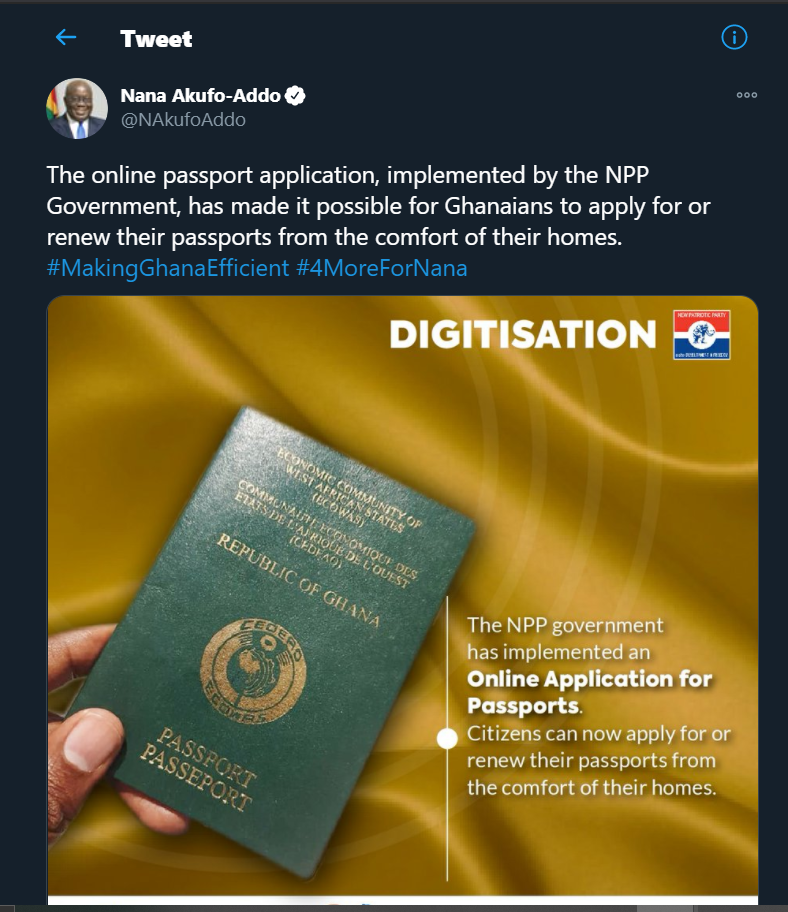
    Claim: The New Patriotic Party led administration implemented the online passport application process in Ghana.

    True. Although the previous administration piloted by the  National Democratic Congress set up and launched the online application process in December of 2016, its use was not implemented until the Akufo-Adddo led administration took office in 2017.

    Full Text:

    The New Patriotic Party, in a Twitter post from the President’s verified account, posted that their administration was responsible for implementing the online passport application in the country. 

    Image source: Twitter.com

    The post has been retweeted 2.8K times since it was posted yesterday, October 19th, 2020. 

    A well known Ghanaian celebrity, Sarkodie, has also retweeted the post, indicating appreciation and congratulations to the ruling government. 

    “…was looking forward to this…About time. Anything towards the right direction we support though there’s a lot to b fixed”, the tweet stated. 

    Sarkodie’s retweet on its own has also generated 1.4K retweets and 8.3K likes since yesterday.

    Image source: Twitter.com

    The initial post and the supported retweet has led to extensive discussion on the twitter social media platform. Some users have countered the claim made with posts that suggest that the former government, led by John Dramani Mahama, was actually the one to implement the online passport application process. 

    Twitter users, @CitizenSawaJnr, @YayraKoku and many others have outrightly called out the President on the post, claiming that the information being passed on is wrong. 

    They further indicate that the post is a blatant lie on the part of the ruling government.

    On the other hand, some, like @ChristallAndre1 and @enkaddison have commended the government for being efficient and competent and have also “thrown shade” at those making any contrary comments on the matter.

    Verification:

    Dubawa set out to clarify the issue of who did what regarding the online passport application and renewal process.

    Passport Application in Ghana.

    Until December, 2016, all applications for new Ghanian passports and renewal of already existing ones needed to be processed manually. The process involved buying the form from designated banks or the passport office and sending duly completed form to the passport office for processing. 

    Between 2014 and 2015, during the Mahama led administration from July 2012 to December 2016, the online passport application project was introduced through the National Information Technology Agency’s (NITA) pilot project which was later taken over by the Ministry of Foreign Affairs and Regional Integration.

    The system was tested successfully and launched in December, 2016 by the Minister, Hannah Tetteh.

    The move to convert to an online system for the passport application process was fueled by complaints about the long queues and the “Goro boy system” which for years frustrated citizens. 

    Present state of Passport Application In Ghana

    After phasing out the manual passport application since its launch in 2016, the online application which is now in full force came into effect on March 1st, 2020. This was announced in a press statement signed by the current Minister of Foreign Affairs and Regional Integration, Sherry Ayorkor Botchway.

    What this means is that by March 1st 2020, there can be no manual processes for acquiring or renewing passports in the country.

    Image source: Ministry of Foreign Affairs, Ghana.

    The process now involves buying an online form by selecting from a range of payment options, completing and submitting the form online and finally, selecting preferred dates for the capture of the individuals bio-data at any of the Passport Application Centers (PACs) across the country. This is done through the Ministry of information portal: passport.mfa.gov.gh.

    The online passport application system has been in effect since its launch in December 2016. But since March this year, the manual system has been completely scrapped off for the online system to take full effect.

    Conclusion:

    It can then be concluded that the online passport application process was indeed   implemented during the ruling NPP administration after the NDC lost power in 2016. 

  • Lying to the Electorates: The ‘Confessions’ of John Mahama Fact-checked

    News reports and social media claim John Mahama has confessed to telling lies during election campaigns.

    Mostly False. Although a 2016 video shows the former president making comments to the effect that some politicians tell lies during election campaign periods in order to win the support of electorates, the quotes being attributed to him are false. Furthermore, no evidence could be found to suggest the former president made the comments during his most recent tour of the Volta region.

    Full Text

    A Facebook user suggests that John Mahama, National Democratic Congress’ Presidential candidate, has “confessed” to lying during campaign periods.

    “As politicians, before the masses can accept you and endorse you, you will have to do the unthinkable. You have to go beyond what you yourself believe you can do. If you have to lie to them, you do so, and this is our way of doing things as political actors,” Mr Mahama is reported to have said.

    Image source: Facebook.com

    According to the post, John Mahama made the confession during his Volta region tour. The post did not, however, mention the exact date of the said event where this claim was made.

    This same post has been carried on some social media news platforms, generating a multitude of shares and comments and has even been posted on YouTube with 3,352 views as of June 25th, 2020.

    We look at this claim in two ways:

    1. Did John Mahama confess to telling lies during his Volta Region Tour as reported by the abcnew.com newspaper?
    2. Has Mahama ever confessed to telling lies during campaigns?

    Verification

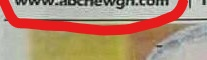
    www.abcnew.com newspaper and the ‘confessions’ of John Mahama: Did John Mahama confess to telling lies during his Volta Region Tour?

    Dubawa ran an online search for www.abcnew.com as shown in the image but found nothing. A Google Reverse Image Search on the image revealed no related photo or related content, suggesting that it may be a unique photo that has not existed prior to the claim being made.

    Also, the image with the circulating text seems to be from a newspaper with the name “www.abcnew.com” as seen in the image.

    Our search reveals that no newspaper exists by this name in Ghana.

    We, however, found abcnewsgh.com which also carried the same story on their website on their Facebook page. Although the portal did not use the same image as seen in the Facebook post, it carried the exact same text as seen in the photo.

    Dubawa tried contacting abcnewsgh.com to clarify the source of the claim but have been unable to reach the organisation. 

    Additionally,  we watched available videos of John Mahama’s recent Volta regional tours on Woezor TV, the NDC and John Mahama Facebook pages but could not find any evidence to support the claim.

    Considering who Mahama is, one would expect that such a claim, if made by him especially a few months before a major election, will be widely reported in mainstream media. However, an online search with keywords and the quote attributed to the former president all led to portals which appeared to have copied their stories from one source. No reputable mainstream media has published the said claim.

    ‘We lie during campaign’ – a confession by John Mahama? 

    Further online search into statements suggesting that John Mahama made such a claim led to the discovery of an article posted on modernghana. The article contained a video in which the former president in what seems to be his 2016 campaign tour, evidenced by the “Changing Lives, Transforming Ghana” backdrop, made some statements about politicians mixing truths and lies in the bid to win over voters. 

    The video linked to the story has been posted on Youtube with the caption, “President Mahama accepts and tells lies”. The former president could be heard making the claims transcribed below:

    Mahama: A lot of times, when it gets to election time, every political party begins to hustle and so whatever you will say to get people’s hearts to turn towards you, is what you say. And so if it’s a lie, you include it, if it’s the truth, you include it. We jumble it all together. The truth is there but we won’t say it but then we will mix it with lies.

    Dubawa found a lengthier version of the video, providing a clearer context of what the former president said during a mini-rally at Kade in the Eastern Region in 2016.

    Transcript: 0:48 – 3:37

    Mahama: “Governance is not easy. It is something that demands patience. It demands wisdom, experience and strength. A lot of times, when someone is doing something, and someone is standing by, if you listen to the bystander speak, you would think the person standing by is capable of doing the work better than the person who is actually doing the work. That is why the white man said, “it is easier said than done.” If you go to a stadium, you will think that the spectators can play better than Adre Ayew and Asamoah Gyan because you will hear them say, they should have played it like this. If it was me, I would play it like this. And so as for talk, it’s cheap. Those of us doing the work, what is important is that we be focused and just continue to do the work the people of Ghana voted us to do. Recently, our brothers said that the NHIS has run down. So what we are saying is that, if NHIS is run down, why is it that you the NPP are making NHIS cards for your people? If the work is run down, then what is the use of the card? Why are you making these NHIS cards for your people at no cost? But it is run down, so stop giving out the cards then. What has happened is that the NHIS has expanded. When we started in 2005, by 2008, the people who went to the hospital were only 9 million. Last year in 2015, the people who went to the hospital were 29 million. A lot of times, when it gets to election time, every political party begins to hustle and so whatever you will say to get people’s hearts to turn towards you, is what you say. And so if it’s a lie, you include it, if it’s the truth, you include it. We jumble it all together. The truth is there but we won’t say it but then we will mix it with lies. As for us, we know that God who is above is the one who knows what is true and what is a lie,” John Mahama said.

    In the transcript, Mahama suggests during a 2016 campaign tour, that a bid to win over electorates during elections, some politicians tell lies, some truths and half-truths. 

  • False! John Mahama did not ‘spray’ cash to supporters in Berekum

    Social media users claim Former President John Mahama shared cash to party supporters during a campaign tour in Berekum. 

    While one of the videos used as the basis for the claim is a 2016 campaign video, the others showed him sharing an item that is black with white straps and a white towel but not money. 

    Full text

    Many social media users claim that Ghana’s former president and flagbearer of the National Democratic Congress (NDC) in the 2020 elections, John Dramani Mahama, has been captured on video distributing cash to some party supporters during a campaign tour in Berekum in the Bono region. 

    The claims have been made on pro-government Facebook pages including NPP projects bureau and on Twitter. The posts have gained more than 8,000 views. 

    The claims are accompanied by a video that shows the former president standing out of a vehicle’s sunroof while the vehicle and others in the convoy are mobbed by several individuals clad in colours of the NDC; red, white, green and black. 

    Some news portals such as GhPage also indicated that the presidential candidate distributed money to supporters: “The NDC Presidential candidate John Dramani Mahama in the course of his campaign tour has visited Berekum in the Bono Region today 28th September 2020. John Mahama in the middle of his street cavalcade pulled wads of cash from his car and gave it to some of the crowded party adherents on the streets.” 

    The official Twitter page of the NDC has, through a statement signed by James Agyenim-Boateng, the party’s campaign spokesperson, denied the claims of John Mahama distributing money. 

    “The said reports are untrue and completely borne out of the desperate and fertile imaginations of the author(s)… As it has become typical of Mr. Mahama on his campaign tour of the regions, he shares JOHN MAHAMA 2020 branded nose masks to people…,” the NDC’s statement indicated. 

    We investigated the claims. 

    Verification

    We have seen two different videos making the rounds on social media, all making the claim that the NDC flagbearer was sharing money to party supporters during his campaign tour. 

    We fact-checked each of the videos below: 

    Video 1, shared on the NPP Projects Bureau Facebook page on 28th September 2020 with the caption “This is video of John Mahama sharing Money in Berekum, where the Nose Masks, Apron and T-shirts they claimed to be sharing not money? December 7 will expose you!!” 

    A reverse image search conducted on some frames of the video showed that it is an old video of Mahama on a campaign. The results matched a similar video uploaded by Joy News to their YouTube channel on September 21, 2016. 

    In both videos, John Mahama is seen in a black polo shirt and a white baseball cap. The background visuals were the same. 

    A google search on the subject showed news reports pointing to the video being taken at Abossey Okai in Accra in 2016.

    Given the evidence above, we find the NPP Projects Bureau’s claim that Video 1 was evidence of John Mahama sharing money in Berekum in 2020 to be false.  

    Video 2

    Shared by a twitter user who is prone to sharing Pro-NPP content on his timeline, the second video shows John Mahama on his recent Berekum visit. The video is accompanied with the text; “John Mahama sharing money on his campaign tour in Berekum, Bono Region. Is Government Official One that desperate? Votes buying come inside? #RejectConMahama”.

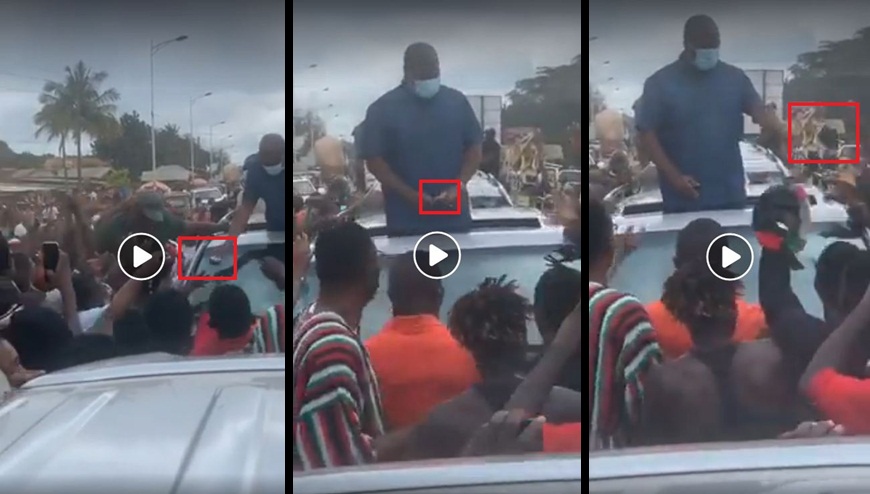
    The NDC presidential candidate is seen standing out of the sunroof of his vehicle in a deep blue shirt and with many of his followers surrounding the vehicle. Although the video is dark and not very clear, it is noticeable that he does at a point hand out something to some people. 

    At exactly 16 seconds into the 42-second video, John Mahama is seen taking and handing out the item to someone around the front-side of the vehicle and later tossing another into the crown on his left.

    We were able to find a fuller version of the same video shared by a Facebook user, Enoch Kofi Nyarkoh with the caption: “John Mahama sharing money on his campaign tour in Berekum..Asem no aye kese oooo.” That video has been watched more than 9,000 times. 

    Analyzing the video in slow motion and in reverse motion between 19 seconds and 25 seconds, we found that the items handed out to the supporters were black with a touch of white. 

    The first frame showed the NDC flagbearer slide the item down the vehicle windscreen. The second frame shows him holding the black item while the third frame gives a better view of the item after he tossed it into the crowd. 

    The nature of the item and how it was tossed does not prove to be money. 

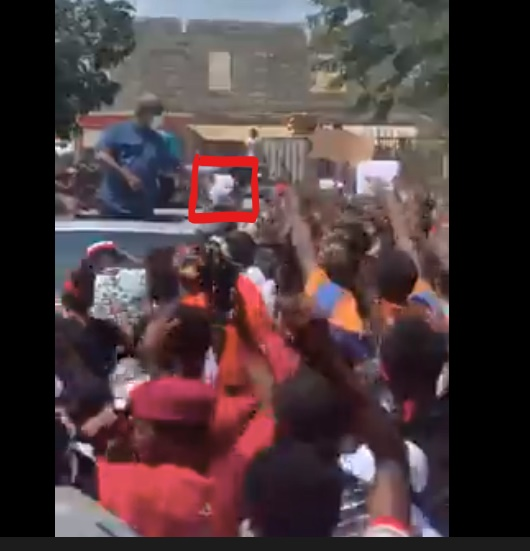
    A further online search of videos on Mahama’s Berekum tour revealed another video originally shared from a live video taken by NDC’s Campaign Spokesperson, James Agyenim Boateng’s on the Berekum tour.

    At the 10 seconds mark of the video, the white piece of cloth which looked like a little towel was tossed into the crowd by the NDC flagbearer. 

    The object seen in no way appears to be money as claimed. 

    Conclusion

    Based on the evidence above, we conclude that the item John Mahama gave to party supporters on his tour of Berekum is not money as claimed.

    The reporter, Jonas Nyabor, produced this fact-check under the auspices of the Dubawa 2020 Fellowship in partnership with Citinewsroom to facilitate the ethos of “truth” in journalism and to enhance media literacy in the country.

Back to top button