Claim: Social media users are claiming that Alex Telles’ goal against Villareal has been voted the best goal of the 2021-22 season of the UEFA Champions League.
Verdict: The claim is false. Thiago Alcantara’s goal for Liverpool against Porto won the poll.
Full text
Some social media users have claimed Alex Telles’ goal for Manchester United against Villareal during the Group Stage of the just ended UEFA Champions League season has been voted as the best goal of the competition.
A number of these posts, which have been sighted by DUBAWA, were made by pages with thousands of followers.
Another page where the claim has been made is ‘Glory Glory Man United – a page with 44,500 followers. The post has attracted 45K reactions, 461 comments, and 156 shares.
Several other users have made the same claim and this can be found here, here, here, and here.
A page on Facebook making the claim
Verification
To verify the claim, we relied on official information from uefa.com, the official website of the Union of European Football Associations (UEFA).
“The Liverpool midfielder’s sweetly struck effort against Porto at Anfield has won the fan vote for goal of the 2021/22 UEFA Champions League season. Thiago Alcántara’s sweetly struck piledriver for Liverpool against Porto on Matchday 5 has been voted goal of the 2021/22 UEFA Champions League in a fan poll,” the story reads.
Manchester United have also confirmed this. In a publication on its website, the club said that “Alex Telles has finished third in the voting for UEFA’s 2021/22 Champions League Goal of the Tournament award.”
Conclusion
Alex Telles’ goal against Villareal during the Group stage of the 2021/22 UEFA Champions League has not been voted the best goal of the campaign. Liverpool’s Thiago Alcantara’s goal won the poll.
Claim: Viral social media posts claimZimbabweans are selling their toes for money.
Zimbabwean Deputy Information Minister, Kindness Paradza, says investigations show no such thing is happening in the country. Reports also indicate that David Kaseke, the Zimbabwean who first posted the claim, is facing criminal nuisance charges for making and circulating same.
Full Text
Social media has been set ablaze after pictures and videos went viral indicating that Zimbabweans are selling their toes for money.
The claim is widespread in other countries and has gained popularity in the Ghanaian space as well.
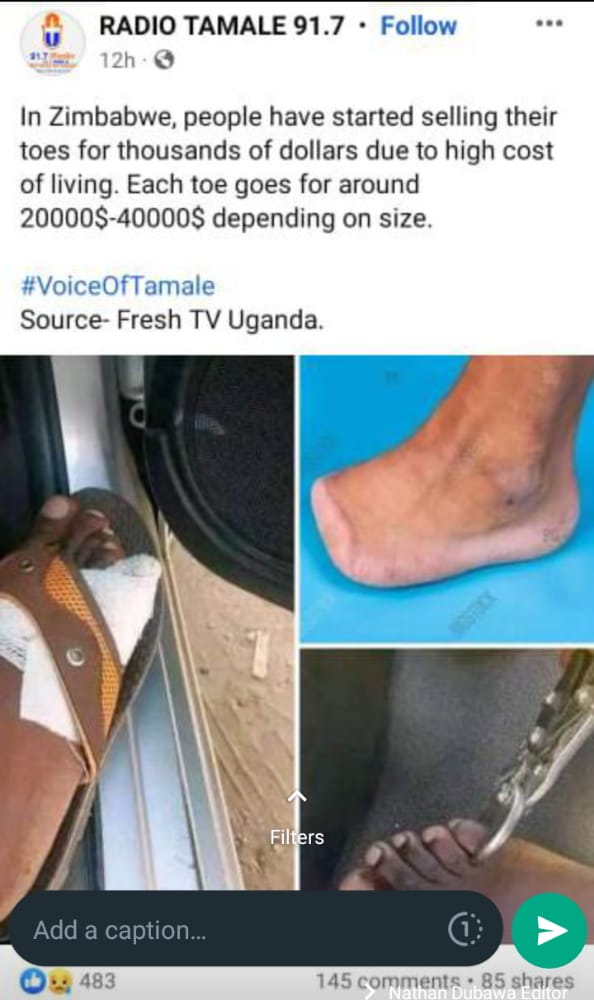
One of the most recent is a post from Radio Tamale 91.7, a radio station in Tamale in the Northern Region shared on its Facebook page. The post has received over 800 likes and has been shared over 200 times.
Source: Facebook
“In Zimbabwe, people have started selling their toes for thousands of dollars due to high cost of living. Each toe goes for around $20000-$40000 depending on size,” the post reads.
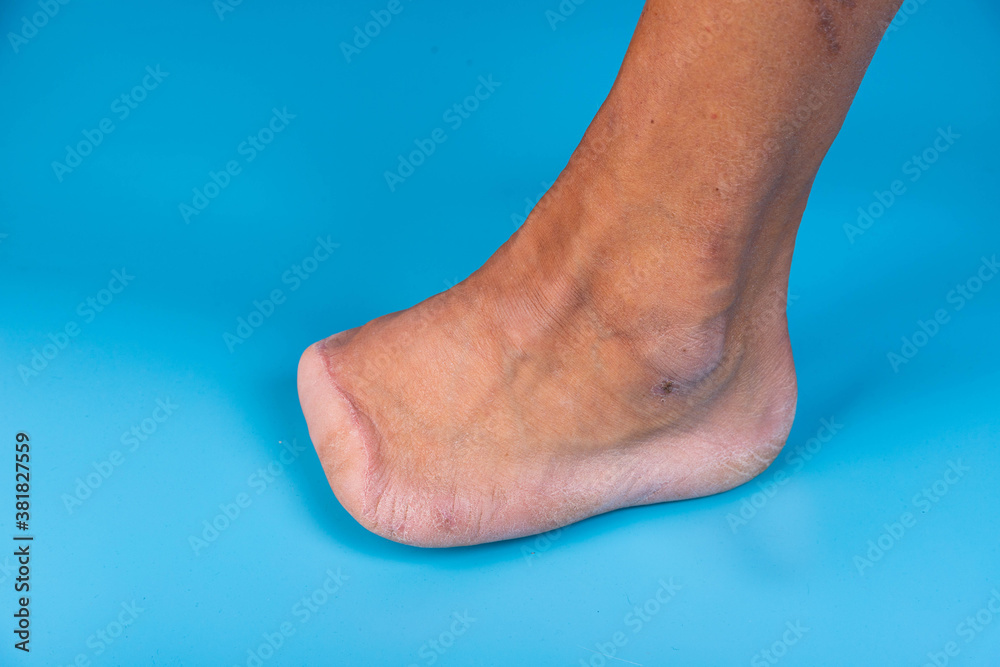
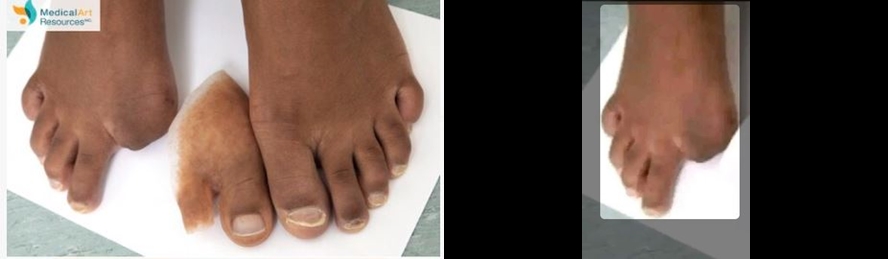
Original Image (as seen on here) Edited Image (as seen here)
A Zimbabwean government official has debunked the claim. In a report published on June 2, 2022, by The Herald, which describes itself as one of Zimbabwe’s leading newspapers, the Zimbabwean Deputy Information Minister Kindness Paradza, is quoted to have labelled the claim as false.
“As Government we did research on this issue and we realised it is false. These are social media reports aimed at tarnishing the image of the country,” said Deputy Minister is quoted to have said.
The newspaper further reported on June 7 that a cellphone dealer at Ximex Mall in Harare, David Kaseke, has been charged with criminal nuisance for making the viral claim and is expected to appear in court.
Conclusion
There is no evidence that Zimbabweans are selling their digits.
Claim: A Facebook user claims the Ghanian government has introduced uniforms for its school teachers.
The claim that the government of Ghana has introduced uniforms for its school teachers is false. The Public Relations Officer for the Ghana Ministry of Education and the Spokesperson, Ghana Ministry of Education, both confirmed that the information is false.
Full Text
For reasons such as equality, safety and sense of belonging, the concept of school uniform among primary and secondary schools in Africa has come to stay. Uniforms are the clothing students are required to wear at school. Schools often have specific styles and colours, “to identify students as attending a particular institution.”
Unlike students, school teachers in Africa are, however, rarely seen wearing school uniforms. Rather, they adopt corporate dresses as their dress code.
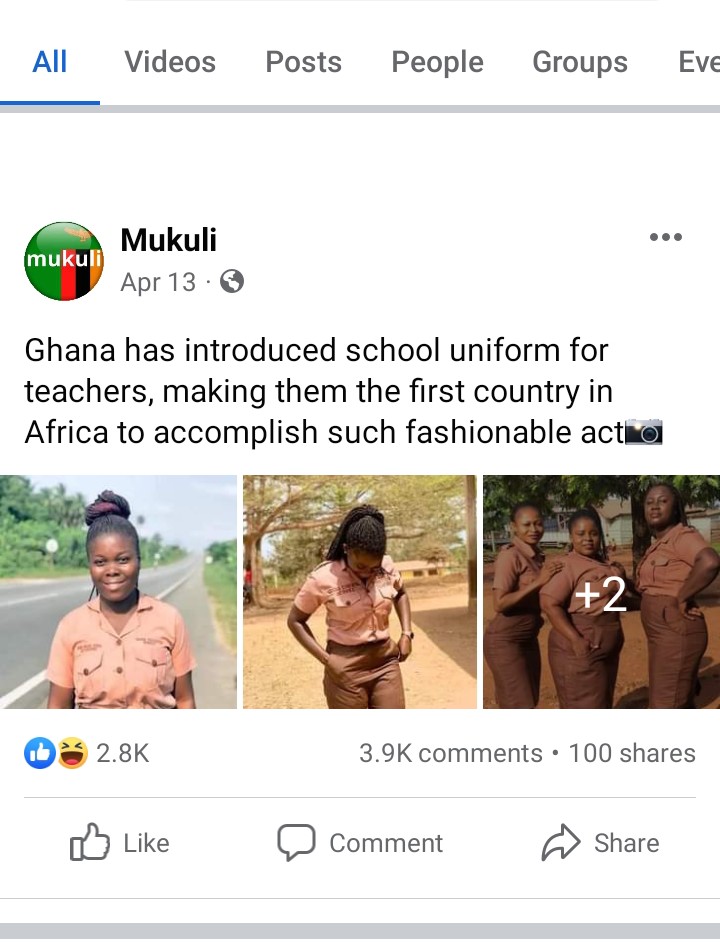
This claim surprisingly indicates that the Ghana government has implemented the wearing of school uniforms by teachers. The post was shared by this Facebook user. The post, accompanied by the post are pictures of some women and a man kitted in dull peach-coloured shirts and deep brown skirts and trousers, went viral and even resurfaced on Twitter. The chest pocket of the shirts reads ‘Ghana Education Service.’
The post, which has been widely shared and retweeted, has also caused controversial debates among users who saw the uniform as “unacceptable” and those who regarded it as ‘a welcomed development.’
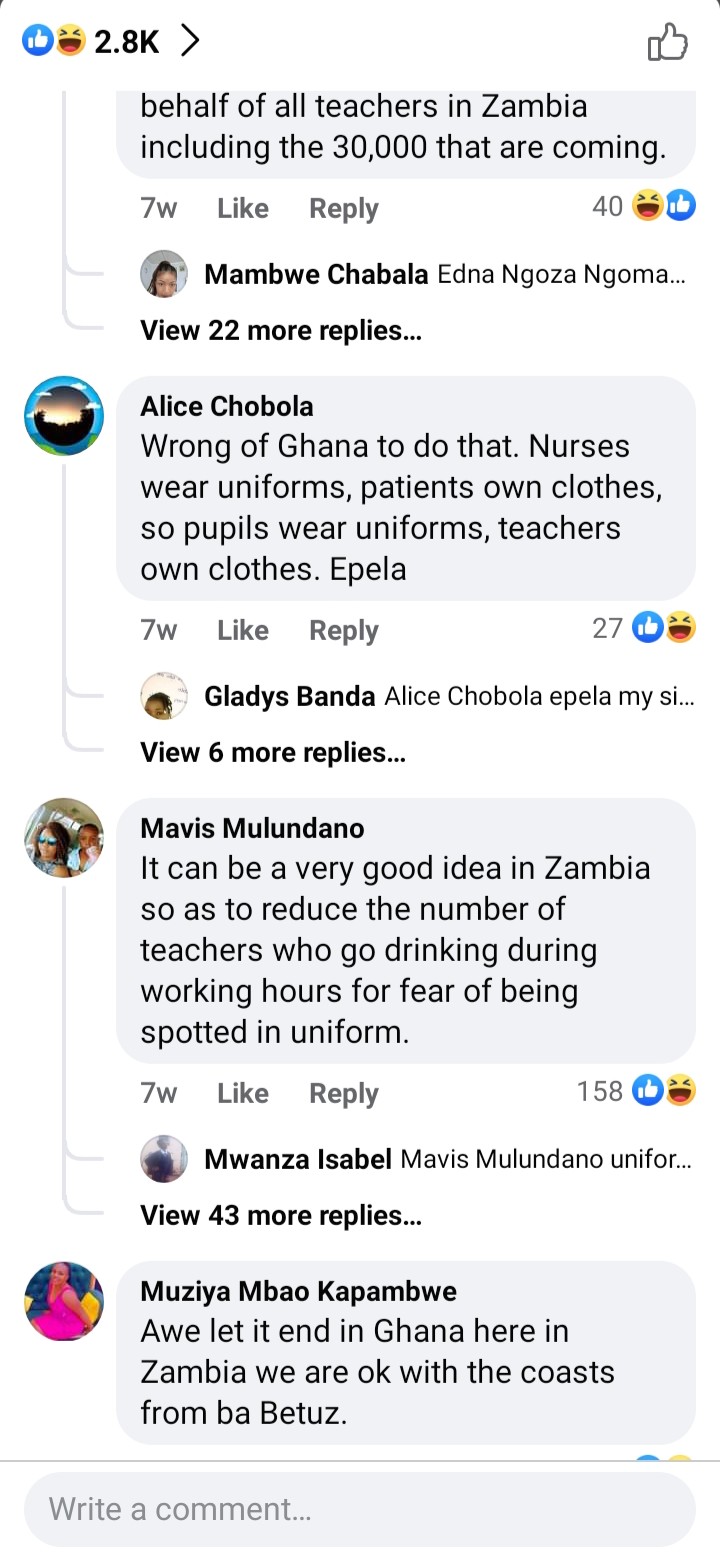
Reacting to the claim, Alice Chobola, a Facebook user, condemned the government’s act, saying it was not right for teachers to wear uniforms.
She wrote: “Wrong of Ghana to do that. Nurses wear uniforms, patients own clothes, so pupils wear uniforms, teachers own clothes, Epela.”
However, unlike Alice, Mavis Mulundano said introducing school uniforms to teachers will curb secret activities performed by them during school hours.
She wrote, “It can be a very good idea in Zambia so as to reduce the number of teachers who go drinking during working hours for fear of being spotted in uniform.”
One of the Facebook posts with over 2k likes, over 3k comments and 100 sharesA fragment of the many comments
It is due to this virality that DUBAWA decided to conduct a fact check.
Verification
DUBAWA first conducted a Google keyword search and discovered that the claim has also been published by this blog, this blog, and this blog. However, it was not reported by any credible news platform.
DUBAWA then contacted Cassandra Twum, the Public Relations Officer for Ghana Education Service. Bluntly but clearly, she discredited the claim, saying:
“Oh but this is an old fake story. Disregard! not true.”
Furthermore, DUBAWA also spoke with Kwasi Kwarteng, the Spokesperson of Ghana Ministry of Education who also debunked the news, saying in a WhatsApp chat:
“The Ghana Education Service has not approved of any uniform/attire for its teachers.”
Conclusion
The Public Relations Officer for Ghana Ministry of Education and the Spokesperson, Ghana Ministry of Education, have debunked the news. The circulating claim that the Ghana government asked its teachers to wear uniforms to work is, therefore, false.
Personnel from the Police Criminal Investigative Department (CID) attached to Ghana’s Food and Drugs Authority (FDA) have confiscated on Thursday two laptops and two desktop computers belonging to managers of Imperial Logistics, owners of Fareast Mercantile.
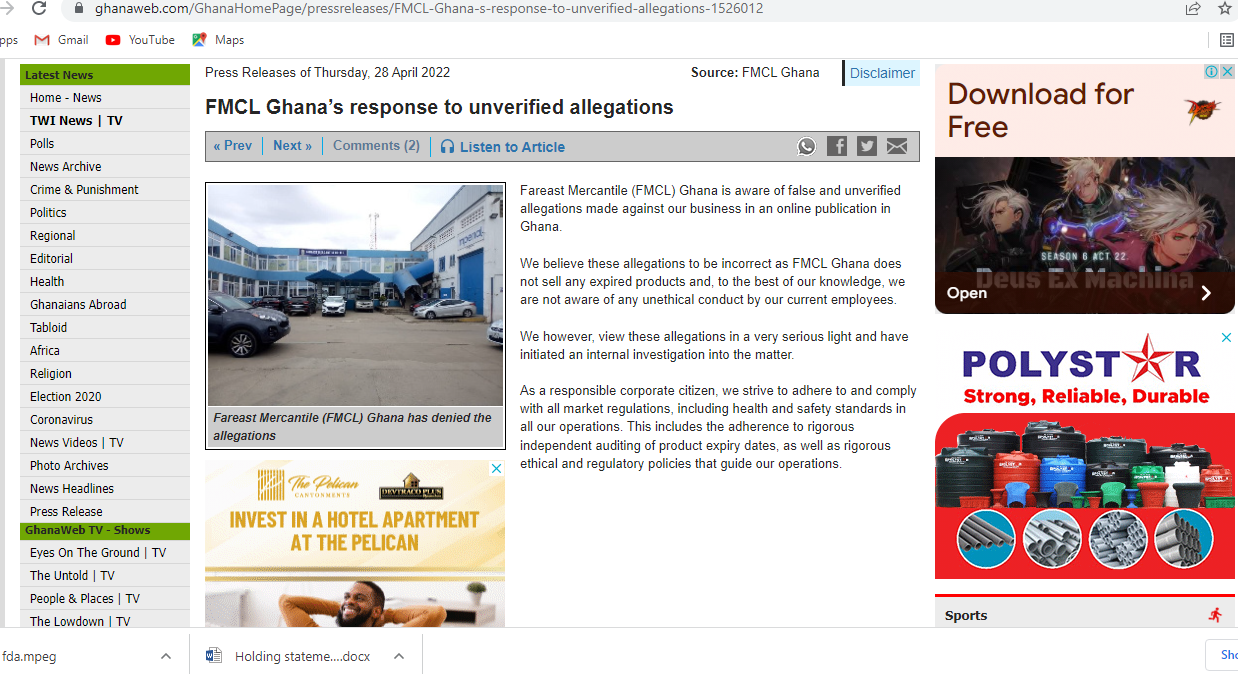
The confiscation is part of an inquiry into DUBAWA’s “Consuming Trash” investigation in which managers of Fareast Mercantile, together with their ‘clients’ at Accra Central Business District, are suspected to be selling expired products to consumers.
The confiscation of the machines is also to preserve and protect the sanctity of potential evidence that may be on the computers. With a court order, the police and the FDA can access information on those machines to facilitate investigation into what could potentially be one of the biggest expired food saga with its attendant public health crisis.
The owners of the machines, including Sharab Sharma, Logistics and Supply Chain Manager, Michael Bassaw, Warehouse Supervisor, have also been invited to the FDA to assist with investigations.
Background
Months of investigations by DUBAWA have uncovered what appears to be a deliberate company strategy to sell expired products to unsuspecting consumers.
Intercepted email conversations, part of which have already been published by DUBAWA, show top managers of the company including the Acting General Manager, Sales (Food), Rayul Kashyap; head of Finance at Fareast Mercantile, Aney Mate; the Logistics and Supply Chain Manager, Saurabh Sharma; and Manager for Sales (Non-food), Raja Mohammed, have been fixing prices and ordering the sale of damaged and expired products, consumables and non consumables, that ought to have been trashed under strict Food and Drugs Authority guidelines.
Before his arrest though, he had successfully purchased truckloads of expired non-consumables including assorted types of Dettol, Njoi soap, Jennifer’s floral anti-bacterial wipes, Enchanteur perfumed HBL, Airwick, Mortein fly and mosquito killer insecticide, on March 17, 2022 and December 17, 2021, all of which DUBAWA tracked by mail and with supporting video and pictorial evidence.
In a casual conversation at the police CID, which DUBAWA has on record, Sarpong admitted selling three months old expired products and has been engaging in the business for eight years.
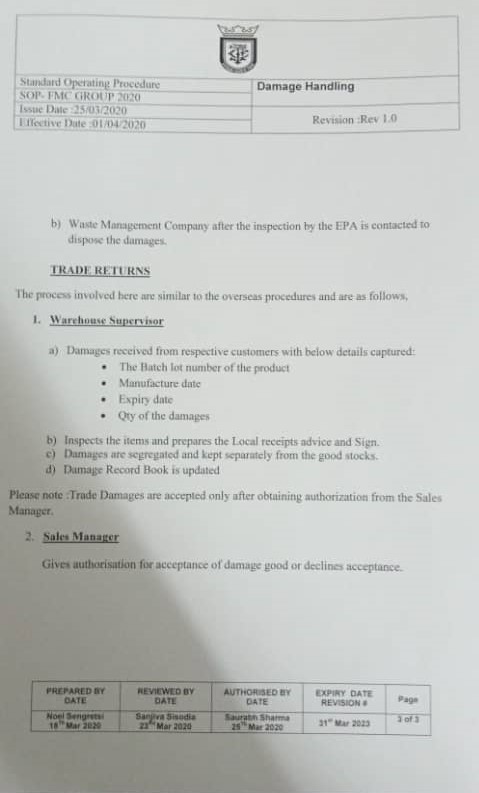
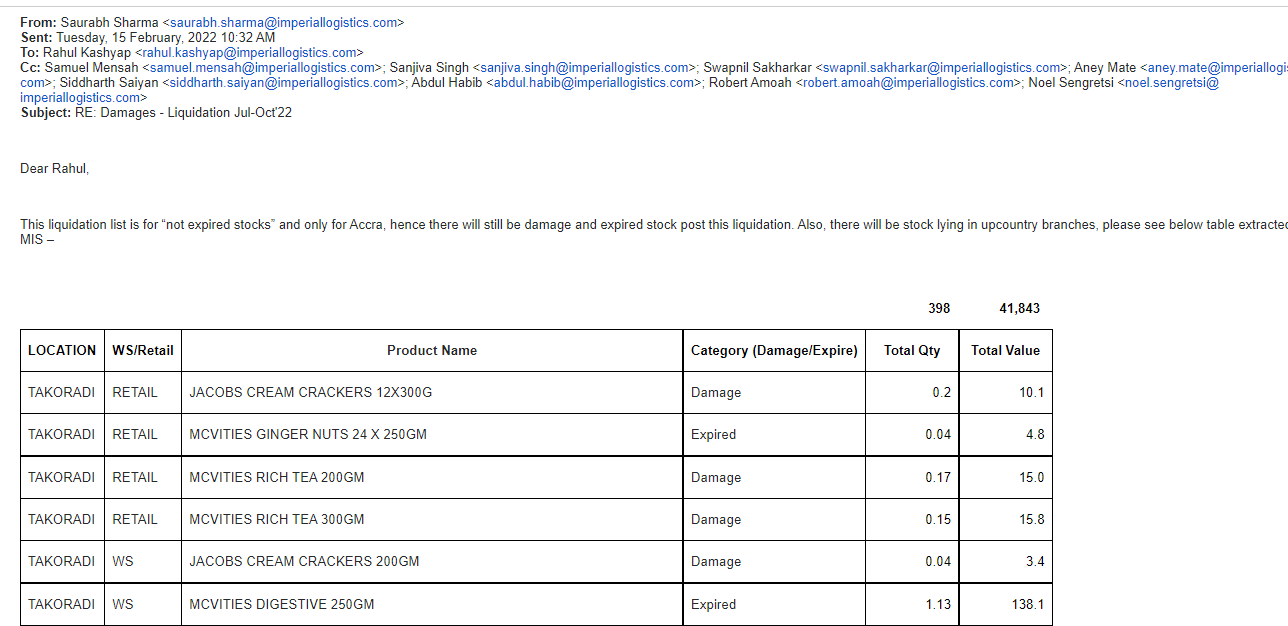
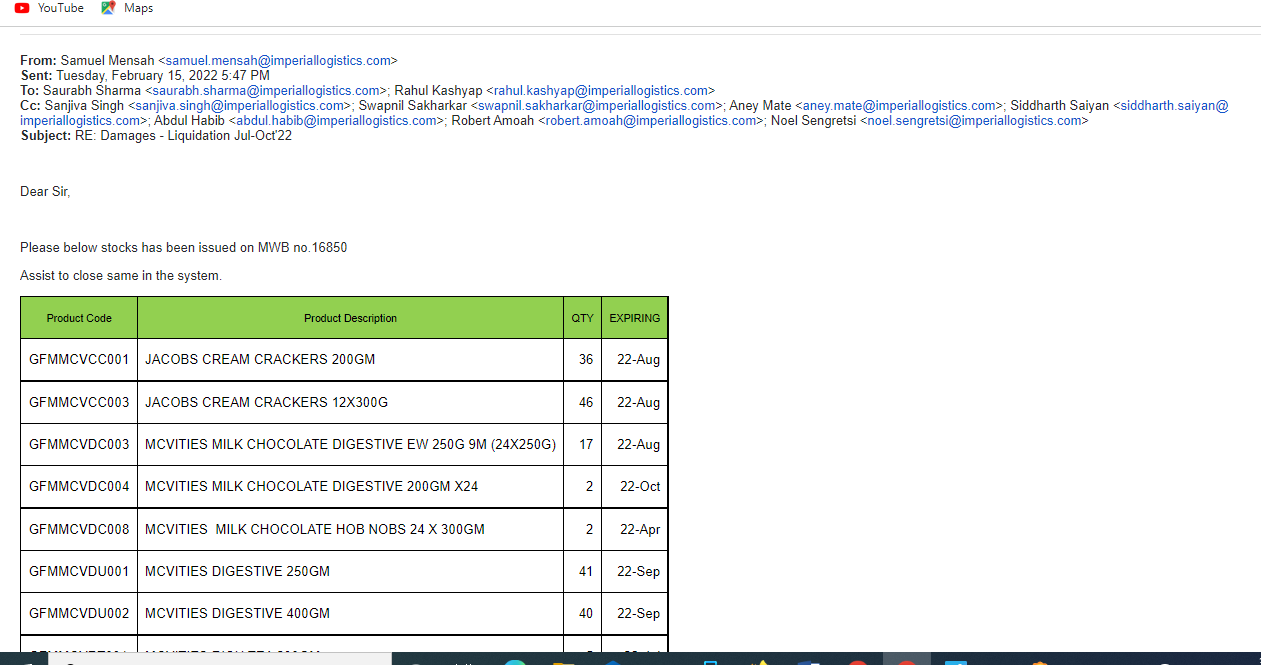
As promised to share in Part One of this investigation, DUBAWA has in its custody a March 2022 email conversation with the subject “Damages-Liquidation Jul-Oct 2022” and what top management members of the company did with those damaged products. DUBAWA also has in its possession portions of Fareast Mercantile’s own Standard Operating Procedures (SOP) issued on March 25, 2020 with effective date being 01/04/2020. The SOP specifies what should be done with damaged products. For the avoidance of doubt, the SOP states that damaged products, like expired products, must be QUARANTINED, and destroyed after alerting the appropriate statutory authorities.
Again, there is also a globally acceptable warehousing principle which frowns on the sale and distribution of products that will expire within six months.
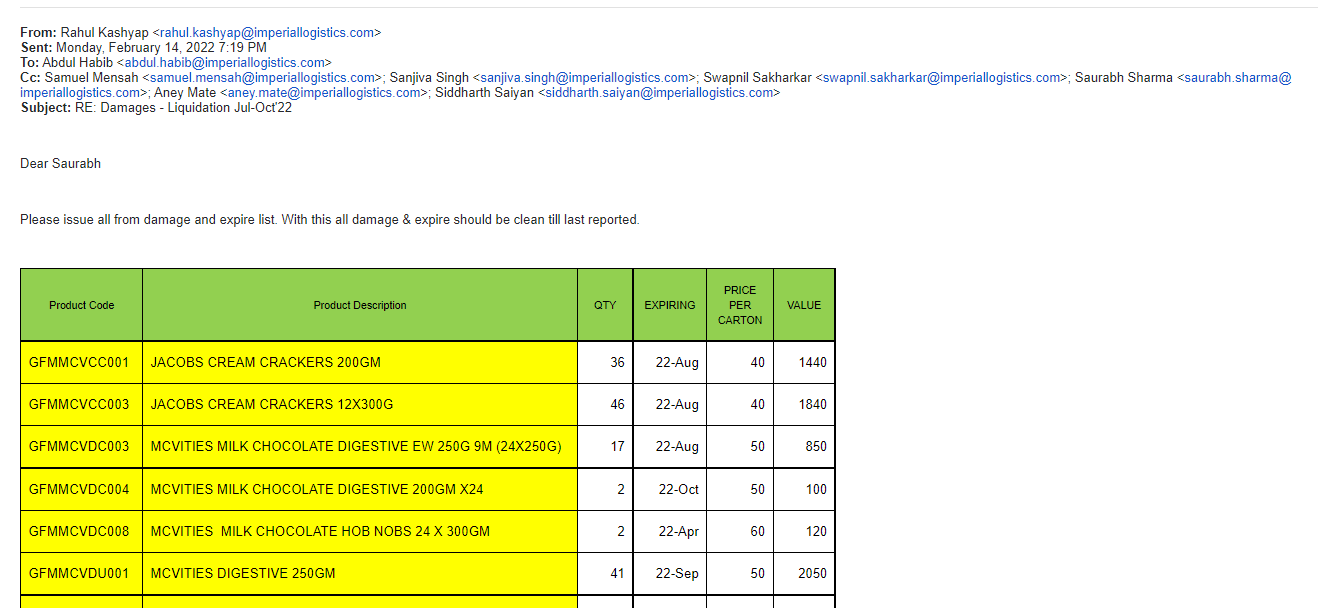
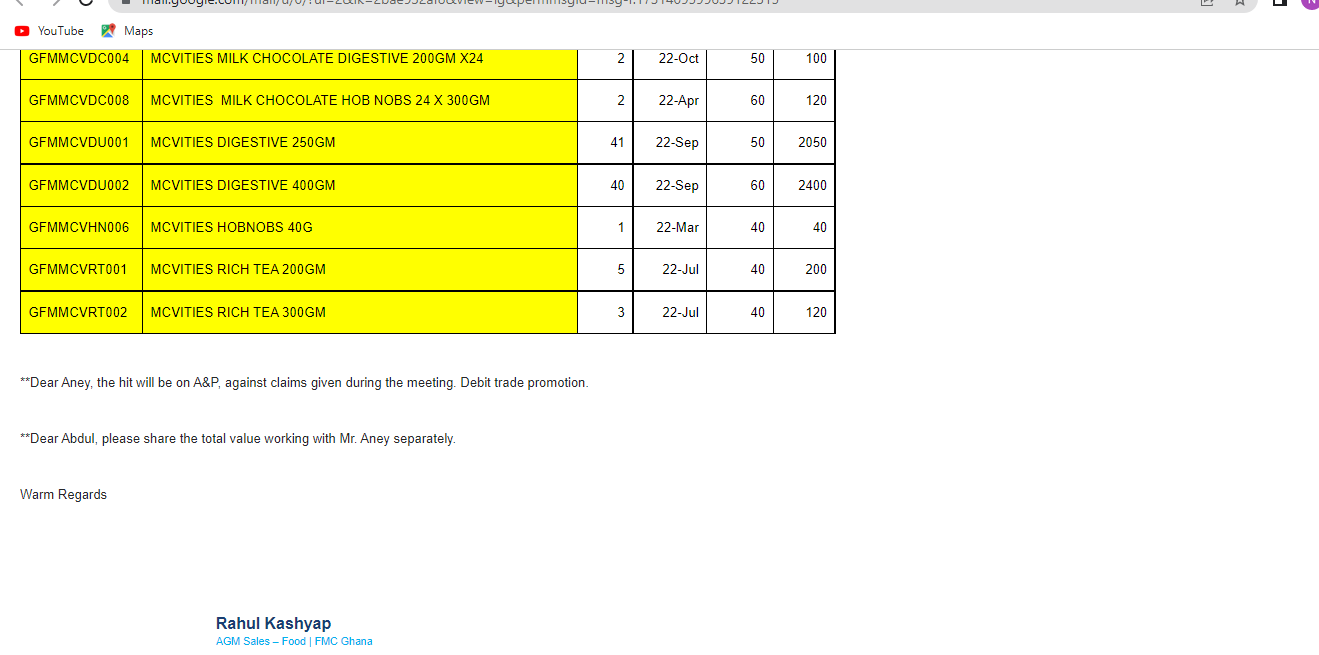
Despite the impressive Fareast SOP on paper, our investigation reveals the company does not observe what is contained in the document. Additional evidence shows that on February 14, 2022, Kashyap, instructed Saurabh to issue some ‘damage and expired list.’
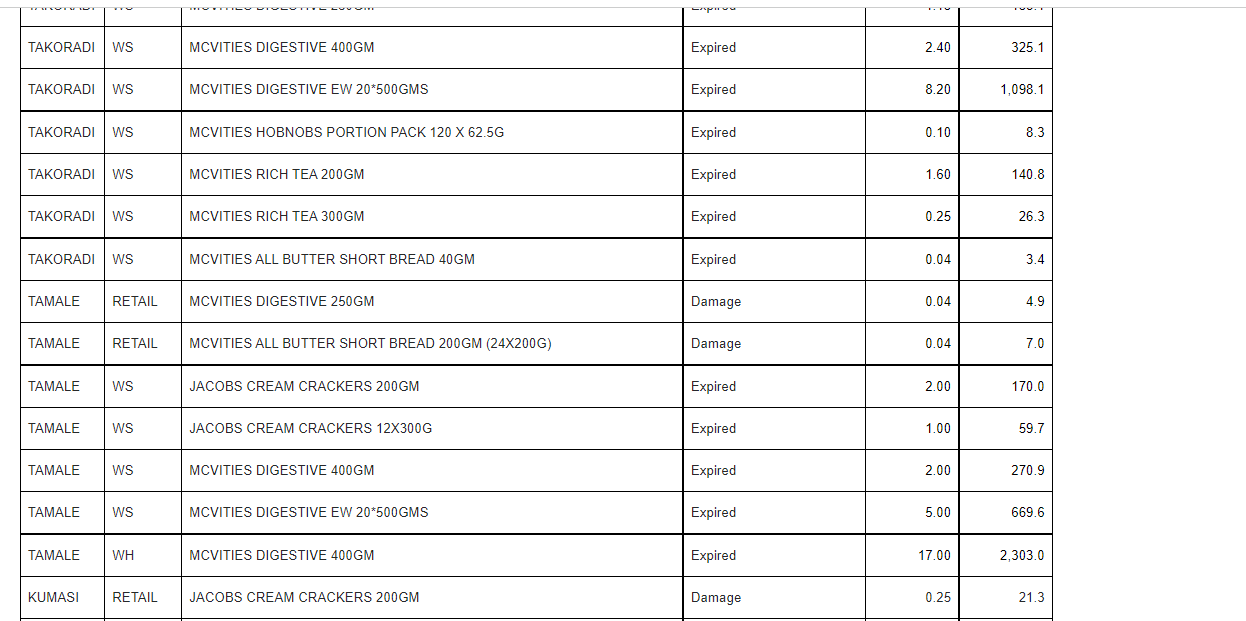
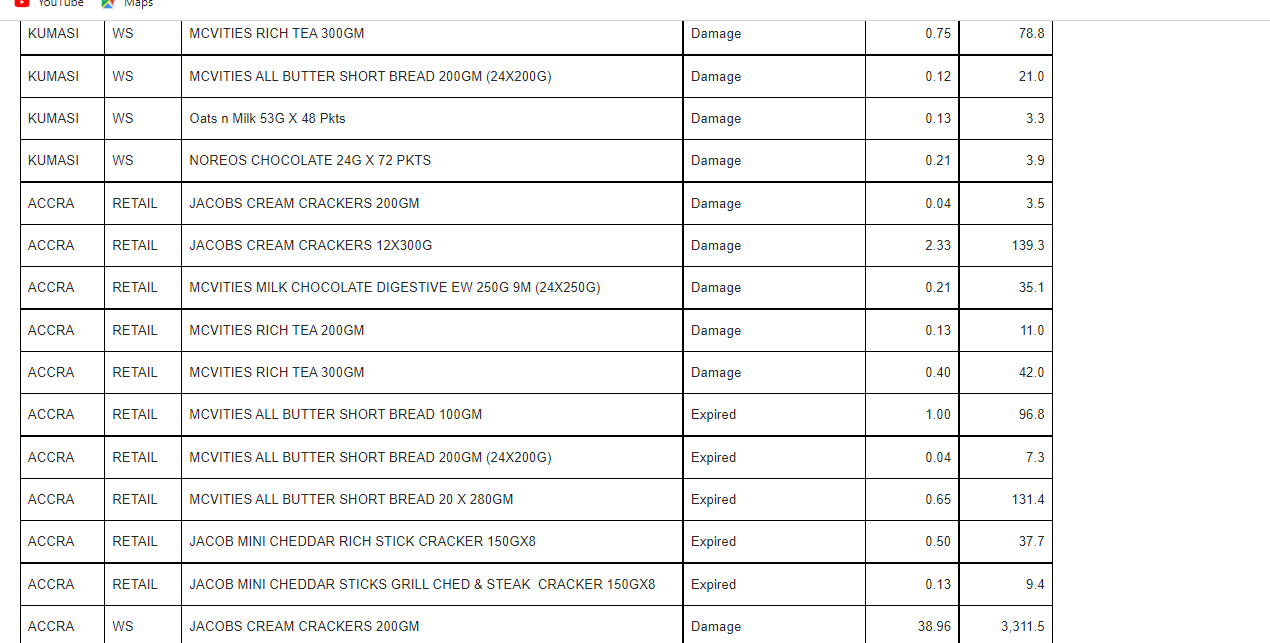
The following day, Saurabh responded with a tall list of damaged and expired goods in all four Fareast warehouses across the regions of Ghana which he said would be “liquidated.”
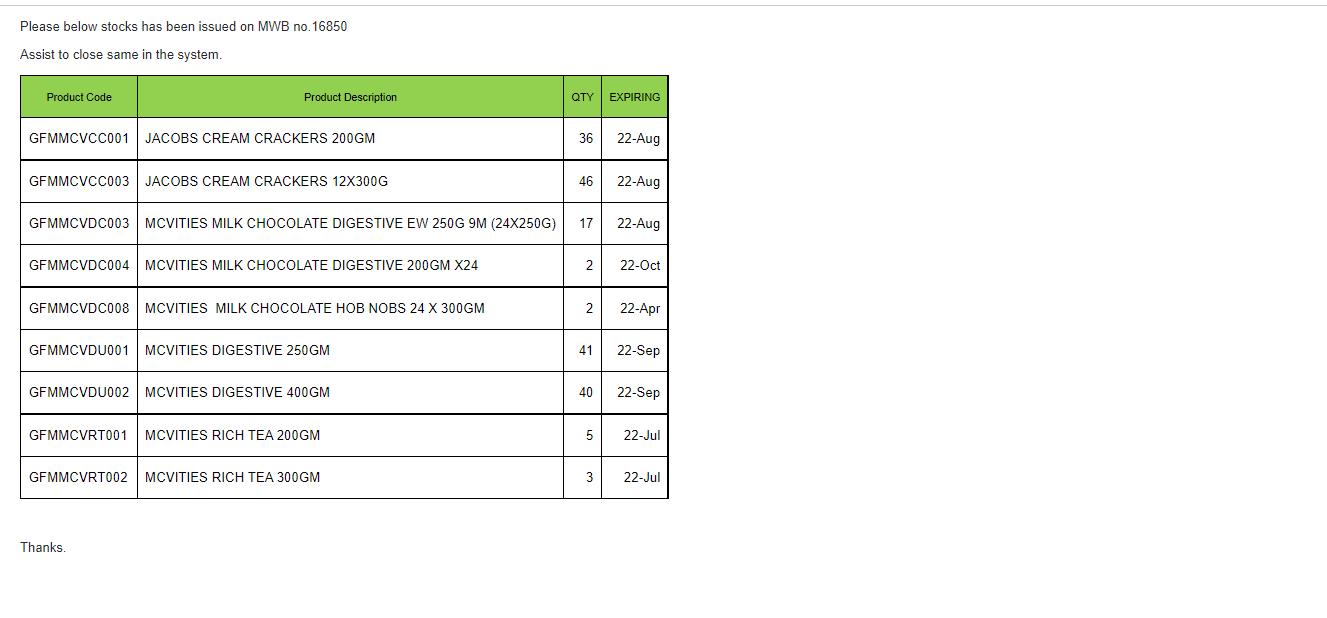
After the long list of damaged and expired goods that should be “liquidated,” Samuel Mensah gave an idea what it means to liquidate damaged and expired goods in his February 15 mail sent to Shaurabh. In that mail, a picture of which is shown below, Mensah said the same stock which Rayuh had described as damaged (a picture of which is shown above in yellow) had been issued on a Manual Way Bill (MWB) No 16850. As we have learnt from part one of this investigation, this MWB is an agent that buys expired goods.
Above is the full list of the products sent by Samuel Mensah all of which have been sold contrary to the company’s own SOP and against the FDA guidelines on dealing with damaged products which would expire within six months.
This evidence and more have all been presented to the FDA for further investigations.
FDA Promise
The FDA in an interview with DUBAWA reiterated its commitment to investigate the matter thoroughly and apply the appropriate sanctions that would protect the interest of consumers.
The Director of Legal and Corporate Affairs at the FDA, Mr Joseph Yaw-Bernie Bennie, stated that an expired product, whether consumable or not, is not fit for purpose and anyone who sells the same, has fallen foul of the law.
“Most products that the FDA regulates might contain chemicals. These chemicals might break down into something else. It is the reason why manufacturers put expiry dates or best before use dates on their products and therefore you cannot guarantee that the health and safety of the consumer can be preserved or not negatively affected by the use of expired products. Whether they are food or not food items, it is expected that once it expires, it should not be used,” he said.
He will not give details of the extent of investigations into the Fareast Mercantile saga, except to say that the FDA by law has the power to prosecute, sanction, fine and withdraw licenses. He insists the FDA will weigh the evidence and provide a commensurate sanction.
He charged Ghanaians to provide information about any wrong doing so that the FDA could timeously act upon the same.
DUBAWA will follow this investigation by the FDA to its logical conclusion in the interest of public health.
Claim: General Secretary of the New Patriotic Party, John Boadu, has claimed that about 90% of ruling governments lost their incumbency in 2020.
False. Checks by DUBAWA indicate that as many as 30 Presidential elections were held in 2020 globally. Out of these elections, 20 representing 66.6% of winners were candidates from the ruling party.
Full story
General Secretary of the ruling New Patriotic Party, John Boadu, has said that his party is among a few to have been re-elected in presidential elections in the heat of the COVID 19 pandemic.
According to him, about 90 percent of ruling parties suffered defeat in their respective countries when elections were held in the year 2020, the year of the COVID-19 pandemic.
Speaking on Accra-based Peace FM Akan language, the politician said that the re-election of the New Patriotic Party in 2020 was a testament to President Akufo-Addo’s efficient management of the economy in the midst of the pandemic.
“All political parties in the world, almost about 90 percent of them, in the year of COVID, when they contested, they lost it. Look at [Donald] Trump, before COVID did you see the things he was doing? But the management of COVID did not help him and so he lost. Look at Angela Merkel’s party, they lost it. I can cite a lot of examples. The same thing happened in India. [For] Ghana, because of what President Akufo-Addo did, because of his management of the economy, in the year of elections, during COVID, we won our election,” John Boadu said in Akan which has been translated into english..
His claim can be found between minutes 1:22 to 2:22 of a video uploaded on the Despite Media channel on Youtube.
The video, uploaded on April 21, has since attracted over 500 views and a number of comments.
Article 56 of India’s constitution (Page 58) states that “the President shall hold office for a term of five years from the date on which he enters upon his office”
This means that India is expected to go to the polls again in 2022 to elect a new President.
In view of this, John Boadu is wrong to cite India among countries where the ruling party lost an election during the year of COVID. The country’s last election was held in 2017, which is about two years before the outbreak of COVID-19.
Again, DUBAWA came across 30 countries, including Ghana, that held elections to elect a leader for their respective governments in 2020.
Relying on reports from credible media organizations, DUBAWA noticed that, like Ghana, 20 countries out of the 30 identified, had the ruling party retaining power.
It cannot, therefore, be said that 90% of incumbent governments lost power in the heat of the global pandemic in 2020.
Conclusion
John Boadu’s claim that as many as 90% of ruling parties across the globe lost in their re-election bid to lead their respective countries is false.
Out of 30 countries where presidential elections were held, DUBAWA confirmed that the ruling party secured re-election victory in 20 of those elections.
Claim: TikTok user claims Plan ‘B’ pills and emergency contraceptives do not work for women over a 155 lbs weight.
Mostly True. An Obstetrician Gynaecologist and a lecturer at the University of Ghana Medical School, Dr Titus Beyuo, has also confirmed that women with high Body Mass Index (BMI) risk getting pregnant even when they use the emergency contraceptives. A World Health Organisation meta-analysis has also found that women with BMI more than 30kg/m² can be pregnant after taking emergency pills.
Full Text
Some social media users on TikTok have claimed that emergency contraceptives are less effective in women who have a higher weight or body mass index (BMI) above 30 kg/m².
A TikTok user, @brittniemars, wrote on a video posted on her timeline that “I took a Plan ‘B’ pill 10 hours after sex with my ex (at the time) and still got pregnant with twins and later found out Plan ‘B’ loses its effectiveness if you’re over 155lbs.”
Her post, at the time of writing this report, had received 12.3k reactions from some of her followers.
While some shared their experiences affirming the claim, others had contrary opinions, insisting that despite their weight, the contraceptives worked for them.
These have generated conversations and debates over whether or not emergency contraceptives are reliable in heavier women.
Image: Screenshot of post
Verification
A study conducted to assess the effectiveness of emergency contraceptives in heavier women found that there are significant drops in the efficacy of the drugs in women with higher weight as compared to their colleagues who had lesser weight. Out of the 1731 population, 38 women were reported pregnant after the trial.
“Women for whom levonorgestrel was not effective in preventing pregnancy had a significantly higher mean body weight and BMI than women who did not become pregnant (76.7 vs. 66.4 kg, p<.0001; 28.1 vs. 24.6 kg/m2, p<.0001).
“The estimated pregnancy rate increased significantly from 1.4% [95% confidence interval (CI): 0.5%–3.0%] among the group of women weighing 65–75 kg to 6.4% (95% CI: 3.1%–11.5%) and 5.7% (95% CI: 2.9%–10.0%) in the 75–85 kg and > 85 kg groups, respectively,” portions of the research read.
Similarly, a 2011 research found that “risk of pregnancy was more than threefold for obese women compared with women with normal body mass index.” This study also corroborates the assertions made by the TikTok users about the medications’ effectiveness relative to weight. It means for women who weigh 155 pounds or more, ‘morning-after’ pills may not help them avoid a pregnancy.
In a conversation with Dubawa, a Consultant Obstetrician Gynaecologist, Dr Titus Beyuo, affirmed the claim and added that there are studies which have confirmed that women whose body mass index (BMI) are more that 30kg/m² have a higher risk of pregnancy compared with women whose BMI are below 25kg/m².
He, however, noted that the reduced effectiveness does not mean the emergency contraceptives do not work entirely, adding that sometimes pharmacists and doctors should calculate the weights of patients to determine the exact dose one may need for the drug to function well in their system.
The Ghana Medical Association (GMA) General Secretary explained that “if you use the BMI, people with a very high BMI have some risk of failure; the failure rate may be higher but it doesn’t mean that it doesn’t work. For women who are very obese, there is a risk of failure.”
“It depends on the types but the higher your BMI is above normal, then there is an increased risk of failure. Those who dispense the drugs know it. There is some protection; it’s not absolutely as if there is no protection.”
“Most drugs are done according to a body weight; so, when you are completely out of that body weight, then the effectiveness will not be exactly the same as somebody who is at the weight at which the studies were done,” he told Dubawa.
Meanwhile, data from 6,873 women in four WHO-HRP randomised trials between 1993 and 2010 to evaluate pregnancy rates across different weights and BMI categories saw an increase in pregnancy rates among obese womne. This is because BMIs that were over 30kg/m² decreased the efficacy of the contraceptives.
“Pregnancy rates were also low in women weighing over 80kg (0.7%) and who were obese (BMI over 30kg/m2) (2.0%). Sensitivity analyses excluding that site showed that obesity was no longer a risk factor.
“However, the other studies included too few obese women in the sample to exclude a substantial decrease in efficacy,” part of the study result read.
Who can use emergency contraceptives?
The World Health Organisation (WHO) has explained that there are no medical restrictions for persons who wish to apply any emergency contraceptive; however, individuals who want to apply any of such Plan ‘B’ pills must seek advice on appropriate contraceptive options.
A 2021 publication by the health body warned that “frequent and repeated use may be harmful for women with conditions classified as medical eligibility criteria (MEC) category 2, 3 or 4 for combined hormonal contraception or Progestin-only contraceptives (POCs).
While acknowledging that such safety pills are less effective in women whose body mass index is more than 30kg/m², the WHO was quick to add that such women should, however, not be denied free access to the emergency contraception when they need it.
Conclusion
Claims suggesting emergency contraceptives are less effective in women with body mass index above 30kg/m² are mostly true. Various studies have found that although Plan ‘B’ pills provide some form of protection against unplanned pregnancy, there is a significant drop in the efficacy of the medication with increasing body weight which induce higher pregnancy risks. A lecturer at the University of Ghana Medical School, Dr Titus Beyuo affirmed the claim, saying women with high Body Mass Index (BMI) risk getting pregnant even when they use the emergency contraceptives.
For many years, women have taken contraceptives to prevent pregnancies but on occasions when these contraceptives fail to do the job for which it was taken there have been some misunderstandings between the couples with the men sometimes accusing the women of ‘trapping’ them with pregnancies.
It is therefore not surprising that a report about a male contraceptive pill is beginning to generate some amount of interest even from women as can be seen here.
One of the comments on the post stated: “Shouldn’t this have been in existence years ago?? A woman can only get preggy once in 9months. A man can impregnate a woman everyday. Who needs contraceptives the most?”
So what is the state of the male contraceptive?
Researchers at the University of Minnesota and University of Edinburgh have begun developing a male birth control contraceptive which has so far proven to be highly effective and safe, with less side effects.
Although they are yet to begin the human trials after the pills tested 99% effective in mice, the news about it have been published in many international online platforms, including France24, SkyNews, NewScientist, euronews.next and Smithsonianmag.com.
On Wednesday, March 23, 2022, the lead researchers, Md Abdullah al Noman and Richard Anderson presented their findings at the spring meeting of the American Chemical Society, following a successful test of the pills on mice for a period of four weeks.
Currently, it cannot be confirmed whether the contraceptive pill will be effective in male humans as it did in mice. This is because the team will begin human clinical trials in the second half of the year, either during the third or the fourth quarter of 2022.
It is, therefore, worth pointing out that there is no such male plan ‘b’ pill readily available on the market which can prevent pregnancy after a sexual intercourse.
How does this new contraceptive work?
The male contraceptive pill is non-hormonal and is said to have fewer side effects, unlike others that target the male sex hormone testosterone and could lead to a weight gain, depression and other health implications.
According to the Merriam Webster Dictionary, the expression – non-hormonal – means anything “not relating to, utilising, or caused by hormones.” Since this contraceptive is non-hormonal, it is very unlikely to affect the hormones of the men who use it; neither will it affect the hormones of the women.
Because of its nature, the researchers used a protein known as retinoic acid receptor alpha (RAR-α) which has the capability to bind retinoic acid, a form of Vitamin A that plays critical roles in cell growth and embryonic development. It is, therefore, able to knock out the RAR-α gene in male mice, making them sterile without obvious effects.
The researchers could eventually produce and synthesize about 100 compounds which could obstruct the functioning of the RAR-α in cells. Throughout the four-week period of trials, they gave a daily dose of a compound they named YCT529 to the male mice and found their sperm count reduced dramatically.
“Between four and six weeks after the mice stopped receiving the treatment, they could reproduce normally again with no observable side effects. When we went to even 100 times higher dose than the effective dose, the compound didn’t show any toxicity,” one of the researchers, Md Abdullah al Noman explained.
Similar research has also shown that mice that went through the same process in order not to reproduce experienced no side effects.
However, the safety of the medication cannot be said to be the same in humans, especially when they are yet to determine its safety in humans.
“If you were developing a drug that’s targeting a completely novel pathway, I think it would be appropriate to be cautious about safety when there isn’t a track record in that field,” co-researcher Richard Anderson explained.
The head of the Medical Chemistry Department of the University of Minnesota, Dr Gunda Georg, has also explained that “because it can be very difficult to predict if a compound that looks good in animal studies will also pan out in human trials, we’re currently exploring other compounds as well.”
What do these mean?
It would be misleading then for anyone to jump into a conclusion that there is an already-made male contraceptive that men can take orally to prevent them from impregnating a woman.
The current, effective options for male contraception are condoms and vasectomies. It must be noted that vasectomies are irreversible whereas condoms have a high failure rate, a professor of medicine at the University of Washington School of Medicine, Dr Stephanie Page has said.
“Scientists have been trying for decades to develop an effective male oral contraceptive, but there are still no approved pills on the market. We wanted to develop a non-hormonal male contraceptive to avoid these side effects,” Md Abdullah al Noman highlighted during his presentation at the spring meeting of the American Chemical Society on Wednesday, March 23, 2022.
Beyond condoms and vasectomy, will a male contraceptive be ready in five years?
The researchers have partnered a private company, YourChoice Therapeutics, to start human trials of the contraceptive by the third or fourth quarter of 2022.
They are also receiving funding from the Male Contraceptive Initiative, a nonprofit advocating a broader range of birth control options.
A successful series of trials would mean that men can begin taking those pills orally before or after sexual intercourse to prevent pregnancy. “I’m optimistic this will move forward quickly. There is no guarantee that it will work…but I would really be surprised if we didn’t see an effect in humans as well,” Dr Gunda Georg said.
Claim: Social media users are sharing a video of former first lady, Nana Konadu Agyemang Rawlings, in which she was lamenting harsh economic conditions in the country.
False! The video is not recent. It has been in circulation at least since 2016.
Full Text
Social media users are sharing a clip of the former first lady, Nana Konadu Agyemang Rawlings, in which she decried the state of the economy.
“My fellow Ghanaians, life is tough. Things are hard, in fact, life is really rough. Things are so difficult that it is not easy for the ordinary man to survive. In fact, things are so tough that it is not making it easy for men and women to survive in this economy,” she said in the video.
A leading website in Ghana, yen.com.gh has also made a publication headlined “Nana Konadu Rawlings complains about tough economy in Ghana in video”
Screenshot of the news publication by Yen Ghana.
Verification
To authenticate the video, DUBAWA did a Facebook search and several videos of and about the former first lady came up.
In November 2021, a page with 233K followers, NDC WEB, uploaded a longer version of the video (4:24). It captioned the video as “Flashback: This is how Nana Konadu Agyeman Rawlings campaigned AGAINST John Dramani Mahama and the NDC in 2016.” The first 30-seconds of the video is the same as what is being circulated online as her criticism of the current Akufo-Addo-government.
“For just this alone, we must vote NDC out. Ghanaians, vote them out. So all of us, women, men, the youth, rich, poor, let us come together and bring our voices out on this issue. Do not sit on the fence, the fence is going to break if you sit on the fence. Let us all make our voices heard clearly on things that are going on that are not helping any of us. Let us speak against the ills of this country,” she said in the video.
Considering the fact that Nana Konadu Agyemang Rawlings contested in the 2016 Presidential election on the ticket of the National Democratic Party, it is likely that the video was created in that year as part of the campaign activities of the party.
Conclusion
The video being circulated is not recent. It dates back to 2016 and cannot be said to be a criticism of the current administration’s handling of the economy
Claim: Social media users claim that Sulley Muntari has finally apologized to the Ghana Football Association (GFA) after a reported physical attack on a Black Stars Management Committee member during the 2014 FIFA World Cup in Brazil.
The letter that is being circulated is not recent. The GFA first featured it in a 2016 publication. Moreover, the General Secretary of the Association says that no fresh apology has been received from the player since 2016.
Full Text
As Ghana prepares for a make or break 2022 World Cup qualifier against Nigeria, there are reports, especially reports on social media, suggesting that Hearts of Oak midfielder and former Ghanaian international , Sulley Muntari, has finally apologized to the GFA for acts of violence he perpetrated during the 2014 FIFA World Cup.
In the letter, the footballer, who now plays for Accra-based Hearts of Oak, said that he had reflected on what happened and was deeply sorry.
The letter concluded with the former AC Milan midfielder expressing his readiness to “play for the Senior National Team of Ghana” whenever he is invited.
The apology is presumed to be a perfect setup for the return of Muntari who is likely to be invited to the Black Stars for the must-win play-off against Nigeria.
He last played for the Stars in 2014.
Verification
A basic search on Google led us to a 2016 publication on the official website of the Ghana Football Association.
“Sulley Muntary’s apology was sent to us years ago. He has not sent any new letter and there is no need for him to even send a new letter,” Prosper Harrison Addo told DUBAWA.
Attempts to get Sulley Muntari to comment on the matter have been futile.
Conclusion
It is not true that Sulley Muntari has sent a fresh apology to the Ghana Football Association. The letter that is being circulated online dates back to 2016.
The Expo aims to forge new partnerships and inspire ground-breaking solutions across key industries worldwide. The Expo provides several possibilities for networking and the promotion of international connections.
Delivering his speech at the expo, President Akufo Addo says Ghana is, today, the safest country in West Africa, the largest recipient of Foreign Direct Investment (FDI) and is ranked 3rd in the Ease of Doing Business Index in West Africa.
The most recent Ease of Doing Business index from the World Bank was published in 2019. In the index, Mauritius is the highest-ranking Sub-Saharan African economy that is conducive to do business followed by Rwanda with the second position. This is confirmed in a fact sheet report from the World Bank.
In their data, Ghana is capped first with a score of 59.22. Ghana ranked highest compared to other West African nations. Côte d’Ivoire and Cape Verde followed with scores of 58 and 55.95, respectively. Guinea Bissau achieved 42.85 score points, representing the lowest in comparison to the other West African countries.
Conclusion: With the available data, with emphasis on the one from the World Bank, DUBAWA can confirm that President Akufo Addo’s claim that Ghana is ranked 3rd in the Ease of Doing Business Index in West Africa is true.
Claim 2: Is Ghana the largest recipient of Foreign Direct Investment (FDI) in West Africa?
Ghana is not the largest recipient of Foreign Direct Investment. Nigeria is the largest with $ 2.4billion inflows with Ghana following with $1.9 billion inflows.
The World Investment Report (WIR) by the World Bank provides leading-edge data, research and policy analysis on Foreign Direct Investment (FDI) and investment for development.
According to the most recent data available at the World Investment Report on page 41, Ghana registered a 52 per cent decline in FDI in 2020, leaving inflows at $1.9 billion, from $3.9 billion in 2019.
However, inflows to Nigeria also increased slightly, from $2.3 billion in 2019 to $2.4 billion in 2020. As such, Ghana is not the largest recipient of Foreign Direct Investment (FDI) in West Africa.
Conclusion: President Akufo Addo’s claim that Ghana is the largest recipient of Foreign Direct Investment in West Africa is false.
Claim 3: Ghana is the safest country in West Africa.
Global Peace Index puts Ghana 1st in West Africa and 2nd in Saharan Africa.
Global Peace Index is a report produced by theInstitute for Economics & Peace which measures the relative position of nations’ and regions’ peacefulness and safety.
According to page 20 of the 2021 Global Peace Index (GPI), which ranks 163 independent states and territories according to their level of peacefulness and safety, Ghana is ranked 38th globally, 2nd in Africa and the 1st most peaceful country in West Africa.
Source: Global Peace Index (2021)
Conclusion: President Akufo Addo’s claim that Ghana is the safest country in West Africa is true.