Featured

  • Ex-Ghanaian Minister Stephen Amoah repeats misleading 2016 economic data

    Claim: Ex-Ghanaian Deputy Finance Minister Dr Stephen Amoah alleges the country’s agricultural sector growth was 2.7%, the industrial sector was 4.3%, and the services sector was 2.8% in 2016.

    Full Text

    President John Mahama delivered his first State of the Nation Address since his successful comeback victory at the 2024 presidential poll. 

    He decried the country’s state and noted the economy he inherited was “criminally managed.” 

    “It is common knowledge that our economy is in dire straits, which is putting it mildly because, after an initial assessment of the books, we have discovered that our economic problems are much deeper than was publicly known. We have inherited a country that is broken on many fronts. The profundities of the challenges are staggering,” the President said.

    Reacting to the address, ex-Ghanaian Finance Minister Stephen Amoah said that President Nana Akufo-Addo handed Mahama a better economy than in 2016.

    He said agricultural growth was 2.7% in 2016, industrial sector growth was 4.3%, and service sector growth was 2.8%.

    See the ex-minister’s comment at minute 22:32 of the video posted on YouTube by Accra-based JOY NEWS.

    The social media data showed the video has received over 14,683 views and 53 comments as of Mar. 3, 2025.

    DUBAWA decided to probe the claim as part of its campaign against misinformation and disinformation in Ghana.

    Verification

    DUBAWA’s investigation showed that the data the ex-Ghanaian finance minister, Stephen Amoah, repeated was misleading. 

    Although an earlier report by the Ghana Statistical Service (GSS) showed that Ghana recorded the data the ex-minister mentioned, it has been revised. 

    Following the rebasing of the Ghanaian economy in 2017, the agriculture growth was revised to 3.0%, the industrial sector was 4.3%, and the services sector was 5.7%. 

    The International Monetary Fund (IMF) has defined rebasing as “the process by which constant price aggregates are updated using the prices of a more recent period.”

    A screenshot of a report the GSS published in April 2018

    Mr Amoah was right that the industrial sector’s growth in 2016 was 4.3%. However, the agricultural and service sector data do not match the figure the GSS published.

    The GSS reports published in September 2017 and April 2018 revealed the revised data.

    Conclusion

    Given the GSS revised data, it is misleading for Stephen Amoah to claim that Ghana’s agricultural sector growth was 2.7%, the industrial sector was 4.3%, and the services sector was 2.8% in 2016.

  • EC has not confirmed that KT has lost his seat

    Claim: KT Hammond has lost his seat. (Source: Facebook, Twitter)

    Verdict: False 

    Explanation

    Reports that the Member of Parliament for Adansi Asokwa Constituency, K. T Hammond, has lost his seat are not confirmed yet. The Ghana Fact-checking Coalition gathers that the Electoral Commission is still collating results from the various polling stations and has yet to declare a winner. An EC officer in the Asokwa Constituency confirmed to the Coalition that the collation of votes is ongoing and no winner has been declared yet. 

  • False! Dollar equivalent of ₵559 NSS 2016 allowance, not $143.33

    Claim: A flyer on social media claiming  that the dollar equivalent of the National Service Scheme (NSS) allowance of ₵559 in 2016 and ₵715 in 2024 were $143.33 and $42.29, respectively.

    Verdict: False

    Verification

    The Cedi traded at ₵4.275 to the dollar as of December 31, 2016, when the NSS monthly allowance was ₵559. Therefore, the dollar equivalent of ₵559 was $130.760 after dividing the monthly NSS allowance by ₵4.275, not $143.33. Also, the NSS allowance as of December 5, 2024, is ₵715 after it increased in July 2023. The Bank of Ghana’s exchange rate as of December 5, 2024, is $1 to  ₵14.9125. With the dollar trading at ₵14.9125, the dollar equivalent of ₵715 is $47.9463, not $42.29 as claimed.

  • Misleading! Asphaltic overlays in Hohoe were done in 2020

    Claim: A Facebook user posted images claiming that new roads are being constructed in Hohoe township in the Volta Region.

    Verdict: Misleading. DUBAWA’s findings reveal that the pictures are old and appeared online in August 2020. 

    Full Text

    Infrastructure has been the core of campaign messages ahead of the December elections. Past and present governments have touted infrastructure achievements during their tenure, and roads are not left out in infrastructure-related campaign messages. 

    Recently, a Facebook user, Elikem Sewordor, posted images alleging that road construction is ongoing in Hohoe. Comments on the post had various other users either commending the government for its efforts in road infrastructure or doubting whether these images represented current road construction in the Hohoe township. 

    “You can’t wake someone who is not sleeping up. Journalists are accused of misinformation, but people like you, party executives and sources of news, keep misinforming the public. You got to Hohoe this morning and saw these things going on? Please mention the roads,” Edward Williams asked.

    “What is wrong with you Elikem Sewordor why do you lie through your teeth and think it’s okay to do so? I was part of the advance team who just toured the Volta Region with JM. The whole Hohoe township is full of dust. Not even a kilometre of road has been constructed as being portrayed in these pictures. I dare you to tell us which part of Hohoe this is, you liar. Stop lying, my brother, for it’s a sin to lie,” another user, Kofi Sammy, commented. 

    DUBAWA decided to investigate this post as part of its campaign against misinformation and disinformation in similar forms ahead of Ghana’s elections.

    Verification 

    We reverse-searched the images in the post using Google tools. Our findings revealed that the same pictures first appeared online in August 2020. The photos were posted by New Patriotic Party activists in the months before Ghana’s 2020 election.

    Also, according to paragraph 729 of the 2019 Budget Statement and Economic Policy by the Ministry of Finance, the Hohoe inner city roads were listed among numerous roads being negotiated and worked on. 

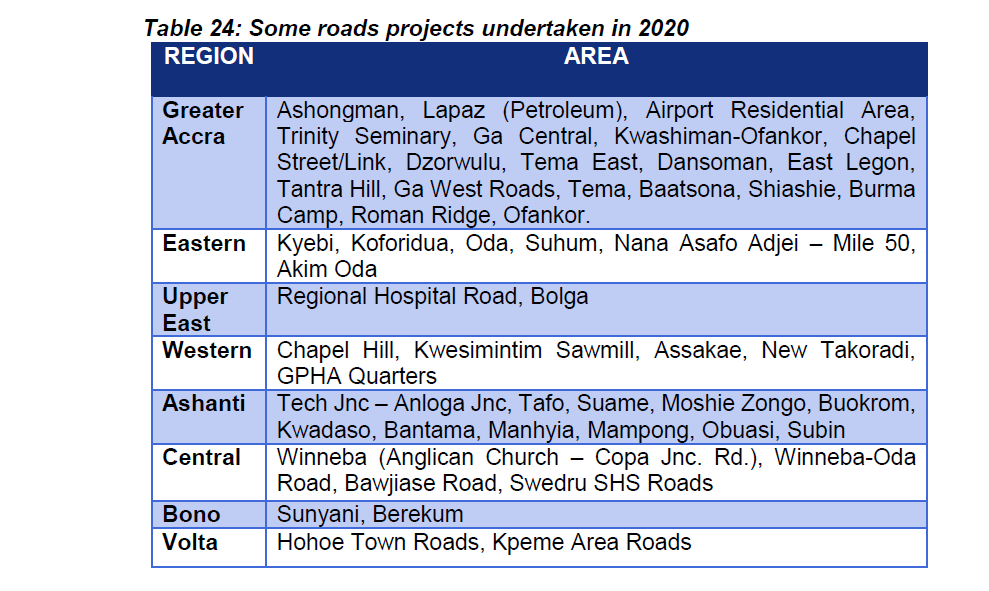
    Further,  the 2021 Budget Statement and Economic Policy confirmed that Hohoe township roads were completed in 2020 under the Urban Roads Asphaltic Overlay Programme. Paragraph 831 of the budget document indicates that the Hohoe Town roads formed part of the “648km of asphalt overlay works” completed in 2020.  

    Table 24 of the 2021 Budget Statement and Economic Policy. Image Source: Ministry of Finance

    Conclusion

    DUBAWA findings indicate that asphaltic overlays in Hohoe were done in 2020. The images in the post portraying the construction of asphaltic overlays in  Hohoe took place in 2020, thus making the claim of a 2024 overlay misleading. 

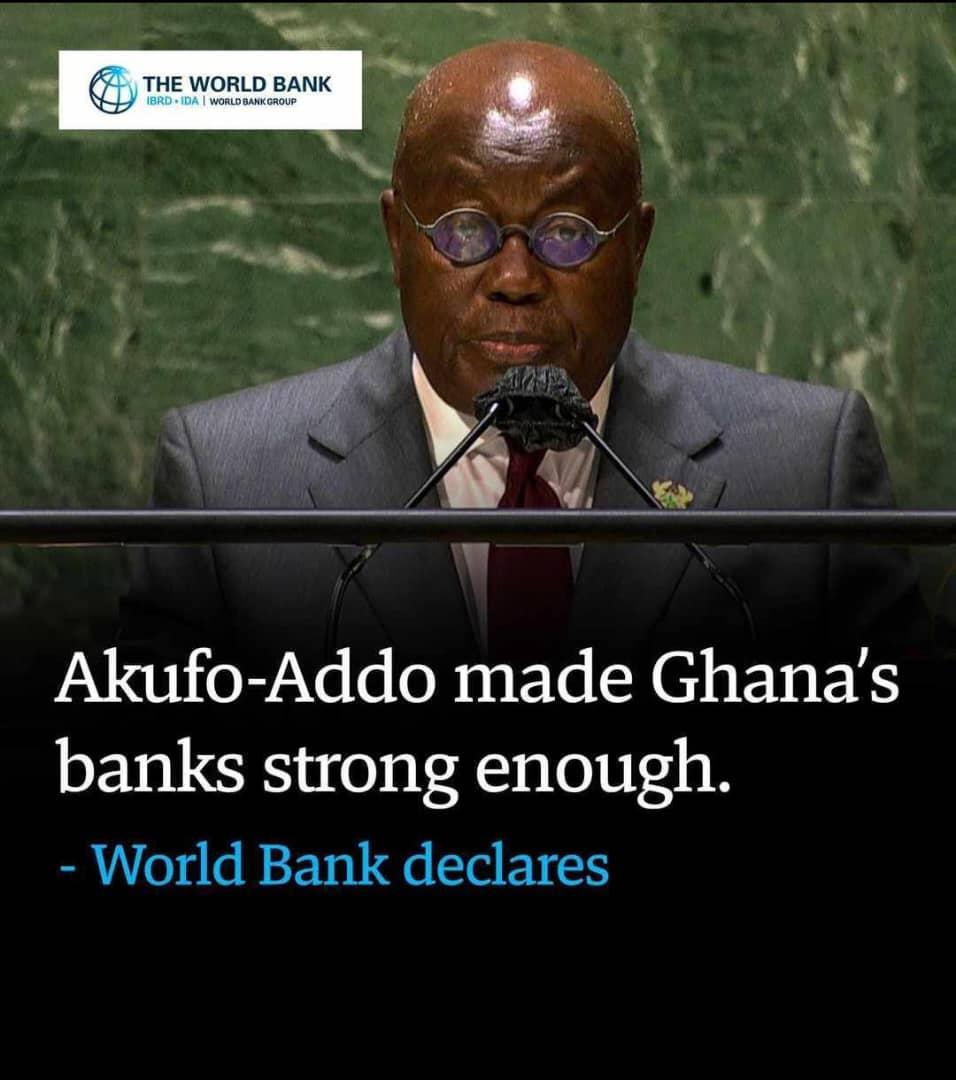
  • Misleading! World Bank did not commend Akufo-Addo for ‘stronger and better’ banking sector

    Claim: The World Bank has commended Ghana’s President Nana Akufo-Addo for strengthening the country’s banking sector, a viral WhatsApp message alleges.

    Verdict: Misleading. DUBAWA’s Investigations showed that the Bretton Wood institution was impressed with the state of Ghana’s banks.  “The banking sector is stronger and better capitalised than in the period immediately after the Domestic Debt Exchange Program (DDEP), but some risks remain,” the 8th Ghana Economic Update Report published by the World Bank in June 2024 said. However, the institution did not directly attribute the growth of the banking sector to Akufo-Addo, as captioned in the flyer.

    Full Text

    A viral WhatsApp message has alleged that the World Bank has lauded Ghana’s President Nana Akufo-Addo for making the country’s banks “strong enough.”

    The assertion was contained in a flyer with the logo of the Bretton Wood institution embossed on it.

    During a major clean-up by the Bank of Ghana, nine banks collapsed, and three merged between Jan. 2017 and 2020.

    DUBAWA’s research has revealed that the exercise reduced the number of banks operating in the West African country from 36 to 23. 

    Read news reports on the banking clean-up in Ghana here, here, and here.

    Nearly four years after Ghana’s major banking shake-up, a flyer has gone viral saying the World Bank has commended President Nana Akufo-Addo for strengthening the country’s banks.

    “[President] Akufo-Addo made Ghana’s banks strong enough,” the World Bank allegedly said.

    A screenshot of the flyer making the rounds in Ghana

    DUBAWA decided to probe the claim due to its virality in West Africa.

    Verification

    DUBAWA’s investigations showed that despite worrying about some challenges in the banking sector, the Bretton Wood institution was generally impressed with the state of Ghana’s banks.

    The World Bank, in its 8th Ghana Economic Update Report, published in June 2024, said the country’s banks are “stronger and better” than before.

    “The banking sector is stronger and better capitalised than in the period immediately after the Domestic Debt Exchange Program (DDEP), but some risks remain,” the global financial body said.

    See paragraph 1 of page 8 and paragraph 35 of page 29 of the report here

    The Domestic Debt Exchange Programme (DDEP) was a public offer to Ghanaian bondholders to trade their high-yielding bonds for lower-yielding versions of much longer maturity periods.

    Experts revealed that Ghanaian banks’ Expected Credit Losses (ECL) on existing bonds and Treasury bills during the programme were more than GHȼ15 billion. 

    Commenting on the Domestic Debt Exchange Programme, the World Bank said that despite the programme’s impact, Ghanaian banks “continue to implement their approved capital restoration plans in line with BoG’s (Bank of Ghana) requirements.”

    “Bank profitability has improved, with the return-on-equity after tax reaching 34.2 per cent in December 2023, up from -34.4 per cent in December 2022, while the return on assets rose to 5.4 per cent from -3.8 per cent during the same period,” the World Bank said on paragraph 35 of page 29 of its June 2024 report.

    Despite the Bretton Woods institution’s verdict on Ghana’s banking sector in its report, the Communications Officer of the Country Office, Kennedy Fosu, told DUBAWA that they did not create the flyer containing their logo.

    “We have not posted anything on Social Media in the Banking sector. Kindly check the recently released 8th Economic Update report on exactly what it says on page 29, item 35 about,” he told DUBAWA.

    Conclusion

    The World Bank said Ghana’s banks are “stronger and better” after the Domestic Debt Exchange Programme carried out in 2023. However, presenting the World Bank’s comments in 2023 as a current development is misleading.

  • Explaining Ghana’s imminent debt restructuring

    The term debt restructuring has been a serious issue on the media’s radar and a big case in the Ghana’s court of public opinion. This development occurred after the arrival of officials from the International Monetary Fund (IMF) in Ghana for the second time. 

    The first time the Fund visited was about three months ago, in response to the government’s u-turn movement to seek an IMF bailout following a series of mass protests over the weakening economy. The government had sworn it was never going to the IMF early in the year

    After agreeing to the programme, a team of IMF representatives, led by its Mission Chief, Carlo Sdralevich, arrived in Ghana on July 6, 2022, after home-grown efforts, such as cutting discretionary state spending by 30 per cent, reducing government ministers’ salaries by 30 per cent, and introducing a 1.5 per cent electronic transaction levy, had failed.

    These institutional visits have primarily been to inform the government of its debt sustainability analysis and facilitate the negotiation process between the two entities.  The visits, among other things, aim to afford the Fund access to first-hand information about the country’s financial position to assess Ghana’s ability to repay its debts properly and to determine the country’s funding needs before the two entities reach an agreement. On the second visit, the IMF team is led by its Mission Chief, Stéphane Roudet, with the Ghana team and Ghana’s finance minister, Ken Ofori-Atta, at the negotiation table.

    As the finance minister announced in a press release on September 26, 2022, the ongoing phase of the negotiation process, is mainly a debt sustainability analysis aimed at informing programme negotiations. In an emailed response to Bloomberg, an IMF spokesperson said: “In cases where a country’s debt is assessed as unsustainable, the IMF is precluded from providing financing unless the member [country] takes steps to restore debt sustainability, including by seeking a debt restructuring from its creditors.”

    That is not to say debt sustainability analysis necessarily results in debt restructuring, as IMF Director of Communication, Gerry Rice, stated at a news conference in Washington DC, even though many have interpreted it as such.

    “When a country requests financing from the IMF, we [the IMF] assess whether the country’s policies are consistent with debt sustainability as one of our requirements. We still need to conduct a thorough update of the debt situation in Ghana through our debt sustainability analysis,” Mr Rice said.

    What is the prevailing situation?

    Soon after the finance minister’s announcement of September 26, 2022, on Ghana undergoing a debt sustainability analysis, the media and public spaces began the conversation on debt restructuring, giving room for speculations which could potentially incite public fear of investment loss.

    An example of this was when on Thursday, September 29, 2022, the Second Deputy National Organiser of the NDC, Chief Hamilton Nixon Biney, explained the anticipated governmental debt restructuring as a situation in which people who invest with the government in the form of treasury bills are expecting returns on their investment. The government will or can decide to pay them only half of their total investments, and the investors do not have any option than to accept it or risk losing their investments altogether.

    Nixon quizzed rhetorically in Twi:“If you and I have invested money in the government in the form of T-bills, the government can say it is going to give us half of those investments. For example, if you invested GH₵50,000 the government will say it will give you, GH₵50,000, ‘accept the offer or I [the government) will cancel the money I owe you [the investor],’ and you cannot do anything about it. Have you ever witnessed a situation whereby someone has taken the government to the police station and won a case against it?” 

    The NDC Second Deputy National Organiser made this statement on the Gumbe Show on TV XYZ. The video has since been shared to the TV station’s Facebook page, gathering some 4,000 views and more than 300 engagements. His interpretation is found from 1:26:50 to 1:29:22 time frame of the video.

    There have been many similar misleading interpretations in the public domain. Therefore, this explainer is to put the discussions into proper perspective and adequately inform the populace on the meaning and implication of the country’s imminent debt sustainability programme with the IMF.

    To do this, DUBAWA reviewed several authoritative documents and news sources and spoke to Dr Lord Mensah, a financial analyst and a professor of Finance at the University of Ghana Business School, who also envisages the imminent arrival of a debt restructuring programme in Ghana.

    What is debt restructuring and its implication on the Ghana economy?

    Debt restructuring is a process used by borrowers (individuals, companies, or countries) to avoid the risk of failing to repay existing debts (in the form of treasury bills, bonds, or equity) to their lenders (individuals, institutions, or businesses). In this case, the borrower is the Government of Ghana, and the lenders are the banks and other institutions that have, for example, subscribed to government bonds and bought its treasury bills.

    Thus, in restructuring, Lord Mensah explains, if the IMF assesses Ghana’s financial situation and concludes the country is on a slippery debt sustainability threshold and its policies are not consistent with the Fund’s debt sustainability requirements, then Ghana will have next to zero option than to undertake a debt restructuring exercise. 

    This option, experts say, is better than the alternative of possible bankruptcy, often a painful process as it may threaten the country’s macroeconomic stability and set back its development for many years. Lenders will not be left out in the repercussions of bankruptcy; they are likely to lose (all of) their investments, too. To avert such possibilities, the government may initiate a renegotiation process with the lenders to agree to a haircut.

    Haircut, induced by debt restructuring, comes in varying forms. The government can get its lenders to agree to reduced interest rates on the loans or to extend the dates when it is due to pay its liabilities or both. In more practical terms, in the case of the first option (of getting lenders to reduce interest rates on their loans), Lord Mensah explains with an example:

    “Let’s assume the government has contracted a loan at an interest rate of 26 per cent from a bank. In the likely event of restructuring, the government may propose a renegotiation process to the bank and ask it to accept 23 per cent, instead of the original 26 per cent. If the bank agrees to the 23 per cent, it will receive a three per cent haircut on its interest rate–minus the principal.” 

    The principal is the consideration in the second option of haircut. In this option, the government may get the bank to agree to an extension of maturity from, for example, an original five to ten-year period to pay the principal.

    The government can also get the bank to agree to a combination of the two options in a win-win situation.

    Who is most affected by debt restructuring?

    On who bears the hardest brunt in debt restructuring is largely reliant on the interest rate differentials, Mensah explains with an example:

    ‘If, on the one hand, the bank promised its investors (or depositors) a 20 per cent interest rate to invest with the government at an interest rate of 26 per cent and is now receiving 23 per cent due to the government’s debt restructuring renegotiation, the bank can easily absorb the difference of the three per cent, and, according to Mensah, the bank will likely absorb it. If, on the other hand, the bank promised the bank a 24 per cent interest rate, there will be a four per cent reduction. After absorbing the first three per cent margin within its control, the bank will have to pass on the balance to its depositors or investors,’ the professor explained.”

    In a nutshell, contrary to the many inaccurate pieces of mediated information, it is established in this article that Ghana hasn’t yet reached the point in the ongoing IMF negotiation process whereby it has to restructure its debt. However,, experts say debt restructuring is an imminent prospect from the debt sustainability analysis. 

    Again, when it happens, debt restructuring will not be a unilateral take-it-or-lose-all decision the government will impose on people who have invested with it. Debt restructuring will be a negotiation process, which will involve both the government, as the borrower, on one side, and its investors, as the lenders, on the other. Lastly, who gives what during debt restructuring depends on the interest rate differentials and other factors.

  • Five False Stories About China Circulating In Ghana

    A fortnightly newsletter that looks closely at the significance of truth and falsehood in today’s news stories. 

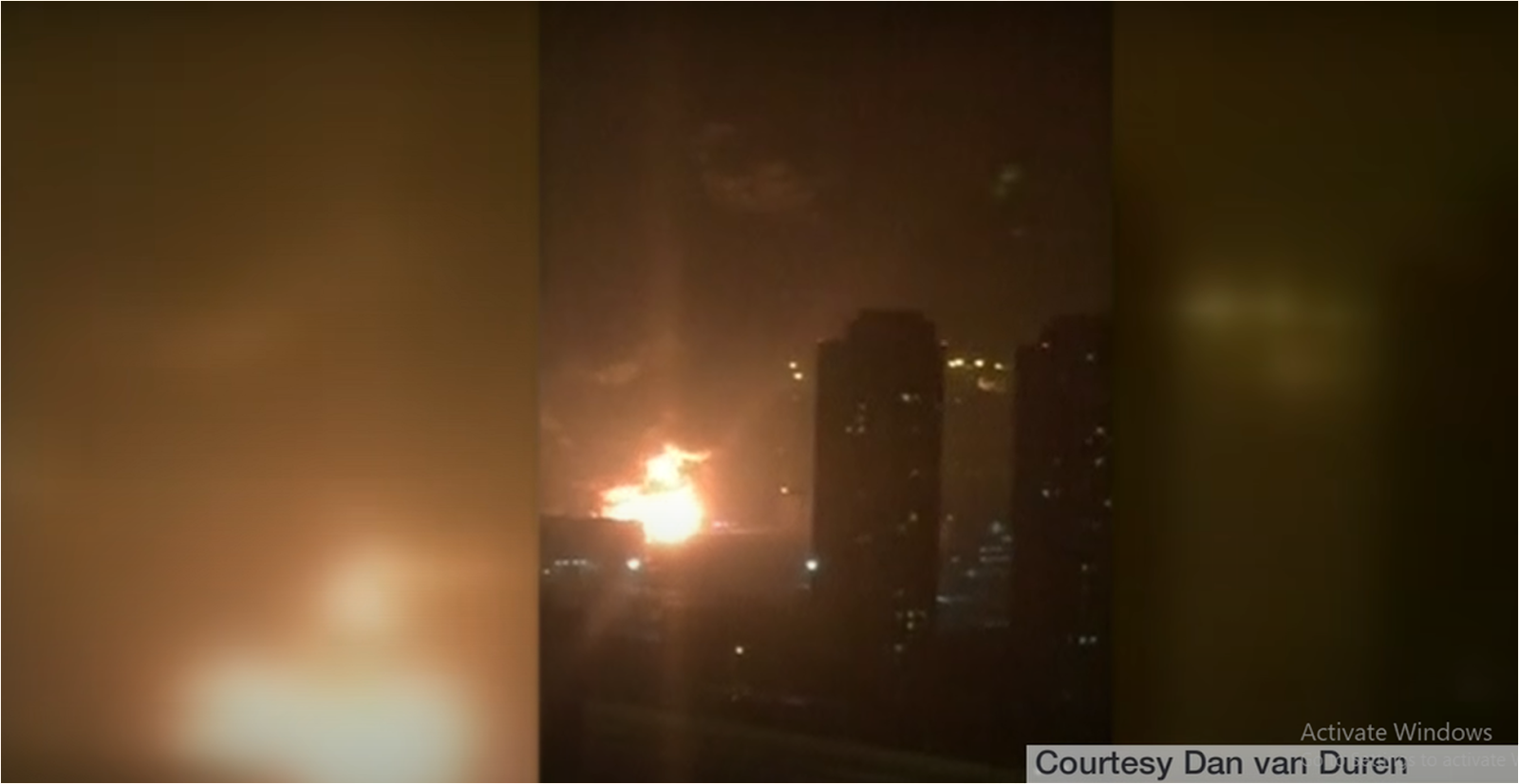
    Explosion Video Reported To Be Coup In China

    Recent reports suggest a coup in China and a house arrest of Xi Jinping, Chinese President. To make these reports believable, some social media users have included a video of an explosion claiming to be footage from China’s capital, Beijing, related to the coup. Yet, while we have found no evidence as yet authenticating claims of a coup in China, the explosion video was actually the explosion of a warehouse in China and has been online since, at least 2015. Read more about it here

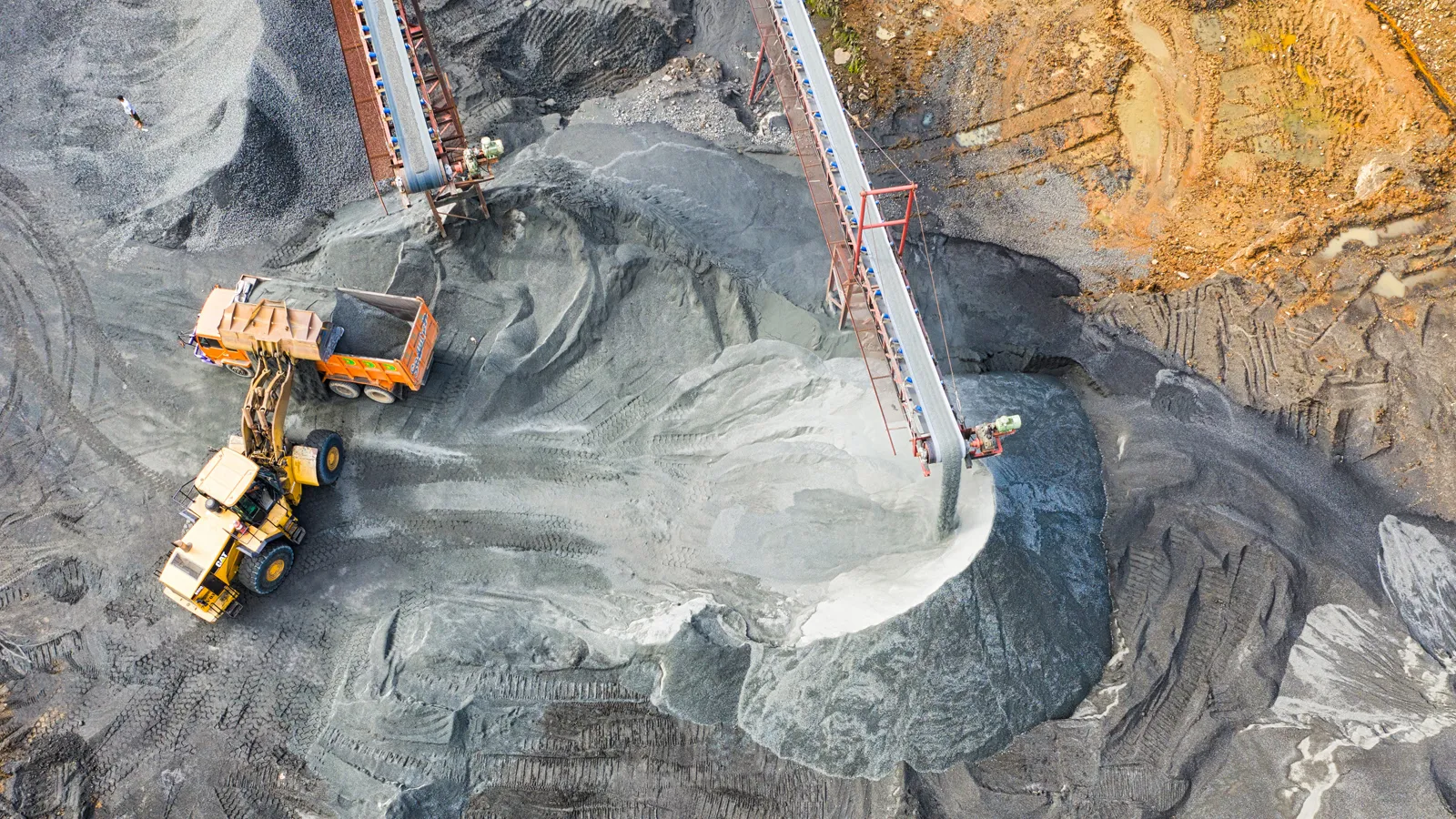
    Deportation Of Supposed 5,000 Chinese Illegal Miners By Mahama Government 

    The illegal return of popular Chinese businesswoman Aisha Huang to Ghana caused her another arrest and a trial for engaging in illegal mining, stirring up scepticism from Ghanaians about possible prosecution. With these ongoing discussions, former President Mahama stated in an interview that almost 5,000 illegal Chinese miners were deported during his tenure in government. Meanwhile, data from the Ghana Immigration Service shows that less than 3,000 foreigners were deported and repatriated between 2012 and 2016 when Mahama was president. Read all about it here

    China’s Alleged Launch Of Artificial Sun Into Space 

    When China innovated a nuclear fission reactor known as the “artificial sun” and, before then, launched a satellite on a rocket, the two events were mistaken to be one. Photos were shared to suggest that China launched an artificial sun into space, but this is untrue. Read all about it here

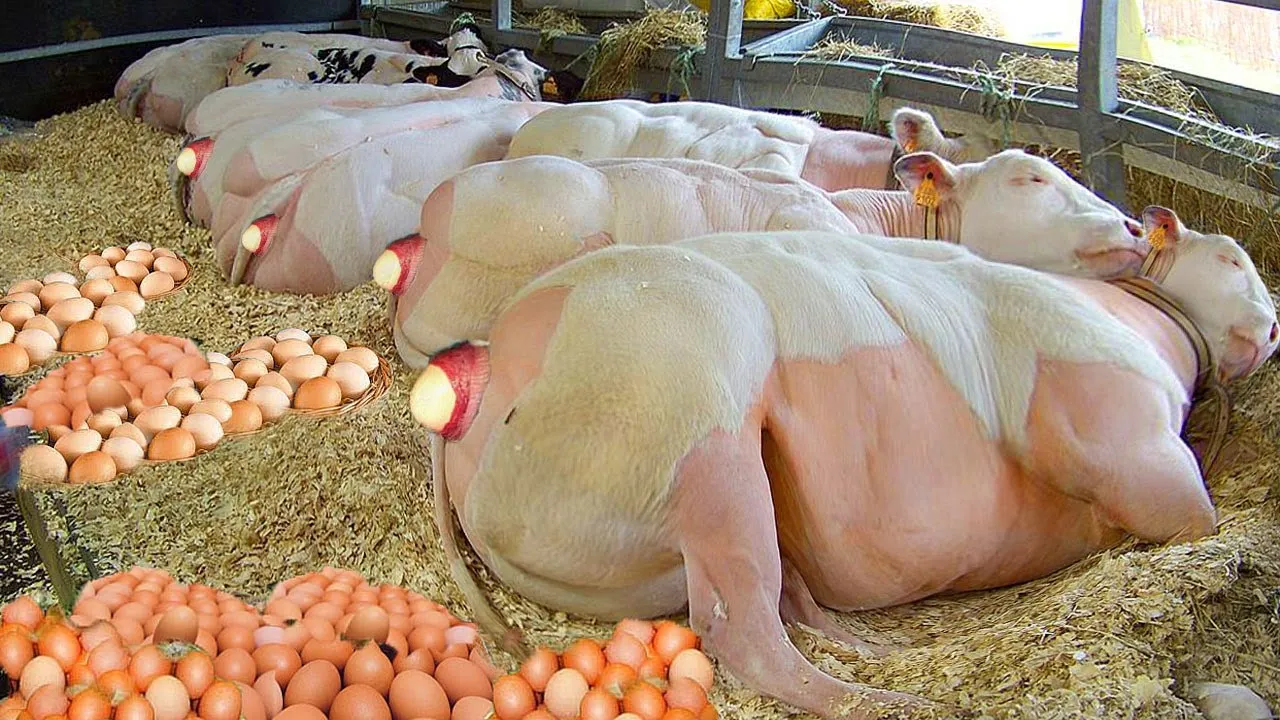
    Chicken Organs Purportedly Planted In Cows For Egg Production In China

    A Facebook user alleged that the Chinese government plants chicken organs in cows for faster egg production. But the photo alleging this was manipulated. The original shows cows whose genomes had been edited to give them traits they do not naturally possess. Read all about it here

    Sheep Faeces Speculated To Prepare Beverages In China 

    Facebook users have claimed that sheep faeces were in high demand in China for their richness in proteins for beverages. It is accompanied by a photo alleging that the beverages were made with sheep faeces, juice, soya milk and other liquids. This is false. Some of the photos have been manipulated, and the resemblance of sheep faeces in the photos is tapioca pearls. Also, the beverage in the photos is Bubble Tea, which has one of its ingredients as tapioca pearls. Read all about it here

  • ‘Fake’ Otto-Addo page causes stir over 2022 World Cup call up criteria 

    Claim: Black Stars coach, Otto-Addo has disclosed in a Facebook post that his choice of who will be invited into the national team to the 2022 World Cup will be based on the individual’s performance and commitment as well as age.

    The coach has denied making any such comment and has disassociated himself from the Facebook page that is claiming to him.

    Full Text

    A purported Facebook account of Black Stars coach, Otto Addo has stoked controversy with a post on Thursday, August 18 saying that a call-up to the Black Stars for the 2022 World Cup will be based on performance and commitment.

    The page, making a definite pronouncement in the name of the coach said, “I am building a new team that will bring back the love and make our motherland proud!”

    The post has since received more than 400 reactions, including shares by influential Ghanaian figures, with some of them believing the page is owned by the Black Stars coach as can be seen here and here.

    Even more interesting is the timing and tone of the post, which has raised some suspicion. 

    Ghanaian sports enthusiasts are divided over whether or not former Black Stars captain Asamoah Gyan should be called up into the team for the 2022 World Cup in Qatar. 

    The discussion stemmed from a recent interview Gyan granted the BBC, where he expressed his interest to join the team to play at the international tournament. 

    While some believe that Gyan, 36, should not be allowed into the team, others insist he still has something to offer. 

    If the post purported to be from Otto Addo is true, it takes a definite position in the ensuing debate.   

    Verification

    According to Facebook’s page transparency feature, the page, with over 93,000 followers, was created only four months ago in April 2022.  

    While it is publicly known that the coach is largely based in Germany due to his other major commitment as assistant Borussia Dortmund coach in Germany, Facebook’s page transparency feature further shows that the page is being managed in Ghana by at least two Ghana-based Facebook profiles.

    Phone number traces conducted on +49 231 900200, which was listed on the purported Facebook page as Otto Addo’s contacted number revealed that it was a landline operated in or around Dortmund in Germany.

    Otto Addo in a WhatsApp conversation with Dubawa Ghana editor, Nathan Gadugah has disassociated himself from the page and its content.

    He further revealed that he has no official public social media account except on Instagram.

    Conclusion      

    The Facebook page purporting to be Black Stars coach, Otto Addo is fake and does not in any way represent the person of the football manager.

  • Explaining August’s cool weather in Ghana – a good time to catch fish

    Claim: A Facebook user stated the aphelion phenomenon as the reason for the blowing cold breeze in Ghana. He insists the phenomenon will last till 22 August and impact flu-like ill-health.

    False. Meteorology and astronomy experts explain that the aphelion phenomenon happens once a year and does not directly affect weather conditions nor cause flu-like symptoms.

    Full Text

    A Facebook user in Ghana stated that the current cool weather will last till 22 August and attributed it to the aphelion phenomenon. The post added that the phenomenon would cause it to be colder than in previous years and with health implications such as flu, shortness of breath and cough. The same post appears to be circulating in other parts of the world. The post is seen below:

    Source: Facebook 

    Verification

    What is the aphelion phenomenon? 

    There is a time the earth is at its farthest from the sun. This phenomenon is what astronomy experts call aphelion. Aphelion happens annually in early July, and this year it happened on 4 July 2022, as the National Aeronautics and Space Administration (NASA) of the US government and other reports here and here have recorded. 

    Scientists indicate that even though the earth is farthest from the sun during this period, the earth is warmer then. 

    Roy Spencer, an expert at the Global Hydrology and Climate Center in Alabama, said,

    “In fact, the average temperature of Earth at aphelion is about 4o F (2.3o C) higher than it is at perihelion.”

    DUBAWA interviewed Joshua Asamoah, a meteorologist at the Ghana Meteorological Agency, to further situate the phenomenon in the Ghanaian context and explain the weather conditions. 

    He explained that the earth rotates and revolves around the sun. Due to the earth’s shape, there are times when the earth will be closest to the sun (Perihelion) and other times when the earth will be farthest away from the sun (Aphelion). These two processes happen each year.

    “It is logical to assume that the earth will be hotter during perihelion and colder during aphelion. However, this is not the case. The heat from the sun does not differ much during these periods,” Asamoah said. 

    He also emphasised that aphelion lasts for only a day, which was 4 July,  contrary to the claim suggesting it will last till 22 August. 

    Why is it cold in Ghana?

    Asamoah further explained that August is the coldest month in Ghana, which is not a discovery. He mentioned some factors that affect Ghana’s cold weather conditions in July and August and highlighted that the factors influencing this season are favourable for fisherfolks.

    “In August, there are low sea surface temperatures over the Gulf of Guinea, as deep cold water rises to the surface of the sea. This water is full of nutrients; fishes move from the bottom of the sea to the surface around this time, a process known as ‘Upwelling.’ There is also a cold current in the Atlantic Ocean (Benguela current). High pressures build up over the Atlantic while low pressures develop over West and North Africa. As a result, winds move from the Atlantic to feed the low-pressure areas in West and North Africa. As the winds move, they carry the cold conditions from the Benguela and Gulf of Guinea through Ghana before feeding the low-pressure centres. This accounts for the cool conditions around this time,” Asamoah said. 

    Source: Weather Spark

    Will this be the coldest year yet?

    Asamoah continued by detailing that the cool temperature during this period varies per year, and contrary to the claim, this year is not the coldest compared to previous years. He adds that the cold situation is not a result of climate change since Ghana is considered a tropical zone.

    “Because the winds from the ocean are moist, they help in cloud formation over Ghana. Most parts of the day remain cloudy with few breaks of sunshine. As a result of the clouds, the rays from the sun are reflected and do not reach the earth’s surface. This also leads to the lower temperatures recorded around this time. These conditions happen each year. However, variations in the conditions over the Gulf and Benguela currents affect the formation of clouds over Ghana and lead to variations in the temperature recorded around July and August each year. Aphelion and Perihelion may indirectly affect seasons but are not the cause of the seasons. Because the earth’s axis is tilted at an angle, it gets more or less of the sun’s rays at different times. This leads to the seasons. The cold temperatures depend on other factors, and it’s normal around late July and August. Still, the severity may vary yearly due to the intensification or weakening of these conditions,’’ Asamoah explained. 

    Does aphelion affect flu-like symptoms? 

    Asamoah indicated no proven correlation between the aphelion phenomenon and flu-like symptoms.

    Similarly, astronomers have confirmed to other fact-checkers that aphelion has no proven effect on the earth’s temperature and human health, as has also been debunked here

    DUBAWA spoke to two health experts practising in the northern and southern parts of Ghana, and both confirmed that there is, however, a rise in flu-like reported cases during July and August in Ghana. 

    A medical doctor at Tantra Hospital in the Greater Accra Region in Accra, Dr Senyo Misroame, said that flu and cough are prevalent during this season. 

    Also, a  medical doctor at the Upper East Regional Hospital in Bolgatanga, Dr Kasule Iddrisu Yakubu, explained the spike in flu and cough during the period.

    “When it is cold, viruses live longer and mature faster because the air is less humid outside. Also, since it is windy during this period, Aerodrops such as saliva from sneezing and coughing have an easier transmission mode,” he said. 

    Conclusion

    The Facebook posts attributing the aphelion phenomenon to the cold breeze blowing in Ghana are false. The claim that the aphelion phenomenon is expected to last till 22 August with flu-like health implications is also false. However, there is a rise in flu-like symptoms during the cold season in Ghana. Aphelion happens once a year and happened on 4 July  2022 this year. In Ghana, low sea temperatures carrying moist and forming clouds cause cool weather during July and August annually. 

  • John Jinapor’s claim that inflation has surpassed 30% is false

    Claim: The Member of Parliament for Yapei Kusawgu in the Savanna Region, John Abdulai Jinapor, has said that Ghana’s inflation rate has surpassed 30%.

    False. According to the most recent data from the Bank of Ghana and the Ghana Statistical Service released on June 8, 2022, the current inflation rate stands at 27.6%.

    Full Text

    The Member of Parliament for Yapei Kusawgu in the Savanna Region, John Abdulai Jinapor, has said that Ghana’s inflation rate has exceeded 30%. He said this in relation to a discussion on the economy and the government’s decision to go to the International Monetary Fund. The claim was made on Metro TV’s “Good Morning Ghana” hosted by Dr. Randy Abbey. The video, which was posted on YouTube on Tuesday, July 5, 2022, has amassed over 2,000 views. The claim was made from 1hour:18minutes:33 secs-1 hour:19minutes:22secs time frame of the video.  

    According to the MP, “Even when the NPP assumed office, they made it look as if once you go to the IMF, it is the mark of incompetence. Even after Covid and the Ukrainian war. As early as last week, even their Deputy Minister was insisting that so far as they remain in power, they will never go for an IMF program.

    Indeed, the e-levy was an option, choose e-levy or go to IMF. That’s what they told us. Eventually, they got the e-levy passed and low and behold, things got so worse and so bad to the extent that our debt to GDP moved from 56.1% to 80.1%. That’s the situation. Inflation today is more than 30%”.

    Verification

    Inflation is defined as the rate of increase in prices over a given period of time. It can occur when prices rise due to increases in production costs, such as raw materials and wages.

    To verify the claim made by the Member of Parliament, DUBAWA resorted to data from the Bank of Ghana and the Ghana Statistical Service (GSS). We decided to use these institutions because they are statutory institutions mandated to provide Ghana’s economic and social data.

    The Ghana Statistical Service gives monthly updates on the rate of inflation in the country. On page 3 of its most recent Consumer Price Index (CPI) data released on Wednesday, June 8, 2022, the current inflation rate is 27.6%. According to Bloomberg, the 27.6% rate is the highest level in more than 18 years.

    Also, according to the Bank of Ghana, the current inflation rate is 27.6%, as cited in the data of the Ghana Statistical Service (GSS).

    The data from the Bank of Ghana and the Ghana Statistical Service is further corroborated by Trading Economics, an agency that provides data on economic indicators and financial markets. Its most recent data also pegs Ghana current inflation at 27.6%.


    Source: Trading Economics

    Moreover, even though data on inflation rates for June 2022 has not been released yet by the Ghana Statistical Service to determine if the rate has surged past 30%, projections from the Trading Economics global macro models and analysts indicate that Ghana’s inflation rate is expected to surge in the coming months. It has, however, forecasted the rates to be 29% by the end of the second quarter in 2022.

    Conclusion

    Even though there has been a continuous surge in inflation rates in the past months, Data available show that inflation has not surpassed 30%; it is currently 27.6%.

Back to top button