Ghana

  • Suhuyuni’s contention that Seth Terkper’s regime recorded nearly single digit, false

    Claim: Member of Parliament for Tamale North constituency Alhassan Suhuyini contends that inflation rates during former finance minister Seth Terkper’s reign were nearly single-digit.

    False. Data from the Bank of Ghana, the International Monetary Fund, the World Bank, and the Ministry of Finance recorded double-digit inflation rates. The member of Parliament for Tamale North constituency Alhassan Suhiyini in the Northern Region of Ghana stated that during the reign of Former Finance Minister Seth Terkper, inflation rates recorded were nearly single digit.

    Full Text

    The assertion was made from 1 hour 37 minutes, 30 seconds to 1 hour 37 minutes, 46 seconds on Metro TV’s Good Morning Ghana on Thursday, October 27, 2022. It has generated over 27,000 views on its Facebook page. 

    According to Mr Suhiyini, “When Seth Terkper was finance minister, what was our inflation rate? It was around a single digit. Today we are talking about 37%.”

    He made the assertion when he backed calls for the resignation of finance minister Ken Ofori-Atta. Already, some 80 NPP Members of Parliament on Monday, October 24, 2022, called for his resignation due to the country’s economic difficulties.

    Verification 

    According to the Ghana Statistical Service, Ghana’s current inflation rate stands at 37%. The higher the inflation, the higher the prices of goods and services. 

    To verify the contention, we first had to establish which years Seth Terkper acted as Finance Minister and the inflation figures during that period.

    Mr Terkper was appointed Finance Minister in 2013, shortly after President John Mahama was voted into power in the 2012 elections. He left office in 2017 together with the Mahama-led administration after they lost power in 2016.

    DUBAWA looked at the World Bank, the International Monetary Fund (IMF), the data from the Bank of Ghana and the Finance Ministry to find out what the inflation figures at the time.

    For the IMF, inflation rates from 2013 to 2016 were 11.7%, 15.5%, 17.2%, and 17.5% respectively. 

    For the World Bank, inflation rates from 2013 to 2016 were 11.7%, 15.5%, 17.1%, and 17.5%, respectively. 

    On page 10 of the Annual Report of the Bank of Ghana, inflation rates during the reign of the former finance minister were 13.5%, 17.0%, 17.7%, and 15.4%, respectively. 

    Page 15 of the 2016 Annual Debt Management Report from the Ministry of Finance also quotes the same figures recorded by the Bank of Ghana.

    YearAnnual Inflation Rate
    World BankIMFMinistry of FinanceBank of Ghana
    201311.7%11.7%13.5%13.5%
    201415.5%15.5%17%17.0%
    201517.1%17.2%17.7%17.7%
    201617.5%17.5%15.4%15.4%

    Conclusion

    From 2013-2016, the period in which Seth Terkper was Finance Minister data from the World Bank, IMF, Ministry of Finance and the Bank of Ghana, suggests that inflation figures rose from 11% to 17% away from the single digit. Therefore to suggest that inflation was around single digit is false.

  • False; Ghanaians, Sierra Leoneans not banned from travelling to the UAE

    Claim: Ghana, Sierra Leone, and 18 other African countries have been banned from travelling to the United Arab Emirates.

    False! No official source of communication has corroborated the information that the United Arab Emirates has issued a visa ban on Ghana and Sierra Leone, even though some other African countries like Nigeria have suffered some restrictions on some categories of visas.

    Full Text

    On the night of Tuesday, October 25, 2022, information widely made the rounds in Ghana that the United Arab Emirates had placed a 30-day visa ban on citizens of Ghana as well as 18 other African countries and one non-African country. According to the information, published by national mainstream news media portals, such as citinewsroom, and international news outlets like The BBC NEWS PIDGIN and DW Africa, effective October 18, authorities from the UAE  would not be posting 30 days visa applications for the affected countries. 

    Sierraloaded, an online portal in Sierra Leone, also reported that a ban had been placed on Sierra Leone.

    “Authorities in the United Arab Emirates (UAE) have announced a visa ban slapped on Sierra Leoneans and 20 other nationalities seeking to visit Dubai with immediate effect,” excerpts of the publication read.

    Except for the Dominican Republic, all other countries purportedly are in Africa. Aside from Ghana and Sierra Leone, the other countries supposedly affected in  Africa include Benin, Burkina Faso, Burundi, Cameroon, Comoros, Congo, Democratic Republic of Congo, Guinea Bissau, Ivory Coast, Liberia, Nigeria, Republic of Guinea,  Rwanda, Senegal, Sudan, The Gambia, and Togo. To ascertain its veracity, DUBAWA has independently verified the information.

    Verification

    By the United Nations Security Council Resolutions, a member state can impose a travel ban on listed individuals by preventing transit or entry into their country. These listed persons must be deemed to have committed or are likely to commit acts of terrorism and other human rights abuses.

    Also, by International Health Regulation (2005), countries can impose travel bans “to prevent, protect against, control and provide a public health response to the international spread of disease…” 

    As part of DUBAWA’s verification in Ghana, we combed the website of the United Arab Emirates, but no news was found on the ban. Though Citinewsroom did not name its source, our contact at the online news portal indicates the information was sourced from DW Africa, which, according to our source, was the first to publish the story. But DW Africa itself did not attribute the claim to anyone in particular. DUBAWA then proceeded to verify from official sources at the Embassy. 

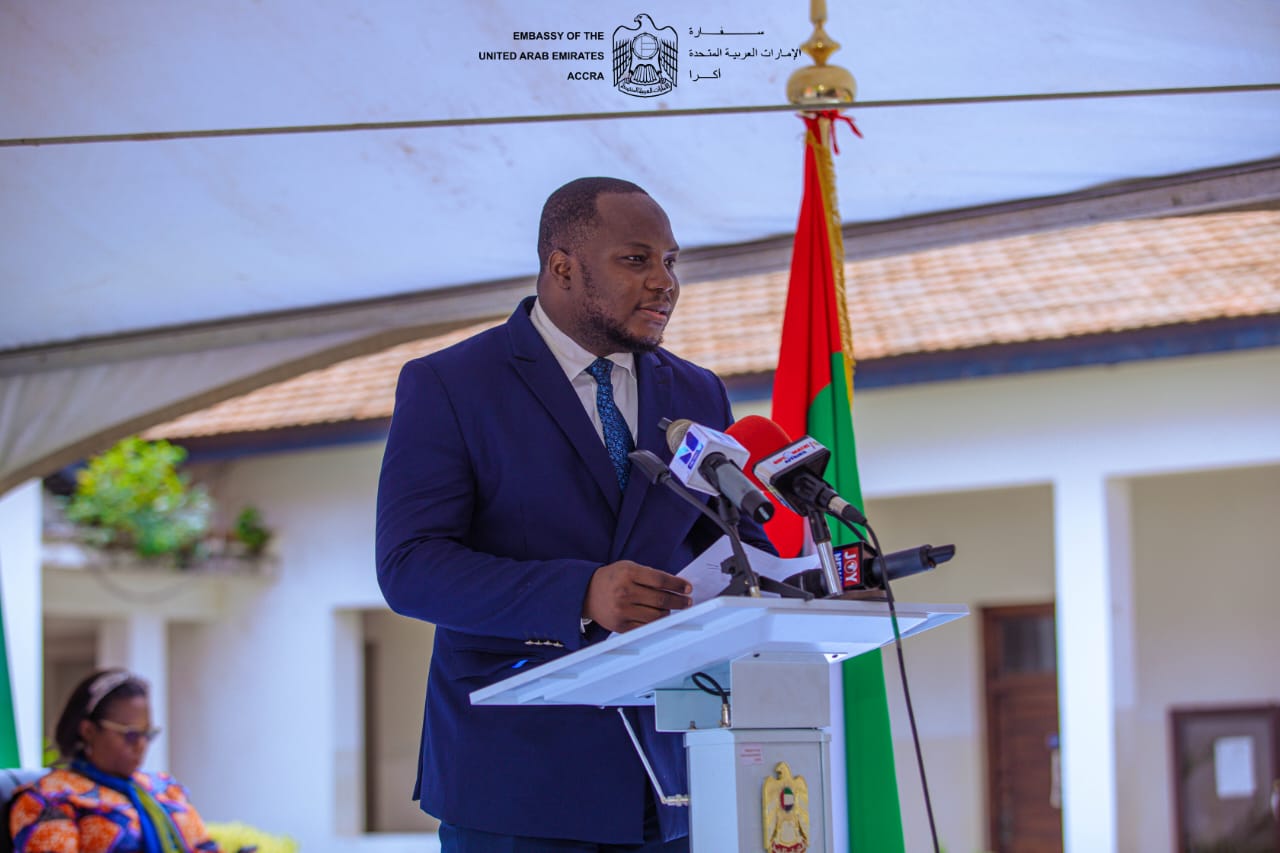
    DUBAWA’s independent checks at the United Arab Emirates Embassy in Accra have revealed that the UAE has not placed any visa ban whatsoever on Ghanaians. According to Mikdad Mohammed of the Trade and Investment Desk at the Embassy, who is also in charge of media relations, while it is true that the UAE has issued stricter visa terms for some African countries, including Nigeria, it is false that Ghana is part of the affected countries. He explains that the UAE has restricted certain visa categories to, for example, Nigerians under 40, except those applying for family visas, due to their likelihood of overstaying, adding that Ghanaians are exempted from all of those ‘stricter’ restrictions. He, thus, urges the Ghanaian community to treat the Tuesday information in the public domain as “unsubstantiated rumours”.

    “You can quote me anywhere. There is no official ban on visa issuance [to Ghanaians]. We are still issuing visas to the public without any hindrance.

    “Stricter visa terms have been issued for some other African countries, including Nigeria, but the same has not been extended to Ghana. Treat news of the visa ban as uninstantiated rumours,” he urges.

    Mikdad Mohammed, Trade and Investment Desk, United Arab Emirates Embassy in Accra.

    Mikdad’s information has been confirmed by the Embassy Public Relations Officer (PRO), Haruna Abdul Rashid. When DUBAWA sought to know the nature of the relationship between Ghana and the United Arab Emirates, Mikdad replied that a solid tie exists between the two countries.  

    In Sierra Leone, DUBAWA reached out to Mohamed Massaquoi, Press & Information Attache for Sierra in the UAE, through his Facebook Messenger to verify the statement and determine the conditions under which those bans, if true, were imposed.

    “There is no ban on Sierra Leoneans, as of this time of responding to you!” Massaquoi replied, adding that the UAE has not communicated any information regarding a travel ban on Sierra Leone to the Embassy. 

    The Press Attache on the alleged UAE travel ban on Sierra Leoneans at  the Embassy vehemently dismissed the assertion concerning the travel ban on Sierra Leoneans, adding that such information has not come to the notice of the Embassy.

    “The attention of the Sierra Leone Embassy in the United Arab Emirates (UAE) has been drawn to social media reports claiming the UAE Government has issued a visa ban on Sierra Leoneans and several African nationals. The Embassy wishes to state that it has NOT received any information on the same from official sources in the UAE and therefore considers the said reports being circulated as false and misleading,” the release disclosed.”Consequently, we encourage all Sierra Leoneans planning to visit the UAE on tourism and business purposes to go ahead with their visa applications as planned,” the press statement added. 

    Press Statement from the SL Embassy in UAE, debunking the alleged travel ban on Sierra Leone nationals to the Emirates 

    DUBAWA also contacted Sierra Loaded, the platform that published the story, to find the source of the claim, but there has since been no response from the media organisation.

    Conclusion

    According to official information, the United Arab Emirates has not issued any visa ban for Ghanaians and Sierra Leoneans willing to emigrate to that country. 

  • Breast cancer awareness month has been trivialised, and it hurts

    It is the month of October – a month dedicated to raising awareness about the impact of breast cancer.

    As part of the campaign, it is expected, among others, that discussions are held about risk factors and the early detection of breast cancer.

    Particularly for those on social media, it should be a time for education and sharing facts and statistics about breast cancer as part of the sensitisation process.

    Rather, in an interesting twist, some users of various social media platforms appear to have diluted the campaign’s message, making posts that could be described as having sexual connotations. Simply put, they have trivialised the breast cancer campaign.

    Certainly, posts such as this, this, and this are not helping matters, especially as they are made in the name of creating awareness about breast cancer.

    Have we sexualised breast cancer awareness month?

    “Yes, there is some of that going on. In totality, we are achieving breast cancer awareness but unfortunately, some people coming up with things that are not too appropriate,” says Dr Josephine Nsaful, a General Surgeon at the Breast Surgery Unit of the Korle-Bu Teaching Hospital and a Senior Lecturer at the University of Ghana Medical School. 

    It is not just about random posts on social media. Dr Nsaful is concerned about the virality of false assumptions such as “Sucking your wife’s breast prevents breast cancer.” 

    These occurrences, according to Dr Nsaful, are not helping. She has called for decent factual content when discussing breast cancer.

    “People should take the campaign seriously. Breast cancer is a serious issue, and it is not time for the sexualisation or trivialisation of the female breast. This is a matter of life and death, so the messages they put out there should be factual and decent,” she reiterated.

    Joycelyn Yaokumah, a breast cancer survivor, is equally unhappy about the situation. She is convinced that the actions of some social media users amount to trivialising the breast cancer awareness campaign and has described that as “very unfortunate and disappointing.”

    “Most of these people do not know how serious this breast cancer thing is,” she told DUBAWA Ghana.

    “People are losing their lives because of breast cancer, and instead of creating awareness and sensitisation, the message is being trivialised; it hurts a lot,” Joycelyn Yaokumah expressed. 

    “We want the sensitisation message out there. It is unfortunate, and it gets to me, especially during times like this when the whole world is talking about it. If they know what breast cancer is, they will not trivialise it,” the critical care nurse at the Korle-Bu Teaching Hospital continued.

    Several other Twitter users believe that breast cancer month has been sexualised.

    Despite these shortfalls, there are some positives as progress is being made with the breast cancer awareness campaign.

    “The number of reported breast cancer cases is going up. We have also seen an improvement in the number of women visiting the hospital for breast screening,” Dr Nsaful told DUBAWA Ghana.  

    In Ghana, it is estimated that nearly 3,000 cases are recorded annually, with one-eight of them dying from it. Academics such as Dr Nsaful encourage women to get screened to ensure early detection of breast cancer and increase chances of survival.

    Breast cancer education

    Breast cancer is a disease in which cells in the breast grow out of control. 

    Symptoms of breast cancer include:

    • A breast lump.
    • A change in the appearance of the breast.
    • Changes to the skin over the breast.

    Some factors that could lead to breast cancer are being a woman, age, lack of exercise, alcohol drinking, smoking, and family history. 

    When breast cancer symptoms are developed or realised, a medical officer must be consulted immediately for checks.

    Conclusion

    Undoubtedly, social media is a potent tool capable of bringing change. As the world targets to reduce breast cancer mortality, online discussions about the health condition must be decent and factual to increase sensitisation.

  • NPP’s Razak Opoku makes false report about inflation in US and UK in a widely published article

    Full Text

    An opinion article authored by Razak Kojo Opoku, a member of the ruling New Patriotic Party, has been widely published across media platforms in the country.

    The article’s headline is “37.2% inflation is unsatisfactory but better than NDC’s 122% inflation,” and the publication can be found here, here, here, and here.

    In the article, Opoku suggested that Ghana’s 37.2% inflation rate for September was not the country’s worst in its history.

    According to him, under its leadership, the opposition National Democratic Congress has led Ghana to record higher inflation rates.

    He  overviewed the inflation situation in other countries such as Turkey, the United States of America, and the United Kingdom.

    “The inflation rate of the United States of America has jumped to an unprecedented record of 14.5% with the UK experiencing its 40-year high inflation rate of 9.9%,” part of the article reads.  

    DUBAWA Ghana decided to investigate these two submissions:

    1: The inflation rate of the United States of America has jumped to an unprecedented record of 14.5%.

    The Bureau of Labour Statistics is the principal fact-finding agency for the US Federal Government in the broad field of labour economics and statistics. It is responsible for publishing the inflation rate.

    Its Consumer Price Index release for September 2022 indicated that “over the last 12 months, the all-items index increased 8.2 per cent before season adjustment.”

    Various US local media organisations such as NBC News and Voice of America can be found to have published reports in this regard.

    Source: US Bureau of Labor Statistics

    It is, therefore, not true that the inflation rate of the US has risen to 14.5%. 

    2: The UK is experiencing its 40-year high inflation rate of 9.9%

    The UK’s Office of National Statistics (ONS) is yet to publish the country’s inflation figures for September 2022 as of the time of the publication of this report. However, the inflation report for August is available. It is 9.9% as quoted by Razak Kojo Opoku.

    However, the UK’s 9.9% inflation rate for August 2022 is not the country’s highest in 40 years.

    ONS’ inflation data for July 2022 indicates that the UK’s inflation rose to 10.1%.

    “The Consumer Prices Index (CPI) rose by 10.1% in the 12 months to July 2022, up from 9.4% in June,” its July Bulletin reads.

    A statement in the Bulletin said that “indicative modelled consumer price inflation estimates suggest that the CPI rate would have been higher around 1982, where estimates range from nearly 11% in January down to approximately 6.5% in December.”

    Various publications by international newswires such as AlJazeera, CNBC, and Financial Times indicated that the UK’s 10.1% inflation rate for July was the country’s highest in about 40 years.

    Conclusion

    Official data from the UK Office of National Statistics and the US Bureau of Labour do not support Razak Opoku’s assertions.

  • Explaining Ghana’s imminent debt restructuring

    The term debt restructuring has been a serious issue on the media’s radar and a big case in the Ghana’s court of public opinion. This development occurred after the arrival of officials from the International Monetary Fund (IMF) in Ghana for the second time. 

    The first time the Fund visited was about three months ago, in response to the government’s u-turn movement to seek an IMF bailout following a series of mass protests over the weakening economy. The government had sworn it was never going to the IMF early in the year

    After agreeing to the programme, a team of IMF representatives, led by its Mission Chief, Carlo Sdralevich, arrived in Ghana on July 6, 2022, after home-grown efforts, such as cutting discretionary state spending by 30 per cent, reducing government ministers’ salaries by 30 per cent, and introducing a 1.5 per cent electronic transaction levy, had failed.

    These institutional visits have primarily been to inform the government of its debt sustainability analysis and facilitate the negotiation process between the two entities.  The visits, among other things, aim to afford the Fund access to first-hand information about the country’s financial position to assess Ghana’s ability to repay its debts properly and to determine the country’s funding needs before the two entities reach an agreement. On the second visit, the IMF team is led by its Mission Chief, Stéphane Roudet, with the Ghana team and Ghana’s finance minister, Ken Ofori-Atta, at the negotiation table.

    As the finance minister announced in a press release on September 26, 2022, the ongoing phase of the negotiation process, is mainly a debt sustainability analysis aimed at informing programme negotiations. In an emailed response to Bloomberg, an IMF spokesperson said: “In cases where a country’s debt is assessed as unsustainable, the IMF is precluded from providing financing unless the member [country] takes steps to restore debt sustainability, including by seeking a debt restructuring from its creditors.”

    That is not to say debt sustainability analysis necessarily results in debt restructuring, as IMF Director of Communication, Gerry Rice, stated at a news conference in Washington DC, even though many have interpreted it as such.

    “When a country requests financing from the IMF, we [the IMF] assess whether the country’s policies are consistent with debt sustainability as one of our requirements. We still need to conduct a thorough update of the debt situation in Ghana through our debt sustainability analysis,” Mr Rice said.

    What is the prevailing situation?

    Soon after the finance minister’s announcement of September 26, 2022, on Ghana undergoing a debt sustainability analysis, the media and public spaces began the conversation on debt restructuring, giving room for speculations which could potentially incite public fear of investment loss.

    An example of this was when on Thursday, September 29, 2022, the Second Deputy National Organiser of the NDC, Chief Hamilton Nixon Biney, explained the anticipated governmental debt restructuring as a situation in which people who invest with the government in the form of treasury bills are expecting returns on their investment. The government will or can decide to pay them only half of their total investments, and the investors do not have any option than to accept it or risk losing their investments altogether.

    Nixon quizzed rhetorically in Twi:“If you and I have invested money in the government in the form of T-bills, the government can say it is going to give us half of those investments. For example, if you invested GH₵50,000 the government will say it will give you, GH₵50,000, ‘accept the offer or I [the government) will cancel the money I owe you [the investor],’ and you cannot do anything about it. Have you ever witnessed a situation whereby someone has taken the government to the police station and won a case against it?” 

    The NDC Second Deputy National Organiser made this statement on the Gumbe Show on TV XYZ. The video has since been shared to the TV station’s Facebook page, gathering some 4,000 views and more than 300 engagements. His interpretation is found from 1:26:50 to 1:29:22 time frame of the video.

    There have been many similar misleading interpretations in the public domain. Therefore, this explainer is to put the discussions into proper perspective and adequately inform the populace on the meaning and implication of the country’s imminent debt sustainability programme with the IMF.

    To do this, DUBAWA reviewed several authoritative documents and news sources and spoke to Dr Lord Mensah, a financial analyst and a professor of Finance at the University of Ghana Business School, who also envisages the imminent arrival of a debt restructuring programme in Ghana.

    What is debt restructuring and its implication on the Ghana economy?

    Debt restructuring is a process used by borrowers (individuals, companies, or countries) to avoid the risk of failing to repay existing debts (in the form of treasury bills, bonds, or equity) to their lenders (individuals, institutions, or businesses). In this case, the borrower is the Government of Ghana, and the lenders are the banks and other institutions that have, for example, subscribed to government bonds and bought its treasury bills.

    Thus, in restructuring, Lord Mensah explains, if the IMF assesses Ghana’s financial situation and concludes the country is on a slippery debt sustainability threshold and its policies are not consistent with the Fund’s debt sustainability requirements, then Ghana will have next to zero option than to undertake a debt restructuring exercise. 

    This option, experts say, is better than the alternative of possible bankruptcy, often a painful process as it may threaten the country’s macroeconomic stability and set back its development for many years. Lenders will not be left out in the repercussions of bankruptcy; they are likely to lose (all of) their investments, too. To avert such possibilities, the government may initiate a renegotiation process with the lenders to agree to a haircut.

    Haircut, induced by debt restructuring, comes in varying forms. The government can get its lenders to agree to reduced interest rates on the loans or to extend the dates when it is due to pay its liabilities or both. In more practical terms, in the case of the first option (of getting lenders to reduce interest rates on their loans), Lord Mensah explains with an example:

    “Let’s assume the government has contracted a loan at an interest rate of 26 per cent from a bank. In the likely event of restructuring, the government may propose a renegotiation process to the bank and ask it to accept 23 per cent, instead of the original 26 per cent. If the bank agrees to the 23 per cent, it will receive a three per cent haircut on its interest rate–minus the principal.” 

    The principal is the consideration in the second option of haircut. In this option, the government may get the bank to agree to an extension of maturity from, for example, an original five to ten-year period to pay the principal.

    The government can also get the bank to agree to a combination of the two options in a win-win situation.

    Who is most affected by debt restructuring?

    On who bears the hardest brunt in debt restructuring is largely reliant on the interest rate differentials, Mensah explains with an example:

    ‘If, on the one hand, the bank promised its investors (or depositors) a 20 per cent interest rate to invest with the government at an interest rate of 26 per cent and is now receiving 23 per cent due to the government’s debt restructuring renegotiation, the bank can easily absorb the difference of the three per cent, and, according to Mensah, the bank will likely absorb it. If, on the other hand, the bank promised the bank a 24 per cent interest rate, there will be a four per cent reduction. After absorbing the first three per cent margin within its control, the bank will have to pass on the balance to its depositors or investors,’ the professor explained.”

    In a nutshell, contrary to the many inaccurate pieces of mediated information, it is established in this article that Ghana hasn’t yet reached the point in the ongoing IMF negotiation process whereby it has to restructure its debt. However,, experts say debt restructuring is an imminent prospect from the debt sustainability analysis. 

    Again, when it happens, debt restructuring will not be a unilateral take-it-or-lose-all decision the government will impose on people who have invested with it. Debt restructuring will be a negotiation process, which will involve both the government, as the borrower, on one side, and its investors, as the lenders, on the other. Lastly, who gives what during debt restructuring depends on the interest rate differentials and other factors.

  • Five False Stories About China Circulating In Ghana

    A fortnightly newsletter that looks closely at the significance of truth and falsehood in today’s news stories. 

    Explosion Video Reported To Be Coup In China

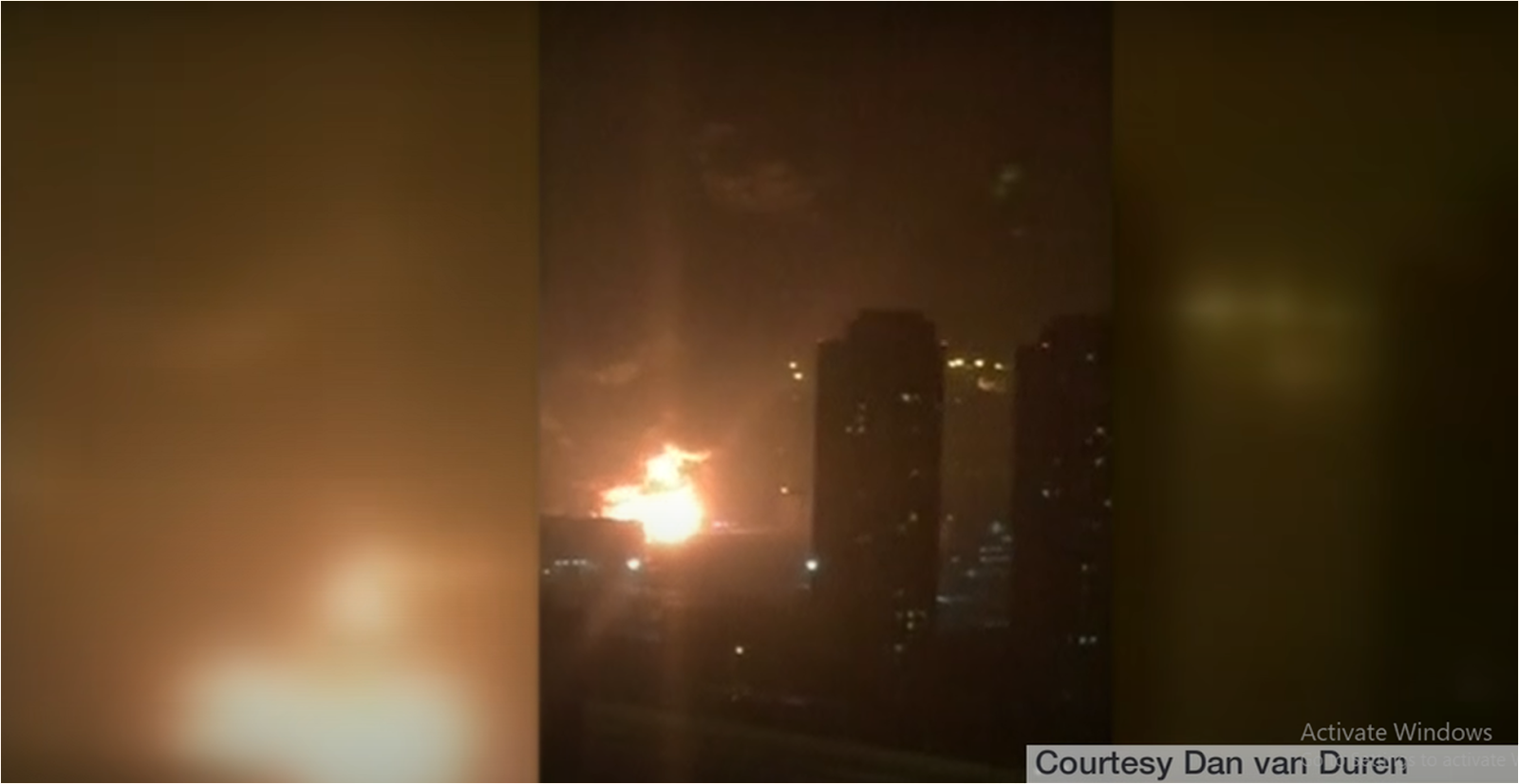
    Recent reports suggest a coup in China and a house arrest of Xi Jinping, Chinese President. To make these reports believable, some social media users have included a video of an explosion claiming to be footage from China’s capital, Beijing, related to the coup. Yet, while we have found no evidence as yet authenticating claims of a coup in China, the explosion video was actually the explosion of a warehouse in China and has been online since, at least 2015. Read more about it here

    Deportation Of Supposed 5,000 Chinese Illegal Miners By Mahama Government 

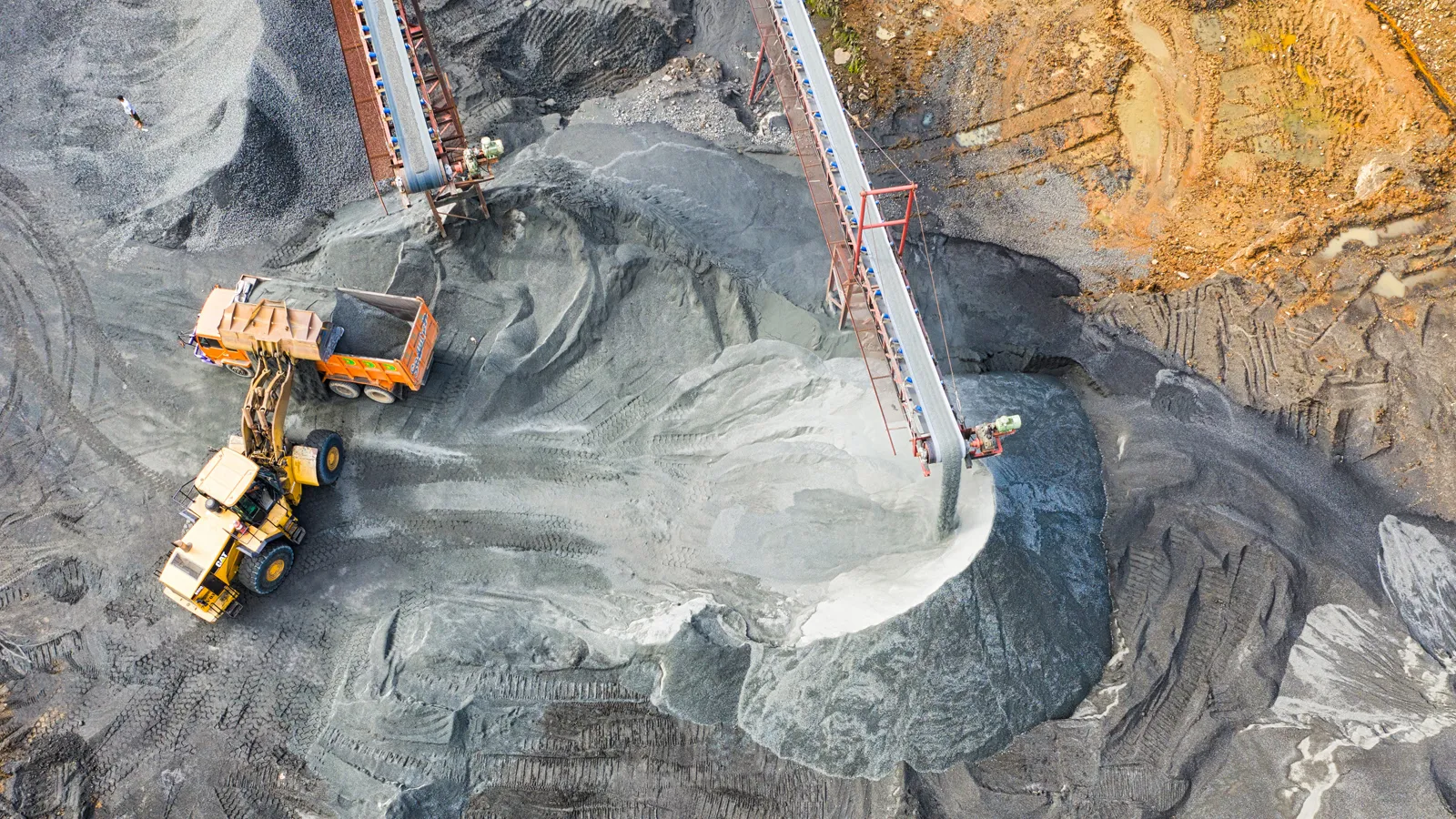
    The illegal return of popular Chinese businesswoman Aisha Huang to Ghana caused her another arrest and a trial for engaging in illegal mining, stirring up scepticism from Ghanaians about possible prosecution. With these ongoing discussions, former President Mahama stated in an interview that almost 5,000 illegal Chinese miners were deported during his tenure in government. Meanwhile, data from the Ghana Immigration Service shows that less than 3,000 foreigners were deported and repatriated between 2012 and 2016 when Mahama was president. Read all about it here

    China’s Alleged Launch Of Artificial Sun Into Space 

    When China innovated a nuclear fission reactor known as the “artificial sun” and, before then, launched a satellite on a rocket, the two events were mistaken to be one. Photos were shared to suggest that China launched an artificial sun into space, but this is untrue. Read all about it here

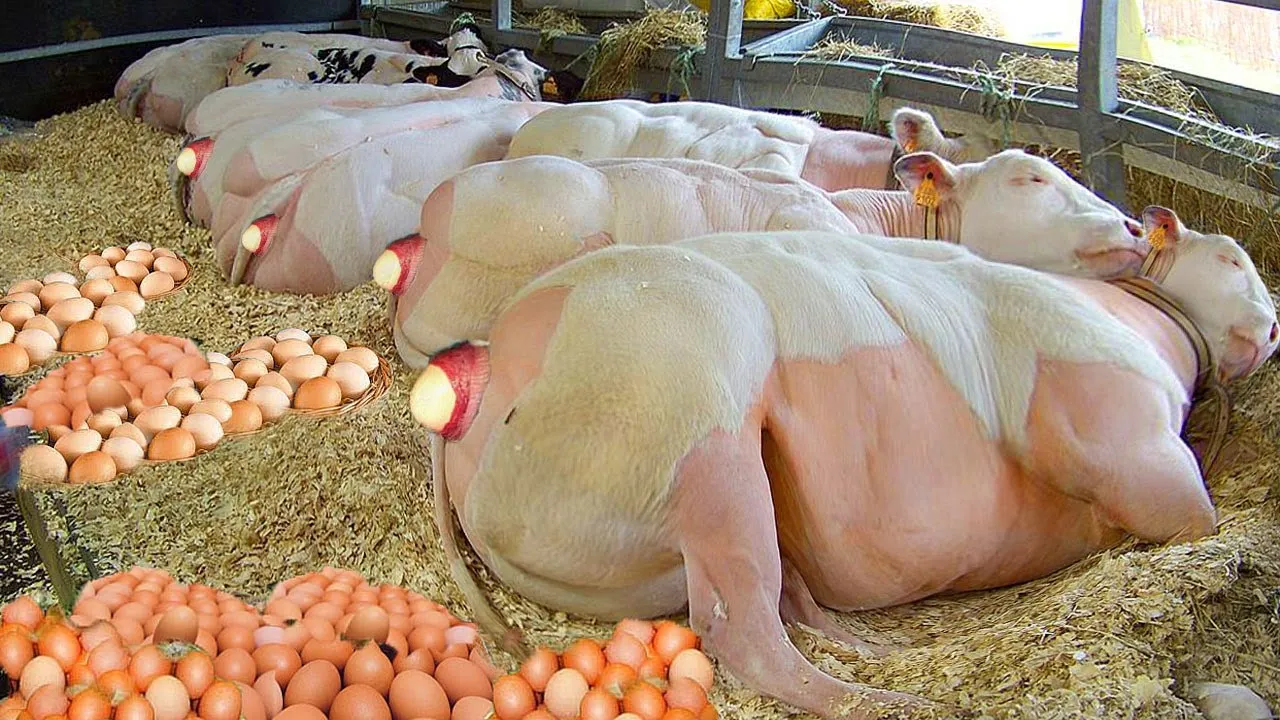
    Chicken Organs Purportedly Planted In Cows For Egg Production In China

    A Facebook user alleged that the Chinese government plants chicken organs in cows for faster egg production. But the photo alleging this was manipulated. The original shows cows whose genomes had been edited to give them traits they do not naturally possess. Read all about it here

    Sheep Faeces Speculated To Prepare Beverages In China 

    Facebook users have claimed that sheep faeces were in high demand in China for their richness in proteins for beverages. It is accompanied by a photo alleging that the beverages were made with sheep faeces, juice, soya milk and other liquids. This is false. Some of the photos have been manipulated, and the resemblance of sheep faeces in the photos is tapioca pearls. Also, the beverage in the photos is Bubble Tea, which has one of its ingredients as tapioca pearls. Read all about it here

  • Misleading! Akufo-Addo did not say he wants to marry a woman from the Volta Region

    Claim: President Akufo-Addo has said in a radio interview that he wants to marry a woman from the Volta Region.

    Misleading! The president talked about being a persistent suitor that keeps knocking on the door of the Volta Region to get the region to ditch the NDC and vote for the NPP. His comment did not in any way communicate his interest to marry a woman from the Volta Region. 

    Full Text

    Several news reports, including those from GhanaWeb, Peacefmonline and GhPage, claim that President Akufo-Addo has declared his intention to marry a woman from the Volta Region of Ghana. 

    He is reported to have made the statement during an interview on Stone City Radio 90.7FM in the Volta Region on Monday, September 12, 2022.  

    The publications have elicited several reactions on social media with many wondering why the president would, make such a declaration on a public platform, given the fact that he is already in an ordinance marriage with Rebecca Akufo-Addo. 

    Verification

    After obtaining a copy of the interview, DUBAWA subjected it to careful scrutiny to confirm the utterances of the president. 

    Between the 50.51 minutes mark and 51.45 minutes mark, the following conversation ensued: 

    Host: Welcome once again to the Volta Region. We know you’ve made countless visits to the Volta Region.

    Akufo-Addo: According to the regional minister, since I came to power, it’s been 10 trips so far. We are not finished yet. 

    Host: More, more should come.

    Akufo-Addo: Absolutely!

    Host: I hope you are enjoying your stay here in the Volta Region. 

    Akufo-Addo: I am but you know my basic position that I have taken. And seeing you, of course, it has heightened it; my determination to marry the Volta Region. I’m like a suitor who keeps knocking on the door.

    Host: Somebody has got me blushing.

    Akufo-Addo: I am waiting for the day the door will be opened and I will keep on until the door is opened. 

    Given the context within which the conversation was had, it comes out clearly that the president’s statement was within the context of political acceptance by the Volta Region, which has been very loyal to his political opponents, the National Democratic Congress (NDC) in every election since 1992. 

    This isn’t the first time the president has made such a statement. 

    For instance, in February 2020, ahead of the general elections, Akufo-Addo responded to comments by an opposition party executive about why he was frequenting the region, saying “I think that the spokesperson doesn’t know about a man who is determined to marry a woman. You will continue to go to the house and you go and go and go. So that is what I am determined to do. I am determined to marry the people of the Volta Region and I am going to come here as often as is necessary until I get them.” He said this at Adaklu and the report was captured by Starrfmonline

    In August 2020, while addressing the chiefs of South Tongu to cut the sod for an €85 million Keta Water Supply rehabilitation and expansion project at Agordome, the President said he was aware of the region’s loyalty to the NDC and that he was determined to win it over for the NPP. 

    “I’m like the suitor who is bent on marrying a beautiful woman, and I’ll keep on knocking at the door until it is open to me,” he stated. The report was copied from the Ghana News Agency and published on Myjoyonline

    As far back as December 2016, the president is captured in this Daily Guide publication saying that his New Patriotic Party will continue to woo the region “until we marry the bride.” 

    In September 2021, Nana Akufo-Addo again said in a VOV Radio interview that, “I am a very persistent suitor. So when I talk about marrying the Volta region. I mean it. When I set my eyes or myself on a particular target, unless it’s God, I do not give up.” This report was captured by the Daily Guide newspaper. 

    Why would the president be talking about marriage to the Volta region? 

    The context in which he has consistently made the statements, dwelling on marriage analogy, has been to express his desire and hope that the Volta region, which is the NDC’s stronghold, will jump ship and accept the NPP as a political party of choice. 

    Since the beginning of Ghana’s fourth republic in 1992, the Volta Region has consistently voted massively for the NDC in all elections. 

    The NPP has previously had no parliamentary representative in the Volta Region. John Peter Amewu, representing the Hohoe constituency, is currently the only NPP legislator in the region. 

    Conclusion

    President Akufo-Addo has not declared his intention to marry a woman or take a wife from the Volta Region as is being peddled in various news publications.

  • GDP growth rate was not 3.4% before President  John Kufour took office and not 9.4% after he left office

    Claim: Deputy Director General of the Commission for Technical and Vocational Education and Training (TVET) Ing. Peter Antwi Bosaiko claims the GDP growth rate before John Agyekum Kufour became president stood at 3.4% and 9.4% respectively after he left office.

    False. Data from the IMF and World Bank reveal that GDP growth rates before Former President Kufour took office which is 2000 were 3.6% and 3.7% respectively. Also, after the NDC took over from President Kufour in 2008 the GDP growth rate stood at 9% and 9.1% respectively.

    Full Story

    The Deputy Director General of the Commission for Technical and Vocational Education and Training Ing. Peter Antwi Bosaiko has claimed that the economy had grown by 3.4% when Former President John Agyekum Kufour took office. He also claimed that before Kufour left office, the economy had grown by 9.4%. 

    He made these statements on Neat FM’s Me Man Nti Show. Speaking on the show, he said, “When NDC took over from President Kufour, the growth of Ghana’s economy was at 9.4%. The size of the economy was so huge. In fact, when President Kufour took over, the growth was 3.4%.” 

    The shorter version of the show was uploaded on YouTube on Tuesday, September 13, 2022. The claim was made from 11 minutes- 17 seconds to 11 minutes -49 seconds. The shorter video has amassed over 70 views.

    Verification 

    Growth in the economy is measured by the change in GDP at a constant price. This is according to the World Bank. The Gross Domestic Product (GDP) is the total value of final goods and services produced in the country during a given period. 

    To clear any doubts, former President Kufour spent eight years in government. This was from 2001 to 2008. This means, per the claim by Ing. Bosaiko, we are expected to look at the GDP growth rate of 2000 which is the year before Fmr. President Kufour took office and the GDP growth of 2008 before he handed over to Late President John Evans Atta Mills of the National Democratic Congress (NDC).  

    We first sourced our data from two international organizations, the International Monetary Fund (IMF) and the World Bank.  We looked at GDP growth rates from 2000 to 2009. 

    Year Annual GDP growth rate
    World BankIMF
    20003.7%3.6%
    20014%3.8%
    20024.5%4.6%
    20035.2%5.1%
    20045.6%5.4%
    20055.9%6.2%
    20066.4%5.8%
    20074.3%4.1%
    20089.1%9%
    20094.8%5.7%
    Source: World Bank, IMF

    Clearly, the IMF sighted 3.6% as the GDP rate for the year 2000 and 9% as the GDP rate for the year 2008.  

    The World Bank also sighted 3.7% as the GDP rate for the year 2000 and 9.1% as the rate for the year 2008.  

    We also looked at data from government institutions including the Ghana Statistical Service and the Ministry of Finance Budget Statement and Economic Policy for the GDP growth rate for 2000 and 2008. 

    We found out that, the GDP growth rate for the year 2000 which was captured in section two subsection 33 of the 2002 budget was 3.7% and 8.4% for 2008 as captured on page 3 of the revised  Gross Domestic Product for 2012 of the Ghana Statistical Service

    Conclusion

    According to data from the IMF, World Bank, and the Statistical Service, the claims by Ing Peter Antwi Bosiako in respect of Ghana’s economic growth rate in 2000 and 2008 during the tenure of ex-President John Kufuor are incorrect.

  • Claim that President Akufo-Addo never met with Queen Elizabeth II false

    Claim: Social media users claim that Ghana’s President, Nana Addo Dankwa Akufo-Addo, never met with Queen Elizabeth II during her reign, unlike some of his predecessors.

    The claim is false. In 2018, President Akufo-Addo met with the Queen when he attended the 25th Commonwealth Heads of Government Meeting in London.

    Full Text

    Following the death of Queen Elizabeth II, social media users in Ghana have been sharing images of some encounters she has had with Ghanaian leaders. Pictures of the Queen with former Presidents Kwame Nkrumah, John Jerry Rawlings, John Agyekum Kufuor, Joh Evans Atta-Mills, and John Mahama have all resurfaced online.

    DUBAWA has observed that some users have claimed that Akufo-Addo is the only Ghanaian president in the fourth republic not to have met the Queen until her death. Some of these posts can be found here, here, and here. There is also an online publication that claims that President Akufo-Addo is missing among Ghanaian heads of state who ever met with the Queen.

    On Sunday, September 11, 2022, a Deputy Director of Communications at the Office of the President, Jefferson Sackey, published a photo of President Akufo-Addo and Queen Elizabeth shaking hands.

    “I witnessed President Akufo-Addo propose a toast in honour of Queen Elizabeth II at the Buckingham Palace in April 2018, during a dinner for Heads of State of the Commonwealth. The Queen’s response brought back memories of some of the greatest moments of her visits to Ghana,” he captioned the photo on Twitter.

    A screenshot of the post by Jefferson Sackey 

    Several responses to the post accused the author of publishing a ‘photoshopped’ image.

    Did President Akufo-Addo ever meet Queen Elizabeth?

    Verification 

    In April 2018, President Akufo-Addo left the country to attend the 25th Commonwealth Heads of Government Meeting in London. The meeting had leaders from member countries come together to reaffirm common values. Queen Elizabeth II was also present at the meeting, together with other members of the Royal family.

    In an 8-minute video published on YouTube by Kigali Today, a verified channel, we spotted President Akufo-Addo among the leaders at the Opening of the Meeting. He was seated on the far left on the third row.

    [President Akufo-Addo marked in a white circle]

    The official opening of the Meeting is also available on the Royal Family’s YouTube Channel

    We also checked with a photo album from the Meeting which was uploaded online by the Commonwealth Secretariat and observed that President Akufo-Addo appeared in one of the shots.

    A 1 hour 42 minutes video of the Queen’s Dinner Reception as part of the meeting sees President Akufo-Addo (1:35:00 to 1:40:55) propose a toast to the Queen.

    A video report by the Communications Directorate at Ghana’s Presidency (20:30 to 21:03) captures the moment President Akufo-Addo and his wife, Rebecca Akufo-Addo, shook hands with the Queen. 

    A photo of President Akufo-Addo and his wife conversing with Queen Elizabeth II

    Conclusion

    It is not true that President Akufo-Addo has never met with Queen Elizabeth II. The two met at the 25th Commonwealth Heads of Government Meeting at Buckingham Palace in 2018.

  • Call For Application: Fact-checking Training for Journalists in Rural Ghana

    Dubawa (Ghana) invites applications for its fact-checking training and mentorship for journalists in community-based media in Ghana. 

    The project forms part of efforts to fight misinformation and disinformation and promote accountability journalism in the Ghanaian media ecosystem. It will also afford both young and seasoned journalists working in non-urban communities in Ghana the opportunity to acquire knowledge and skills in fact-checking.

    The project will consist of a two-day residential training and a three-month post-training mentorship for selected journalists.

    Eligibility Criteria

    Applicants should be working journalists across all communities in Ghana with the divisions as indicated below:

    • North: Northern region, Savanna region, Upper West region, North East region, and Upper East region
    • Central: Ashanti region, Bono region, Bono East region, Ahafo region, and Oti region.
    • South: Volta region, Eastern region, Western region, Western North region, Central region, and Greater Accra region.

    Applicants should be practising journalists from a certified media organisation and must be working outside of the regional capitals of Ghana.

    Applicants must be willing to travel to designated central points within their respective divisions for a two-day residential training.

    How to Apply:

    Interested applicants should submit their applications by filling out this FORM by September 25th, 2022.

    A copy of the applicant’s CV and ID will be required.

    Note: Only shortlisted applicants will be contacted

    Application and Selection Timelines:

    • Deadline for submission of application: 25th September, 2022
    • Selection and interview of shortlisted candidates: 26th September – 7th October, 2022
    • Training: 
    • North: 12th and 13th October 2022
    • Central: 19th and 20th October 2022
    • South:  26th and 27th October 2022

    For further information or clarification, contact Dubawa on 0542818189 or Roselena on 0245070916.

    The project is supported by the United States Embassy in Ghana.

Back to top button