Featured

  • Who Implemented the Online Passport Application process in Ghana?

    Claim: The New Patriotic Party led administration implemented the online passport application process in Ghana.

    True. Although the previous administration piloted by the  National Democratic Congress set up and launched the online application process in December of 2016, its use was not implemented until the Akufo-Adddo led administration took office in 2017.

    Full Text:

    The New Patriotic Party, in a Twitter post from the President’s verified account, posted that their administration was responsible for implementing the online passport application in the country. 
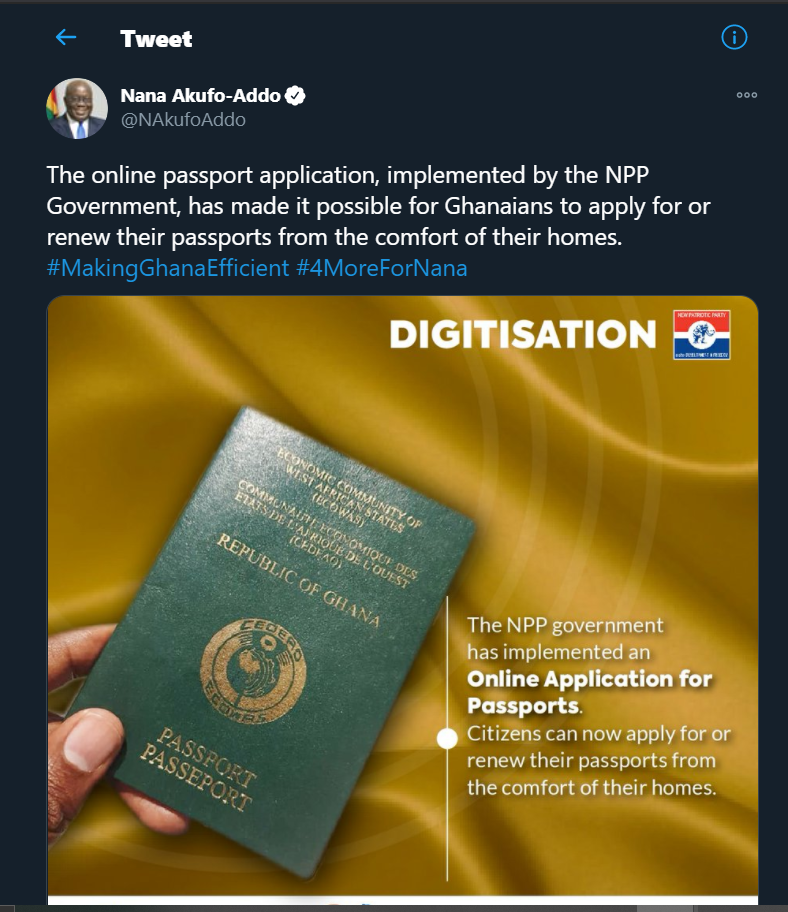
    Image source: Twitter.com

    The post has been retweeted 2.8K times since it was posted yesterday, October 19th, 2020. 

    A well known Ghanaian celebrity, Sarkodie, has also retweeted the post, indicating appreciation and congratulations to the ruling government. 

    “…was looking forward to this…About time. Anything towards the right direction we support though there’s a lot to b fixed”, the tweet stated. 

    Sarkodie’s retweet on its own has also generated 1.4K retweets and 8.3K likes since yesterday.

    Image source: Twitter.com

    The initial post and the supported retweet has led to extensive discussion on the twitter social media platform. Some users have countered the claim made with posts that suggest that the former government, led by John Dramani Mahama, was actually the one to implement the online passport application process. 

    Twitter users, @CitizenSawaJnr, @YayraKoku and many others have outrightly called out the President on the post, claiming that the information being passed on is wrong. 

    They further indicate that the post is a blatant lie on the part of the ruling government.

    On the other hand, some, like @ChristallAndre1 and @enkaddison have commended the government for being efficient and competent and have also “thrown shade” at those making any contrary comments on the matter.

    Verification:

    Dubawa set out to clarify the issue of who did what regarding the online passport application and renewal process.

    Passport Application in Ghana.

    Until December, 2016, all applications for new Ghanian passports and renewal of already existing ones needed to be processed manually. The process involved buying the form from designated banks or the passport office and sending duly completed form to the passport office for processing. 

    Between 2014 and 2015, during the Mahama led administration from July 2012 to December 2016, the online passport application project was introduced through the National Information Technology Agency’s (NITA) pilot project which was later taken over by the Ministry of Foreign Affairs and Regional Integration.

    The system was tested successfully and launched in December, 2016 by the Minister, Hannah Tetteh.

    The move to convert to an online system for the passport application process was fueled by complaints about the long queues and the “Goro boy system” which for years frustrated citizens. 

    Present state of Passport Application In Ghana

    After phasing out the manual passport application since its launch in 2016, the online application which is now in full force came into effect on March 1st, 2020. This was announced in a press statement signed by the current Minister of Foreign Affairs and Regional Integration, Sherry Ayorkor Botchway.

    What this means is that by March 1st 2020, there can be no manual processes for acquiring or renewing passports in the country.

    Image source: Ministry of Foreign Affairs, Ghana.

    The process now involves buying an online form by selecting from a range of payment options, completing and submitting the form online and finally, selecting preferred dates for the capture of the individuals bio-data at any of the Passport Application Centers (PACs) across the country. This is done through the Ministry of information portal: passport.mfa.gov.gh.

    The online passport application system has been in effect since its launch in December 2016. But since March this year, the manual system has been completely scrapped off for the online system to take full effect.

    Conclusion:

    It can then be concluded that the online passport application process was indeed   implemented during the ruling NPP administration after the NDC lost power in 2016. 

  • Joshua Beckford, the ‘6-year old’ Oxford University Student

    A 6-year-old boy, Joshua Beckford from Tottenham, is the youngest to ever attend Oxford University.

    Joshua Beckford has been featured in a number of news reports and has confirmed in interviews, his admission into Oxford University to study Philosophy and History when he was six years old.

    Full text

    A photo, which appears to be retrieved from Snapchat and is asking to be made viral, is purporting that a boy from Tottenham, Joshua Beckford, is the youngest person to ever attend Oxford University to study philosophy at the age of six.

    It also alleges that no one knows much about him and he’s never made front-page news. 

    Verification

    In a 15-minute YouTube video of an interview with Joshua Beckford published by TedX Talks on 29 November 2016, it was revealed that Beckford, who aspires to be a neuro-surgeon, had completed the University of Oxford where he studied Philosophy and had distinction in his papers. 

    Beckford also confirmed in a one-minute interview published by Trends and Buzz in 2019 that he was accepted into the University of Oxford at 6 years-old, where he studied for a year. He studied Philosophy and History, he revealed in this interview. 

    “This Oxford tutor spoke to my Dad, and they said, you know we could sign your child up for this online learning platform to study Philosophy and History. So I studied for a year and I got five distinctions, one in each,” Beckford said

    It was also identified that he is autistic and is an ambassador for autism, serving the community through charity work especially in Africa. In the interview, Beckford stated his love for studying, his preference for interacting with adults for the acquisition of information, his fluency in five languages, and his love for and participation in a number of sports. 

    Beckford, who read one of his poems on Mother Earth to the audience, is passionate about the planet and shared some ways in which humans can treat the planet better for it to be a safer place to be inhabited. 

    Joshua Beckford’s age at the time of the interview in 2016 was identified to be 11.  

    “Joshua Beckford is an 11-year-old boy with Autism. This makes him special because he experiences the world differently. He has a passion for making the world a better place and believes if we don’t save our Planet nothing else that we do is important,’’ it reads.

    Background

    In a one-minute YouTube video of an interview published by Trends and Buzz on 30 August 2019, Beckford, who at the time was 14 years old, revealed that he was adopted by his father and started learning at 10-months.  Beckford was abandoned 48-hours after his birth in London and was adopted when he was a baby by Knox and his wife.

    In the description box of the Trends and Buzz video, Beckford is said to be of Nigerian descent where he had extended some of his charity work. 

    “14 Year Old Nigerian, Joshua Beckford becomes Youngest Oxford University Student. Nigerian boy, Joshua Beckford becomes the youngest to study in Oxford University at the age of 6 and graduated at the tender age of 14 from the Department of History and Philosophy. Despite being diagnosed with high functioning autism, Beckford was reported to be an early starter. As a 10 months old baby he could read, write and understand the alphabet. At two, he could read fluently and by the time he clocked three, Beckford could speak Japanese…He is one of the world’s smartest human’’, it reads.

    Also, a 7-minute YouTube video of an interview covered by TVC News Nigeria, which was published on 16 September 2019, featured Beckford’s father Daniel Knox, who was visiting Nigeria for the first time with Joshua Beckford at the time. 

    In the interview, Beckford, who was 14 years, stated that he was still discovering himself and where he came from. The news report mentioned that Beckford was abandoned 48-hours after his birth in London, and was adopted when he was a baby by Knox and his wife.

    At the time of the interview in September last year, Beckford and his father were in Nigeria to organise a fundraising  for the building of a school in the state of Kaduna for low income earners.

    News reports have featured Beckford’s story, and programmes; for example, the National Diversity Awards in the UK has awarded Beckford for his achievements and featured his story of being accepted into the University of Oxford at age 6. 

    Dubawa has reached out to the University of Oxford to confirm the youngest person ever to be admitted into their University, and is currently awaiting a response.

    Conclusion

    Based on the evidence gathered from news reports and interviews with Joshua Beckford and his father, the claim that he studied Philosophy at the University of Oxford when he was 6-year-old is true. However, the veracity of the claim of being the youngest ever to gain admission at age six from the University of Oxford is awaiting confirmation, and will be updated when new information is gathered.  

  • Fact check: Who started awarding the cocoa road projects: Kufour or Mahama?

    The Public Affairs Manager of the Ghana Cocoa Board (COCOBOD), Fiifi Boafo, has said that the awarding of cocoa road contracts began under former president John Agyekum Kufour.

    True. The awarding of contract started under the Kuffour government under the Cocoa Roads Improvement Project (CRIP)

    Full Text

    Former President John Dramani Mahama has claimed that the Akufo-Addo led administration has spent a whooping US$10 million to conduct an audit report on cocoa road projects that was started under his administration.  

    According to him, it was an inexcusable move by the Akufo-Addo administration to ‘abandon’ the cocoa roads project upon assumption of office in 2017.

    But the Public Affairs Manager of the Ghana COCOBOD reacting to the claims on CitiTV’s Point of View segment on Youtube October 5, 2020  said:

    “It is inaccurate to claim that President Mahama began the awarding of cocoa road projects. Construction of cocoa roads is actually something that started under President John Agyekum Kufour and it’s not an innovation that started under John Mahama. The awarding of cocoa road contracts rather continued under President Mahama and it is still ongoing under President Akufo-Addo.”

    Meanwhile, the minority members in Parliament have also claimed the former president, John Mahama, did indeed start awarding cocoa road projects which they also say have been abandoned by the governing Akufo-Addo government.

    Additionally, some cocoa road projects under the erstwhile John Dramani Mahama administration are currently being investigated by the Ghana COCOBOD under the Akufo-Addo led administration.

    “There is no evidence that there was any wrongdoing in cocoa roads under former President Mahama. There is nothing proving that any procurement was done wrongly because Section 40 was adhered to,” Ranking Member on Parliament’s Transport Committee, Kwame Agodza told JoyNews in an interview on October 5, 2020.

    Verification

    To ascertain the veracity of the claims, our checks revealed Former President John Agyekum Kufuor in February 2008 launched the Cocoa Roads Improvement Project (CRIP)

    The project was intended to improve arterial roads from Accra to the neighboring countries of Togo, Cote d’Ivoire, and Burkina Faso.

    An amount of US$100 million dollars was made available that year [2008] to tar some selected roads in six selected cocoa growing areas and US$200 in 2011.

    “Work is on-going in various Metropolises, Municipalities, and district capitals to reduce traffic congestion, improve public transportation and support economic activities. Accra is a typical example of these -Nkrumah Circle-Ofankor; Tetteh Quarshie-Aburi; Mallam-Kasoa and all over the country,” President John Agyekum said on February 14, 2008. 

    President Kufour at the time added that since he assumed office in 2001, over 1,000 kilometres of feeder roads had been surfaced nation-wide, about 4,800 kilometres had undergone rehabilitation, 10,000 kilometres had undergone spot improvement, while 2,300 kilometres had been re-gravelled.

    In 2015, the programme was relaunched as the Cocoa Roads Rehabilitation Programme under former President John Dramani Mahama during a working visit to the Ashanti and Eastern regions.  

    The US$750 million programme under the erstwhile National Democratic Congress government was meant to fill the gap in road infrastructure in cocoa-producing areas in Ghana and was said to be the single biggest road infrastructure project to be financed by the Ghana Cocoa Board. 

    Spanning over five years, COCOBOD put aside part of its profits of US$150 million every year for five years to finance the reconstruction of selected roads in cocoa-growing areas. 

    Some of the road projects earmarked were in the Asamakese-Suhum; Adeiso-Asamankese; Osenase–Akwatia; Koforidua–Bunso; Apedwa-Kyebi–Bunso and Kyebi town roads.

    Other projects were the rehabilitation of Suhum town roads, construction of selected roads at Asamankese, and bitumen surfacing of Noyem-Winso-Amuana–Praso, Mangoase–Kukua, Chia-Brenase–Ofoase, and Akim Sekyere-Abekoase roads.

    In all, a total of 628.70 kilometers of roads had been earmarked for construction under Phase 1 of the project as at October 2015.

    Conclusion

    The claims made by the Public Affairs of the Ghana COCOBOD, Fiifi Boafo, are accurate and do not contain any element of parody or satire. 

    The reporter produced this fact-check under the auspices of the Dubawa 2020 Fellowship in partnership with Ghanaweb to facilitate the ethos of “truth” in journalism and to enhance media literacy in the country.

  • Are Grape Seeds The New Pills on the Block?

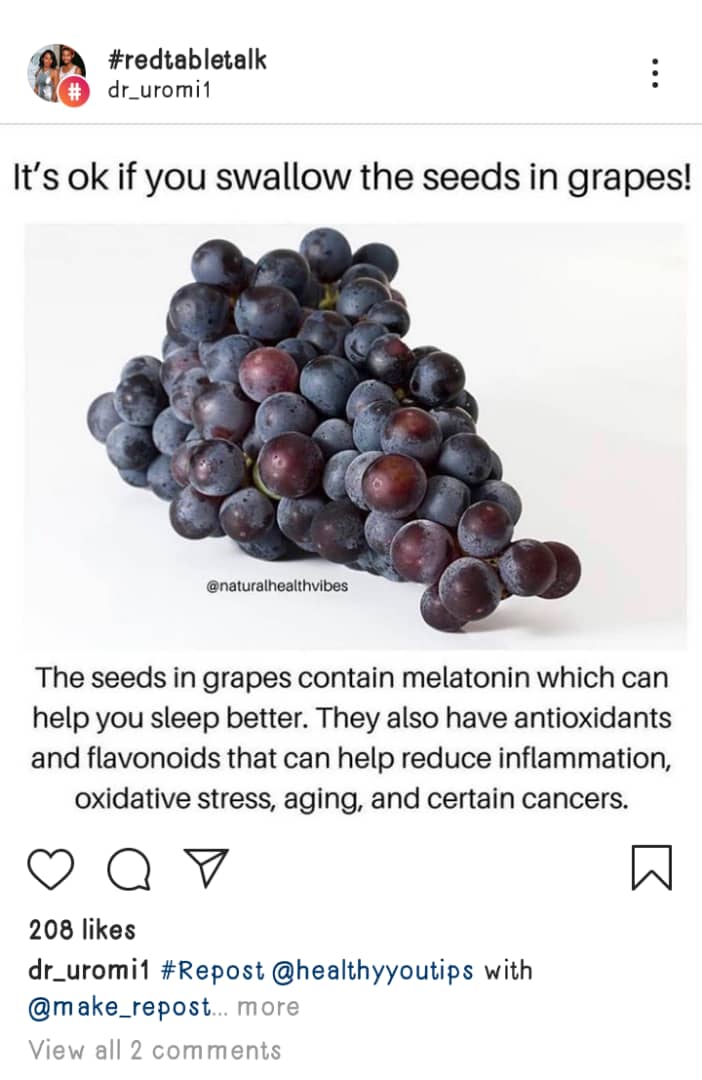
    Swallowing grape seeds is safe and the seed contains certain elements that aid in good sleep, reduces inflammation, oxidative stress, ageing, and fights certain cancers – Instagram User 

    It is safe to swallow grape seeds. However, to get the benefits from the seeds content, it must be chewed before swallowing or its oils extracted before use.

    Full Text

    It’s ok to swallow grape seeds! An Instagram user claims. The individual goes on further by stating that the seeds in grapes contain melatonin, antioxidants, and flavonoids that are all good for consumers. 

    Image Source: Instagram

    Although the social media user does not state exactly how the seed gives the claimed benefits, it is suggestive that swallowing the seed will do it. Dubawa set out to find out the truth behind swallowing grape seed, its safety, and its benefits.

    Verification

    Firstly, we found that swallowing the seed is safe as it will just be passed out with excreta, much like other seeds. 

    In terms of the benefits of the seed, Dubawa found that indeed, the seed contains some components that are beneficial for consumers. However, to get these benefits, the consumer must chew the seed before swallowing or extract the oil within the seed for use. 

    We breakdown below our findings of the pros and cons for consuming the grape seed below.

    The Good

    Grape seeds, for years, have supposedly been used for medicinal purposes. They are rich in antioxidant compounds which can help to relieve oxidative stress, according to a study conducted by Lobo, Patil. Phatak and Chandra in 2010 ,titled, “Free radicals, antioxidants and functional foods; Impact on human health”.  The study also states that grape seed properties can help prevent or resolve health issues like chronic diseases because of its antioxidant elements. 

    As a good source of antioxidants because of its high proanthocyanidins content( the chemical compounds that give fruits their color), grape seeds can combat chances of getting oxidative stress and even further reduce swelling.

    Also, Yilmaz and Toledo (2004), in their study, “Major Flavonoids in Grape Seeds and Skins: Antioxidant Capacity of Catechin, Epicatechin and Gallic Acid”, suggest that grape seeds have high quantities of the compounds called flavonoids (Gallic Acid, Catechin, Epicatechin) which are rich in antioxidants.

    With all the talk about antioxidants, it’s important that we understand what this means.

    Simply put, the human body creates some harmful  molecules or oxidants or what some call free radicals. These harmful molecules can contribute to ageing and old age-related diseases like heart disease. Therefore, these oxidants or harmful molecules need to be countered or balanced.

    Additionally, grape seeds provide melatonin. Melatonin helps regulate sleep patterns. When taken in, melatonin induces fatigue which would induce sleep and consequently improve the quality of sleep one gets. Melatonin also happens to have antioxidant  and anti-inflammatory properties.

    The antioxidants in grape seeds also protect the eyes from damage caused by oxidants or free radicals in the body and effectively avoid varicose veins as well.

    In all, the efficacy of grape seeds or its extract has been thoroughly researched in relation to human health and has been found useful.

    The not so good

    Known for its blood thinning properties, the grape seed oil is not recommended for all people. 

    A 2019 study found that grape seed extract has promising anticoagulant and antiplatelet activity properties. What this means is that, for instance, flavonoids help to thin out the blood by preventing blood platelet from gathering.

    Although this can help prevent cardiovascular damage, it can be problematic for people on blood thinning medication.

    To an extent, the fatigue-inducing property of melatonin, earlier mentioned, may be disadvantageous to grape seed consumers. 

    Grape seed and Cancer

    The claim in question suggests that grape seeds can also help with certain cancers. A multitude of studies have looked at the usefulness of grape seed in cancer prevention and treatment with varied findings. Some have had positive outcomes while some have not. 

    According to the Memorial Sloan  Kettering Cancer Center, although grape seeds have antioxidant properties, it has not been shown to treat or prevent cancer.  They also suggest that very few studies have been conducted in cancer patients with one such study not finding any improvements in radiotherapy side effects among breast cancer patients. Other available sources have labelled it “promising”.

    A study on the other hand suggests that grapes and grape-based products are excellent sources of various anticancer agents and that consuming them regularly should be beneficial to the general population. See more examples of supporting studies here and here.

    It remains somewhat inconclusive what the true potential of the grape seed is in relation to cancer, as few human tests have been conducted. Research however does exist for and against its efficacy with regards to cancer.

    Conclusion

    Grape seeds are safe to swallow. They also have some great health benefits for consumers when chewed or extracted and consumed. It may not be recommended for some individuals however, especially those on blood thinning drugs. 

  • True, Death by Force-Feeding Is Possible

    A Facebook User says force-feeding children can cause death.

    Children can easily die from force-feeding if things go wrong while being force-fed. 

    Full Text

    A Facebook user shared a post that force-feeding children is dangerous and can cause more harm than good to the child being fed.  According to him, the act can be regarded as child abuse and can result in manslaughter or murder charges should a child die as a result. The text accompanying the picture below reads,

    Image source: Facebook.com

    “Dear Parent, you may be thinking you just want to help your child by doing this.

    Sadly, it causes more harm than good. I know its a common practice in our part of the world but forced feeding is a bad habit that can land you in trouble for child abuse or manslaughter/murder in cases you end up losing the child”. 

    According to the Facebook user, a child can die from aspiration if food from force-feeding seeps into the child’s airways and into the lungs.

    Dubawa set out to find out if his claims are true.

    Verification

    Force-feeding has been discussed for years with videos available showing how children are force-fed. The process normally involves holding down the child and forcing the food down his or her throat.

    Dr. Kasule Iddrisu Yakubu, a Medical Officer at the Bolga Regional Hospital, in a conversation with this researcher said that force-feeding is dangerous and can lead to death in children.

    “Forceful feeding leads to aspiration which is a possible reason for a child to die… it’s mainly as a result of aspiration where the food goes into the breathing pathway, preventing the child from being able to breathe,” he said.

    According to Dr Kasule, children have been rushed into the hospital as a result of the difficulty in breathing which was caused by forced feeding, presenting with difficulty in breathing and gasping for air.

    “Treatment includes supplemental oxygen, steroids, or help from a breathing machine. Depending on the cause of the chronic aspiration, you may require surgery…,” he added,

    Many instances have been recorded where children have lost their lives as a result of being force-fed, as rightly stated by the claimant.

    According to a 2016 article published by the Sun titled, “FED TO DEATH Toddler ‘drowned’ in his food after being force-fed porridge and bread by his dad” a post mortem revealed that a three-year-old was found to have had his lungs filled with cereal and bread, causing his death.

    “The child was allegedly regularly made to lie across his dad’s lap as his cheeks were pinched and the porridge-like mixture poured into his mouth…He had aspirated, inhaled, breathed in, a large amount of the porridge-like mix into his lungs so that he had, in effect, drowned in his food”, the article reads. 

    A recent feature on healthwise.punchng.com also reports that force-feeding is a significant cause of death in Nigeria. According to the post, force-feeding which can lead to choking can cause death quickly once the obstruction is complete and the victim does not receive immediate help. This would lead to brain damage within minutes because there is a lack of oxygen supply to the brain. This consequently leads to sudden death due to cardiac problems.

    A New York State Department of Health report states that at least one child dies from choking on food every five days in the U.S., and more than 12,000 children are taken to a hospital emergency room each year for food-choking injuries.

    Very widely circulated stories of Gloria Dwomoh and Oluremi Oyindasola are proof of the dangers force-feeding can cause. The two ladies have served or are still serving their sentences due to death caused to children through force-feeding.

    Some research also exists on the matter, with findings showing that 80.3% of their respondents were aware of the force-feeding practise with 46% of them being aware of the adverse effects. The study found that most of those who engaged in the practice (83.0%)were force-fed as children. One of the commonest methods used while force-feeding children was nose-pinching while showing difficulty in breathing and coughing were common signs seen in the children being force-fed.

    Some have warned of the development of unhealthy eating habits or eating disorders as a result of force-feeding during childhood.

    Conclusion

    Force-feeding children can be very dangerous and cause death through choking or aspiration, suffocation or aspiration pneumonia. Children who do not die from this may develop some eating disorders because of the experience.

  • False! Rwanda has not appointed a 19-year-old as minister

    News reports claim a 19-year-old boy has been appointed Minister of New Technologies and Development in  Rwanda

    The photo of the supposed minister is the image of a British teenager. Besides, Rwanda officials tell us the ministry the supposed new minister will be heading does not exist in Rwanda. 

    Full text

    News reports indicate that the President of Rwanda, Paul Kagame, has appointed a 19-year-old boy as a minister of state. 

    The publication, dated October 5, 2020, said, “Patrick NKURIZA, 19 years old, is the Minister of New Technologies and Development of Rwanda. Patrick Nkuriza, a 19-year-old Rwandan youngest appointed Minister of New Technologies and Development of his country.”

    C:\Users\Jonas\Desktop\Image.JPG

    It has also been published on GhanaPortal.net. 

    One of the publications, which has since been taken down, has been shared many times on Facebook, even more, because a number of people perceive such news as a positive development and cite it as an example of inclusive and progressive governance. 

    The story appears strange, and so we fact-checked. 

    Verification

    To verify this claim, we visited two of Rwanda’s leading online news portals to find out if such a major national development had been reported there. 

    On both The New Times and Kigali Today, there was no report of any such development. 

    Although it would be unlikely that the two local media houses will skip such a major news item, we proceeded to conduct further checks. 

    The news report that carried the claim included a photo of the supposed 19-year-old minister, so we conducted a reverse image search and the results linked the boy to many international stories about having high IQ. 

    For instance, a February 2015 publication by UK’s The Sun names the boy as 12-year-old Ramarni Wilfred. 

    A 2014 report by Mirror UK also made a similar point.

    C:\Users\Jonas\Desktop\Ramarni.JPG
    Credit: The Sun

    In January 2019,  Ramani Wilfred was featured on the BBC for having an IQ higher than that of Bill Gates and Albert Einstein.  

    Other websites such as Black History.com and African Leadership Magazine have also written about him in the past on his high IQ. 

    In all publications, we did not find any link between the boy and Rwanda. 

    With the above giving us reasonable suspicion that the story is false, we proceeded to the central website of the government of Rwanda where we found a list of all ministries and their agencies in the country. 

    Within the list of 19 ministries, we found no ministry for “New Technologies and Development,” as is being claimed to be the office the young man will be occupying. 

    The closest to such a name was the ‘Ministry of ICT and Innovation.’ 

    A desk research on recent ministerial appointments in Rwanda produced two relevant news publications in February 2020 and March 2020 where President Kagame undertook a ministerial reshuffle and made new appointments.  

    The Minister for ICT and Innovation was not affected by the reshuffle. According to that Ministry’s website, the minister in charge is Paula Ingabire

    The Office of the Rwandan Prime Minister in response to an email inquiry on the matter said “this information about the appointment of a 19-year old as Minister of New Technology and Development” is not true, this is fake news.”

    Conclusion

    Based on the evidence adduced above, we conclude that the report is blatantly false and without an iota of truth.  

  • False! John Mahama did not ‘spray’ cash to supporters in Berekum

    Social media users claim Former President John Mahama shared cash to party supporters during a campaign tour in Berekum. 

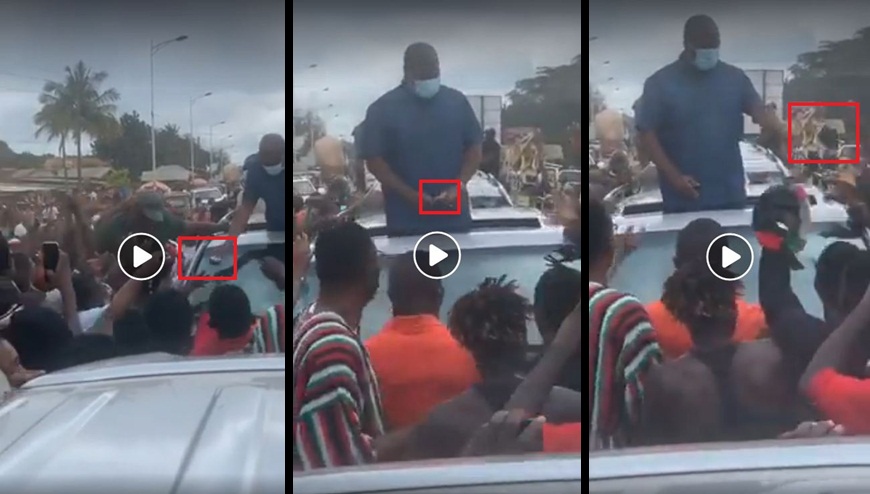
    While one of the videos used as the basis for the claim is a 2016 campaign video, the others showed him sharing an item that is black with white straps and a white towel but not money. 

    Full text

    Many social media users claim that Ghana’s former president and flagbearer of the National Democratic Congress (NDC) in the 2020 elections, John Dramani Mahama, has been captured on video distributing cash to some party supporters during a campaign tour in Berekum in the Bono region. 

    The claims have been made on pro-government Facebook pages including NPP projects bureau and on Twitter. The posts have gained more than 8,000 views. 

    The claims are accompanied by a video that shows the former president standing out of a vehicle’s sunroof while the vehicle and others in the convoy are mobbed by several individuals clad in colours of the NDC; red, white, green and black. 

    Some news portals such as GhPage also indicated that the presidential candidate distributed money to supporters: “The NDC Presidential candidate John Dramani Mahama in the course of his campaign tour has visited Berekum in the Bono Region today 28th September 2020. John Mahama in the middle of his street cavalcade pulled wads of cash from his car and gave it to some of the crowded party adherents on the streets.” 

    The official Twitter page of the NDC has, through a statement signed by James Agyenim-Boateng, the party’s campaign spokesperson, denied the claims of John Mahama distributing money. 

    “The said reports are untrue and completely borne out of the desperate and fertile imaginations of the author(s)… As it has become typical of Mr. Mahama on his campaign tour of the regions, he shares JOHN MAHAMA 2020 branded nose masks to people…,” the NDC’s statement indicated. 

    We investigated the claims. 

    Verification

    We have seen two different videos making the rounds on social media, all making the claim that the NDC flagbearer was sharing money to party supporters during his campaign tour. 

    We fact-checked each of the videos below: 

    Video 1, shared on the NPP Projects Bureau Facebook page on 28th September 2020 with the caption “This is video of John Mahama sharing Money in Berekum, where the Nose Masks, Apron and T-shirts they claimed to be sharing not money? December 7 will expose you!!” 

    A reverse image search conducted on some frames of the video showed that it is an old video of Mahama on a campaign. The results matched a similar video uploaded by Joy News to their YouTube channel on September 21, 2016. 

    In both videos, John Mahama is seen in a black polo shirt and a white baseball cap. The background visuals were the same. 

    A google search on the subject showed news reports pointing to the video being taken at Abossey Okai in Accra in 2016.

    Given the evidence above, we find the NPP Projects Bureau’s claim that Video 1 was evidence of John Mahama sharing money in Berekum in 2020 to be false.  

    Video 2

    Shared by a twitter user who is prone to sharing Pro-NPP content on his timeline, the second video shows John Mahama on his recent Berekum visit. The video is accompanied with the text; “John Mahama sharing money on his campaign tour in Berekum, Bono Region. Is Government Official One that desperate? Votes buying come inside? #RejectConMahama”.

    The NDC presidential candidate is seen standing out of the sunroof of his vehicle in a deep blue shirt and with many of his followers surrounding the vehicle. Although the video is dark and not very clear, it is noticeable that he does at a point hand out something to some people. 

    At exactly 16 seconds into the 42-second video, John Mahama is seen taking and handing out the item to someone around the front-side of the vehicle and later tossing another into the crown on his left.

    We were able to find a fuller version of the same video shared by a Facebook user, Enoch Kofi Nyarkoh with the caption: “John Mahama sharing money on his campaign tour in Berekum..Asem no aye kese oooo.” That video has been watched more than 9,000 times. 

    Analyzing the video in slow motion and in reverse motion between 19 seconds and 25 seconds, we found that the items handed out to the supporters were black with a touch of white. 

    The first frame showed the NDC flagbearer slide the item down the vehicle windscreen. The second frame shows him holding the black item while the third frame gives a better view of the item after he tossed it into the crowd. 

    The nature of the item and how it was tossed does not prove to be money. 

    A further online search of videos on Mahama’s Berekum tour revealed another video originally shared from a live video taken by NDC’s Campaign Spokesperson, James Agyenim Boateng’s on the Berekum tour.

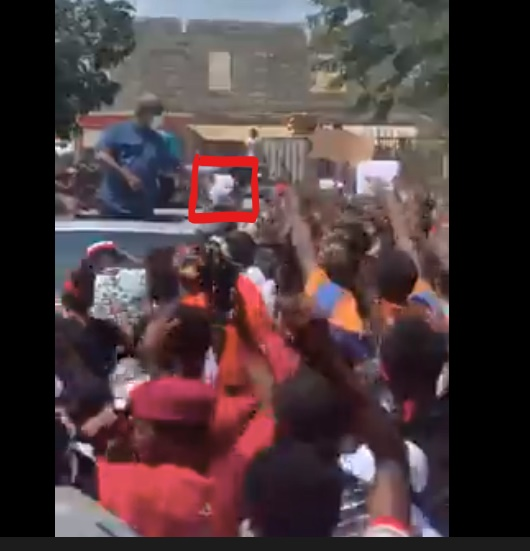
    At the 10 seconds mark of the video, the white piece of cloth which looked like a little towel was tossed into the crowd by the NDC flagbearer. 

    The object seen in no way appears to be money as claimed. 

    Conclusion

    Based on the evidence above, we conclude that the item John Mahama gave to party supporters on his tour of Berekum is not money as claimed.

    The reporter, Jonas Nyabor, produced this fact-check under the auspices of the Dubawa 2020 Fellowship in partnership with Citinewsroom to facilitate the ethos of “truth” in journalism and to enhance media literacy in the country.

  • Are 50 per cent of Ghanaian men impotent?

    News reports claim a health practitioner has said 50 per cent of Ghanaian men are impotent

    Dr Amanamah was misrepresented in the reports. Furthermore, the statistic, which was sourced from a 1980s Massachusetts Male Aging Study (MMAS) referred specifically to men in Massachusetts within the age bracket of 40 and 70. Therefore, the findings cannot be generalised to Ghana.  

    Full text 

    Many media outlets including Otec FM and the Daily Dispatch newspaper in its September 23, 2020 issue, have published reports that claim that 50 per cent of Ghanaian men are impotent.

    The reports quote one Dr Samuel Amanamah of the Sexual Health Foundation, who made the claim while speaking at an event he organized in Kumasi.

    The publication has been widely shared and generated public discussion as it means nearly a quarter of Ghana’s men have such a problem.

    We fact-checked this claim, looking to answer two key questions:

    i. Did Dr Amanamah say 50 percent of Ghanaian men were impotent? 

    ii. Would this claim be correct in the face of any widely accepted evidence? 

    Verification 

    In a phone conversation with Dr Amanamah, he explained that the headlines used in the news publications were not exactly what he communicated. 

    According to him, he indicated that 50 per cent of Ghanaian men within a particular age bracket and not the entire male population, are impotent. 

    “On what I quoted, 50% of men from the ages 40 to 70, that is the clause, not the young men walking around, those who are sexually active,” he explained in a phone interview. 

    Indeed, a desk analysis of the content of the news publications was different from the headline. They did not quote Dr Amanamah on the claim that 50 per cent of the Ghanaian male population was impotent but rather, Ghanaian men within the age bracket of 40 and 70. 

    The lead of Otec FM’s story, for instance, reads: “Executive Director of Sexual Health Foundation, Dr Samuel Amanamah, has revealed that about 50 per cent of men between the ages of 40 and 70 in Ghana are suffering from erectile dysfunction (ED).”

    The two clearly are different. 

    But are 50 per cent of Ghana’s healthy men between the ages of 40 – 70 impotent?

    Having established that the news outlets misrepresented what Dr Amanamah said, we sought to find the evidence of the actual claim that 50 per cent of Ghanaian men between ages 40 and 70 have erectile dysfunction. 

    Population data from the Ghana Statistical Service shows that the total 2020 estimate of all males in Ghana is 15,231,057 while those within the age bracket of 40 and 70 are 2,588,656. 

    Dr Anamanah’s claim, therefore, presupposes that half of this population are impotent.

    Data source: Ghana Statistical Service

    Dr Amanamah who makes the claim said in the phone interview that his source is the Massachusetts Male Aging Study (MMAS), adding that although it was not conducted in Ghana, its results are used across the world. 

    “We don’t have a study in Ghana that talks about the prevalence of erectile dysfunction but we have studies in other countries. And from those studies, the results are almost comparable, so I quoted one study from the US which was one of the most profound studies because the people involved were a lot and you know that in research, if you have a lot of people participating in a study, then the results become more authentic…I quoted the Massachusetts Male Aging Study MMAS,” he said.  

    The MMAS study, published in the United States National Library of Medicine database was a community based, random sample observational survey of non-institutionalized men 40 to 70 years old conducted from 1987 to 1989, 1995 to 1997, and 2002 to 2004 in cities and towns near Boston, Massachusetts in the US. A total of 1,709 men of different backgrounds participated in the study and it was aimed at assessing how closely related ageing and sexual dysfunction or impotence were.  

    The combined prevalence of minimal, moderate and complete impotence was 52% according to the study. 

    Our analysis showed that the MMAS is indeed a widely referenced research across populations and had been cited by other research documents with some referring to it as a ‘landmark study of the epidemiology of impotence.’ 

    A 2010 study on sexual dysfunction among Ghanaian men with various health conditions, which cites the MMAS as well, also found that about 60% of the 102 men sampled in Kumasi had sexual dysfunction and the rate varied according to the condition and age. 

    Two main challenges arise from Dr Amanamah’s use of this data in relation to Ghana

    1. The study was conducted in three phases from 1987-1989, 1995 to 1997, and 2002 to 2004, suggesting it is significantly dated. Therefore, the findings of the study might not hold true today.
    2. The findings of the research may not be generalizable to Africa and for that matter Ghana considering the context, racial differences and lifestyle of people within the different geographical locations.

    A consultant urologist, Dr Matthew Yamoah Kyei said the only related studies done in Ghana focused on men with various health conditions such as hypertension and diabetes and not healthy men from the general population.

    He stated that in his view, basing a claim of erectile dysfunction in Ghana on a study like the Massachusetts Male Aging Study (MMAS) is erroneous since the racial differences are significant. 

    He said although the MMAS is often cited to make general statements, it cannot be used to make emphatic claims. 

    “[Between] we Africans and Caucasians, our potencies are far different. We have high testosterone levels…  The race is important. What proportion of their [MMAS sample] population are blacks?” he quizzed. 

    He explained that the MMAS has gained popularity because it took a large sample at random from within the general population while most of the other similar studies were clinical studies. 

    “If you do it [study] at a hospital, it may not be the best, you must go into the population. The Massachusetts Aging Study got popularity because they went into the population, just that the racial issue is what we are not sure of. Among the Caucasians, it [study] may be good but for Africans, it may not be good,” he added.  

    Brief explainers

    Three major medical terms used in this report are erectile dysfunction, impotence, and sexual dysfunction. While the two might seem different, several academic materials we reviewed, including one from the Harvard Medical School explained erectile dysfunction as the medical term for impotence. 

    In most instances, the two words are used interchangeably to mean the same thing, that is, the inability to achieve or maintain an erection for sexual intercourse.

    Sexual dysfunction refers to any problem that prevents an individual or couple from experiencing satisfaction from sexual activity.

    Conclusion

    Media reports that Dr Samuel Amanamah claims that 50% of Ghanaian men are impotent is misleading. The statistic refers to only Ghanaian men aged between 40 and 70. 

    Again, basing the claim that 50% of Ghanaian men between ages 40 and 70 have erectile dysfunction on the Massachusetts Male Aging Study (MMAS) is problematic as the study centred on people of a different race and dates back to more than a decade ago.  

    The researcher produced this fact-check per the Dubawa 2020 Fellowship partnership with Citinewsroom to facilitate the ethos of “truth” in journalism and enhance media literacy in the country.

  • Fact-check: Is government planning to cancel teachers’ licensure exams and national service?

    News reports claim Education Minister, Matthew Opoku Prempeh, has revealed plans by the government to cancel teachers’ licensure exams and national service

    The Minister in the interview did not make the claim attributed to him. Rather, he was reading from documents before him a portion of the NDC’s 2020 manifesto which promises to cancel licensure exams and national service.

    Full Text

    The debate over teachers’ licensure exam has become a topical issue in this year’s election, with the National Democratic Congress (NDC) promising to cancel it, should it win the December elections.

    The National Teaching Council (NTC) started issuing the licenses last year to teachers who sat for and passed the licensure examination.

    The introduction of the teachers’ licensure examination was met with some agitations by teacher trainees who accused the government of scheming to use the exam to cut down on the number of teachers to be employed, thereby denying them and their dependents their livelihood.

    The 2019 edition of the licensure exam saw 7,432 teachers fail and 21,287 out of 28,757 teachers pass.

    Former President John Dramani Mahama, flagbearer of the NDC, in a Facebook interaction in December last year promised to abolish the licensure examination if he is elected president of Ghana.

    He argued that what was more important was an improvement in the quality of teaching and examinations at the colleges of education.

    Also dominating discussions in the education front is the one-year mandatory National Service for teachers from Colleges of Education announced by the government last year.

    This was also fiercely resisted by the teacher trainees who staged a demonstration, registering their displeasure about the decision.

    The government, however, went ahead and implemented the policy, compelling all graduates from the Colleges of Education to do National Service.

    The NDC again promised to cancel the mandatory National Service for teachers.

    To demonstrate their commitment to these promises, the party captured them in their 2020 manifesto dubbed, The People’s Manifesto.

    “The automatic posting of teachers without National Service and licensure exams will be reversed under the John Mahama Administration in 2021,” the NDC’s manifesto states on page 69.

    Reacting to the promise to cancel the licensure examination and the mandatory national service by the NDC, Education Minister, Dr Mathew Opoku Prempeh, on Net2 TV’s The Seat show, cast doubt on the commitment of an NDC government to cancel the licensure examination since the process began under the previous NDC administration.

    Some online portals, theheraldghana.com, honestynewsgh.com, gh.opera.news, wobeti.com among others published stories from the said interview on Net2 TV suggesting that the minister had said the current government was considering a cancellation of the teacher licensure exam and the mandatory National Service for teachers.

    At the time of filing this fact-check, the story on honestynewsgh.com had recorded 5335 reads and had been republished by several online portals and shared on Facebook and some WhatsApp platforms.

    Verification

    To ascertain whether indeed the education minister uttered the statements attributed to him, Dubawa obtained a copy of The Seat Programme on youtube and transcribed the relevant portion of the interview.

    Below is the transcript of the interview between the host of the show, Kwaku Annan and Education Minister, Matthew Opoku Prempeh (NAPO): 44:06 – 46:37

    NAPO: When we came, we looked at professionalisation. We wanted to raise the standards…so we will implement a continuous professional…but who is a professional without continuous professional education? It was only in Ghana. So now the government says it will support you with GHs1200 each year to add to your salary. So when you look at the NDC and what they have been saying in their manifesto…have you seen the lies they are peddling?

    Host: There’s something there

    NAPO: Ghanaians should listen, Ghanaians should listen very well

    Host: It is in the NDC manifesto?

    NAPO: NDC manifesto, page 69. You’ve heard President Mahama saying if he comes he will recruit teachers automatically. In his era, he never did that. Now he is saying when he comes he will automatically recruit teachers. Because he is lying, what he has written in his manifesto and what he is saying are different. He says when he comes he will cancel the license, right? Then he will cancel National Service and then he will recruit teachers automatically, right?

    First of all, it was only diploma teachers that we did that to but now there are no diploma teachers. So when he comes, which teacher is he going to give the automatic appointment to?

    Host: Ah doesn’t he know or didn’t anybody tell him? 

    NAPO: As for President Mahama, everybody knows that he cannot read. So you see what I mean? Listen again to what he has written in his manifesto. (reading from documents before him) He says that ‘the automatic posting of teachers without national service and licensure exams will be reversed.’

    Host: The “the” to start with, presuppose as if it exists.

    NAPO: ‘The automatic posting’

    Host: But does it? 

    NAPO: It doesn’t. And he said;

    Host: Didn’t anybody see it to advise him?

    NAPO: And he said now he is bringing automatic posting. But if you haven’t done… (raises sheets of paper) his manifesto, this is what he has written in it. If you have not done your national service and you haven’t done your licensing exams, he will not give you that automatic posting. Right now that I am talking, Ghana Education Service has advertised it. All those who completed colleges of education in 2019 who want to teach are applying. If you apply, you are applying because there is a vacancy that you’ll be posted to. You are applying to be posted. But see to it that you have done your national service and prove that you have done your licensure exams.

    You are lying to Ghanaians that you will cancel it when you come but you have put it in your manifesto that you will not do automatic posting again.

    Host: it is two sharp diametrical view; I don’t understand it well

    NAPO: that is NDC. Have you seen their Green Book? What is in it is not what exists. As for them that is how they are.

    Host: Lots contradictions

    From the transcript, it is clear that the minister did not say the government plans to cancel the licensure exam and the mandatory National Service. Dr Opoku Prempeh was quoting from the NDC 2020 manifesto where the party promised to cancel the exam and the mandatory National Service.

    Dubawa also contacted Dr Opoku Prempeh who categorically denied making the comments attributed to him.

    “It is not true. It is false, period! And you can go to Net2 and get the clip. That will be better information for you. No, it’s not true,” he said in a telephone conversation with Dubawa.

    The host of The Seat show, Kwaku Annan also denied that the minister made the comments on the programme when Dubawa reached him on the phone.

    “It is not true. There was no such thing. The minister took a cue from what the NDC did on this licensure exam and then he also put it right on the spot what the government of the NPP that he is a minister of, have also done or intends to do. So, it comes as a surprise that that propaganda is flying on the wheels of operanews and the rest of news portals,” he said.

    Conclusion

    Based on the evidence adduced from the transcript of the interview and the categorical denial of both the minister and host of the programme, we rate the claim false.

  • What really did John Mahama say about Zongos and mortuaries?

    Several news reports claim John Mahama has said an NDC government will build at least 300 mortuaries in Zongo communities.

    The NDC flagbearer in the referenced interview said the party will facilitate the establishment of mortuaries but did not give any indication that mortuaries will be situated in Zongo communities. He also did not say the number of mortuaries to be built.  

    Full text

    Several news reports published on websites such as Adomonline and Ghana Guardian say the flagbearer of the National Democratic Congress (NDC), John Mahama, has promised to build over 300 mortuaries in Zongo communities across the country if he is elected in the 2020 presidential elections. 

    One of the reports, titled “1 Zongo, 1 Mortuary – Mahama Promises Zongo Communities,” reports the former president said funds for the construction will come from a “Zongo and Deprive Communities Development Fund.”

    The reports referenced a video interview by John Mahama granted to Woezor TV which was streamed live on Facebook and YouTube. 

    The reports, since their publication has generated public debate with Mahama being criticized by a section of the public over the matter.   

    The NDC, on the other hand, has said that the reports are “false, misleading and inaccurate claims,” and “an attempt to whip up anti-Muslim sentiments against the NDC”.

    Verification

    To verify the claim, we accessed the video interview on YouTube and transcribed the comments by John Mahama on mortuaries and Zongo communities. 

    Transcription: 00:56:33 – 1:01:25

    Interviewer: The Zongo communities, this current administration talks about Zongo ministry, your manifesto makes specific reference to Zongo areas and what you intend to do. Why would people in the Zongos… Why should they trust [you]. What really do you have to share with them. Specifically with reference to where I’ve made mention of.

    Mahama: We call it Zongos and deprived urban communities. That is our description. I think the NPP calls it Zongo and inner city or something. We say  Zongo and deprived urban communities because it is not only the Zongos that are deprived, there are other communities.

    Interviewer: And it is in this manifesto?

    Mahama: Yes it is. It is on page 82 I think. It has a lot of programmes here…. This one is interesting, it [manifesto] says ‘facilitate the establishment of morgues [or mortuaries]… You know there has been a long-standing complaint about how their [Muslim] bodies are handled and also by Islamic practice, within a certain number of hours, I think 48 hours they must bury the person but often with our traditional hospitals it takes quite some time for them to get the body ready and so on and so forth and so a lot of the Muslim communities have not been happy. So we say ‘facilitate the establishment of mortuaries in accordance with Islamic customs and practices and collaborate with the Ministry of Health to set up focal teams responsible for procedures that are compliant with Islamic Customs and practices at all public mortuaries’, so this is a very important thing that they have been talking about.” 

    We did not find any mention made of the specific number of morgues to be built nor where they would be situated during the interview.

    When contacted, some of the news portals that published the report were unable to point to the source of the promise that at least 300 mortuaries will be built.   

    Further, desk research we conducted also did not reveal evidence of any subsequent interview by Mahama in which he explicitly stated the number of mortuaries an NDC government intends to build and where they intended to build them.

    The online version of the political party’s manifesto in page 94 says on page 94: “facilitate the establishment of morgues in accordance with Islamic customs and practices and collaborate with the Ministry of Health to set up focal teams responsible for procedures that are compliant with Islamic customs and practices at all state morgues.”  

    Conclusion

    With the above information, we conclude that the news reports are mostly false. Although John Mahama, quoting from the NDC’s 2020 manifesto indicated that the party, if voted into office, will facilitate the establishment of mortuaries, he did not mention the number of mortuaries to be built or where they will be situated as is being widely reported. 

    The reporter produced this fact-check under the auspices of the Dubawa 2020 Fellowship in partnership with Citinewsroom to facilitate the ethos of “truth” in journalism and to enhance media literacy in the country.

Back to top button